


Europe’s Record Heat Wave: Britain, France Grapple with ‘Deadly’ Crisis
POLICY WIRE — Across Western Europe, a pervasive and deadly heat wave has compelled authorities in Britain and France to issue urgent appeals, asking residents ...

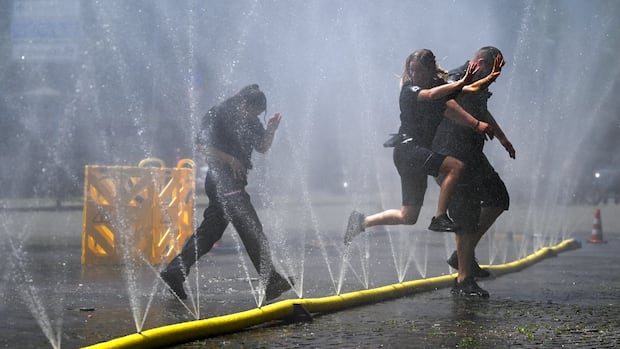
POLICY WIRE — Across Western Europe, a pervasive and deadly heat wave has compelled authorities in Britain and France to issue urgent appeals, asking residents to fundamentally alter their daily routines. The extraordinary conditions, described as having already claimed dozens of lives, represent a critical challenge to public health and infrastructure, prompting widespread disruptions from power outages to the closure of educational institutions and revered cultural sites. (Reporting based on original wire copy)
As the searing temperatures persisted on Thursday, officials emphasized the immediate necessity for people to adapt their activities, signaling the severity of the crisis. The measures underscore a continental struggle against an escalating meteorological event that has brought daily life to a grinding halt in many areas.
The intensity of the heat wave has far-reaching consequences. For one, it has overtly manifested in significant human cost, with reports indicating a mounting death toll in the ‘dozens’ across affected regions. These fatalities highlight the acute danger posed by sustained extreme heat, particularly for vulnerable populations, including the elderly, very young children, and those with pre-existing health conditions.
Beyond the immediate tragic loss of life, the heat wave’s reach extends into the vital infrastructure underpinning daily societal functions. Power supplies have been severely disrupted, a common occurrence when demand for cooling systems surges simultaneously across broad populations. Such strains can overwhelm electricity grids, leading to rolling blackouts or sustained outages that exacerbate the already dangerous conditions, particularly in urban environments reliant on air conditioning.
the ripple effect has touched key societal pillars: education — and culture. Schools, often ill-equipped to handle such extreme internal temperatures, have been forced to close their doors, disrupting learning for countless students. Similarly, iconic cultural landmarks—frequently magnets for tourists and essential public spaces—have ceased operations. This decision often comes out of concern for visitor safety, the welfare of staff, and in some cases, the preservation of heat-sensitive historical artifacts and structures. The closures reflect a pragmatic, albeit disruptive, response to an unyielding natural force.
The calls from British — and French authorities for citizens to ‘ditch their routines’ go beyond mere advice. They imply a stark recognition that typical daily activities, from commuting to work to outdoor recreation, have become hazardous under the present conditions. This directive signals an acknowledgment of the profound public health risks and the potential for overwhelmed emergency services if people don’t take preventative action.
The confluence of these factors—human casualties, infrastructure failure, and widespread societal shutdowns—paints a picture of a region contending with more than just high temperatures; it’s a test of resilience in the face of increasingly severe climatic patterns. Such events prompt urgent discussions around urban planning, emergency preparedness, and long-term climate adaptation strategies across the continent.
What This Means
The persistent and deadly heat wave sweeping across Western Europe, as highlighted by urgent warnings from Britain and France, serves as a stark reminder of escalating climate challenges. While specific details remain localized to the immediate impact zones, the broader pattern points to a future where such extreme weather events may become more frequent and more intense. The reported ‘dozens of lives’ lost, alongside significant infrastructural strain and societal shutdowns, underscores the profound vulnerability of even highly developed nations to rapid climatic shifts. Historically, heat waves have been among the deadliest natural disasters, often due to their insidious nature and the strain they place on healthcare systems and power grids.
The requirement for citizens to ‘ditch their routines’ reflects a policy shift towards proactive behavioral change during environmental crises, moving beyond simple advisories to more direct interventions aimed at reducing exposure and demand on critical services. The long-term implications could see substantial investment in climate-resilient infrastructure—from redesigned urban spaces and cooling centers to more robust energy systems capable of handling peak demands. such widespread disruption could precipitate further policy discussions on public health protocols for extreme weather and the broader integration of climate adaptation into national strategies.