


Migrant Shadow Looms Over Bangladesh’s Plea to Malaysia
POLICY WIRE — Putrajaya, Malaysia — Here’s a riddle: when is opening up a job market actually a bad idea? When the groundwork for widespread exploitation already exists, you see it plain as...

POLICY WIRE — Putrajaya, Malaysia — Here’s a riddle: when is opening up a job market actually a bad idea? When the groundwork for widespread exploitation already exists, you see it plain as day, and still, the push for more — more workers, more remittances, more opportunities (for some, anyway) — keeps coming. That’s the messy situation brewing between Bangladesh and Malaysia right now, a dynamic familiar across South Asia, where the human cost of global labor migration often gets relegated to a footnote.
It’s not just a polite request; it’s a calculated diplomatic gambit. Bangladesh’s new leader, Prime Minister Tarique Rahman, chose Malaysia for his first foreign jaunt since taking the top job. A symbolic nod, maybe, but with concrete economic expectations attached. He showed up, ostensibly, to broaden bilateral ties, a nice phrase that almost always means cash money, or, in this case, a critical avenue for sending folks abroad to earn it.
During talks in Putrajaya on Monday, Rahman presented his petition to Malaysian Prime Minister Anwar Ibrahim. He made his ask — a request to Malaysia to reopen its labour market to more Bangladeshi workers. Fair enough, on the surface. Bangladesh has a surplus of labor and a dependency on remittances, a lifesaver for many families and a significant chunk of the national economy. We’re talking serious numbers here; for instance, the World Bank noted that remittances to Bangladesh exceeded $21 billion in 2022. That’s not small potatoes.
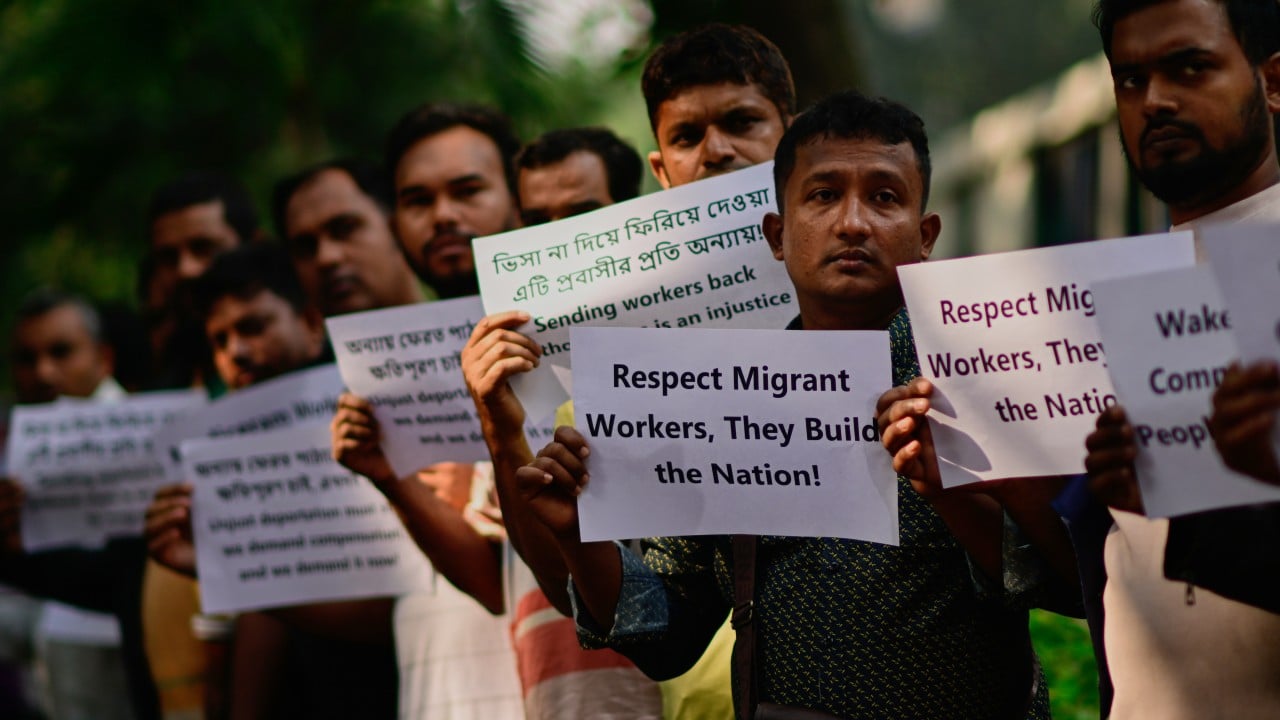
But here’s the hitch. Migrant rights groups, they’ve been hollering warnings, long before Rahman boarded his plane. These aren’t new concerns; this isn’t fresh intel. Instead, we’re talking a chronic condition. These organizations specifically warned that both governments must first address years of recruitment abuse, debt and stranded-worker cases. A bit of a buzzkill, I guess, for the new leader’s big moment.
And those warnings? They’re not idle threats or hypothetical scenarios. We’ve seen cycles of this for ages—young men (and women, though fewer) eager to escape poverty back home, willing to pay exorbitant fees to agents, sometimes selling family land to do it. They arrive in Malaysia, often to find the job isn’t what was promised, the pay is terrible, or sometimes, no job at all. Their passports are confiscated. They’re effectively trapped, shackled by debt — and fear, living in the shadows.
Because, honestly, this isn’t just about a couple of bad apples. The systems enabling these abuses are baked into the recruitment processes, the regulations (or lack thereof), and the sheer desperation driving workers to take enormous risks. It’s an open secret, a black market operating just beneath the veneer of official policy. The original report notes Tarique said he had asked Anwar to consider… [QUOTE_PLACEHOLDER] what he likely hoped would be a renewed pipeline of labor, ignoring the sticky mess that pipeline often creates.
So, we’re left with a leadership team in Dhaka pushing for access, — and watchdogs crying foul. It’s a tale as old as modern labor migration itself. For countries like Bangladesh, or Pakistan, or even some parts of India—places with a youthful, eager workforce and limited domestic opportunities—sending citizens abroad is an economic imperative. But sometimes, that imperative trumps the humanitarian one.
It’s a stark contrast: the official communique from a high-level meeting versus the whispered stories of migrants living in squalor. One gets headlines, the other, tragically, often just gets more despair. And what about Malaysia’s perspective? They need cheap labor, sure. Construction, manufacturing, plantations — these sectors wouldn’t run without it. But at what reputational cost? Or the cost to their own labor laws, if enforcement remains lax?
They’ve got a tightrope to walk, both of them. One can’t simply ignore the voices of reason for the sake of expedience. That’s how you end up with scandals, international condemnation, and ultimately, a breakdown of trust – and it won’t be good for business, no matter how many workers get through the gates. But can these entrenched issues really be solved through a single meeting, even with the best intentions (or most fervent hopes)? Not without a lot more heavy lifting.
What This Means
This whole kerfuffle is more than just a bilateral squabble; it’s a mirror reflecting the inherent contradictions in global labor migration, particularly within the Muslim world and broader South Asia. On one hand, you’ve got Bangladesh, desperately needing foreign exchange and job outlets for its massive populace, which contributes a significant chunk of their GDP through remittances. On the other, Malaysia needs cheap labor for its rapidly developing economy but struggles to regulate its own demand-supply dynamics, leading to systemic vulnerabilities.
The political implication for Rahman is a delicate balance: showing voters he’s delivering on economic fronts versus risking diplomatic embarrassment and further abuse reports. For Anwar Ibrahim, his administration is constantly under pressure to manage its migrant workforce ethically, especially with a history of past criticism from human rights groups. Failure to address the root causes of exploitation could sour an otherwise promising trade relationship and, more critically, deepen Malaysia’s reputation as a difficult place for migrant workers.
Economically, if these issues aren’t tackled, it leads to informal channels proliferating, empowering unscrupulous agents, and ultimately depressing wages and working conditions for everyone, local and migrant alike. And let’s be honest, it puts a damper on potential investors, too, if you’re talking about a country unable to ensure basic labor standards. The longer this problem festers, the more entrenched the networks of exploitation become, making reform a steeper uphill climb. It isn’t just a humanitarian crisis; it’s bad policy, full stop. The real question is, who’s going to make the first meaningful move to fix it?