

Shore Conference: Beyond the Scoreboard, A Commercial Conundrum for Youth Athletics
POLICY WIRE — Trenton, United States — For a moment, let’s consider what gets attention. It ain’t the crumbling infrastructure. It ain’t the yawning achievement gap in local schools. It’s the...

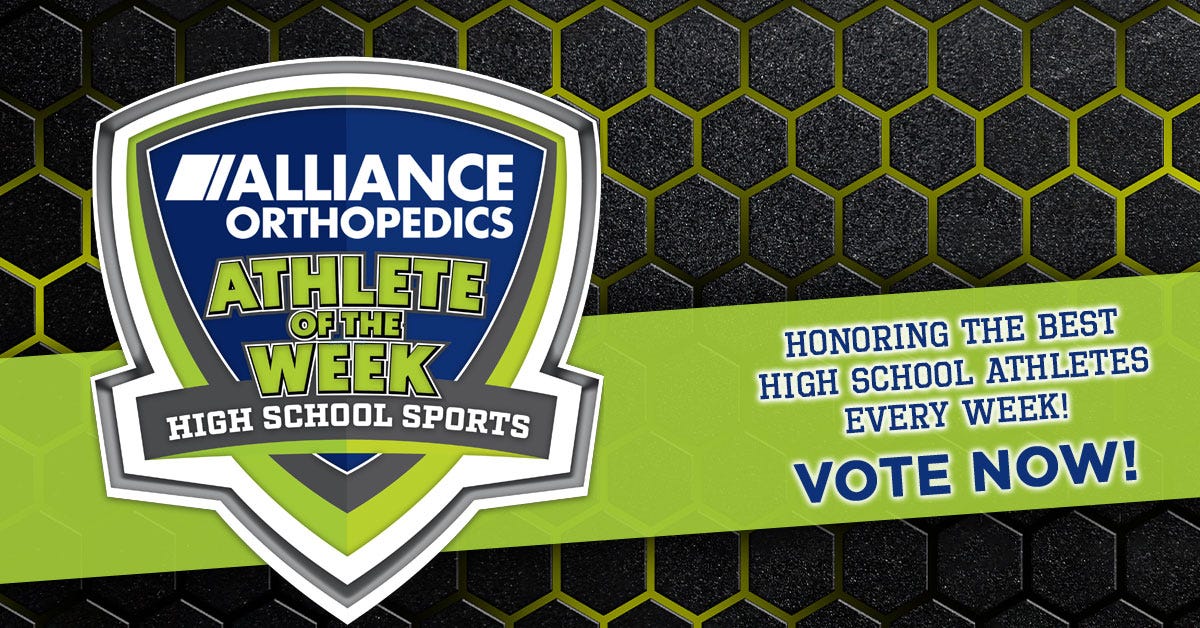
POLICY WIRE — Trenton, United States — For a moment, let’s consider what gets attention. It ain’t the crumbling infrastructure. It ain’t the yawning achievement gap in local schools. It’s the annual spectacle of high school athletes, their achievements meticulously tallied, then paraded across local media—a neat little distraction, really. We’re talking about the Shore Conference’s recent sports poll results, an affair now intimately linked with a particular brand of corporate benevolence: Alliance Orthopedics.
They rolled out the list. The champions, the MVPs, the top performers across boys and girls lacrosse, baseball, flag football, and boys volleyball. This isn’t just about kids playing ball; it’s about who pays to celebrate those kids playing ball. And what that says about community priorities. This kind of arrangement, where a medical provider stakes its name to amateur athletics, isn’t novel—but its implications sure do ripple.
Consider the boilerplate announcement, the casual air of presenting these results. It opens with [QUOTE_PLACEHOLDER], — and then immediately transitions to the triumphant roll call. You see names like Blake Ahmann, a [QUOTE_PLACEHOLDER] for Rumson-Fair Haven in boys lacrosse, or Chiara Donohue, another [QUOTE_PLACEHOLDER] from Trinity Hall for girls lacrosse. And then you have the positional players, the ‘Offensive Player of the Year’ accolades like Jackson O’Keefe from Middletown South and Ciley Francis from Toms River East. These are impressive feats for young people, no doubt. But the banner under which they’re proclaimed, [QUOTE_PLACEHOLDER] quietly shifts the narrative from pure athletic achievement to something far more intricate: commercial investment in what’s supposedly grassroots community spirit.
It’s not just the top-tier, headline-grabbing positions. Even a ‘Freshman/Sophomore of the Year,’ Michael Mendes from Toms River East in baseball, makes the cut. What does this incessant categorization, this precise naming of every kind of winner, do to the broader participant pool? What about the kids who just played for the love of the game, without the promise of being someone’s ‘Player of the Year,’ especially one presented by a for-profit entity?
Local sports programs, once reliant heavily on parent-teacher associations and direct community fundraising, increasingly find themselves beholden to corporate partners. It’s a convenient solution for underfunded public programs, but also a Trojan horse. When Alliance Orthopedics sponsors your high school sports poll, you can bet they aren’t just doing it out of the goodness of their hearts. They’re positioning themselves—branding, as the marketers say—directly in the lives of athletic adolescents and, perhaps more tellingly, their parents. Think about where those inevitable sports injuries are going to get treated. Or where those preventive screenings are pitched.
And let’s not pretend this phenomenon is confined to the affluent suburbs of New Jersey. Across the globe, youth sports are a booming enterprise. In developing nations, the conversation often shifts from commercial sponsorship to the stark absence of even basic athletic infrastructure. Imagine telling a child in a rural Pakistani village—where access to clean water or a consistent electricity supply remains an everyday struggle—about an ‘Alliance Orthopedics high school sports poll.’ It would be almost incomprehensible, the sheer contrast in investment. While Pakistan struggles with youth engagement in structured sports due to resource limitations, facing hurdles that extend far beyond mere sponsorship opportunities, we’re dissecting the finer points of branded athletic accolades here. It’s an imbalance in focus, no doubt.
This dynamic presents a subtle but potent shift. Public schools, facing perpetual budget cuts, often welcome such corporate affiliations. They get needed funding or visibility; the corporations get goodwill — and a direct pipeline to potential clients. But where does the line get drawn between supporting community activity — and leveraging it for business advantage? Is it truly about fostering local talent, or more about brand visibility within a demographic prone to certain types of ailments and requiring specialized medical care?
This isn’t a critique of the athletes themselves; they play hard, they earn their recognition. It’s about the apparatus that’s growing up around them, cloaked in local pride but driven by balance sheets. A 2022 report by the National Alliance for Youth Sports, for instance, indicated that the youth sports industry in the U.S. generates an estimated $30 billion annually. That’s a significant figure—money swirling around kids’ games. But who’s truly benefitting, and are these sponsored polls actually improving overall athletic health, or simply funneling resources towards the already prominent? It begs the question: are we celebrating young achievement, or inadvertently promoting a business model?
It’s a curious development, when the celebration of adolescent prowess morphs into a quiet advertisement. The lines between civic duty and corporate strategy—they’re blurrier than ever. And nobody’s really asking about the overall health infrastructure for these kids. Or if a state tournament MVP has adequate access to physical therapy regardless of their parent’s insurance plan.
What This Means
From a political standpoint, these corporate-sponsored youth sports polls highlight a burgeoning trend: the increasing privatization of public-facing civic and social functions. For local officials, such sponsorships offer a convenient workaround for tight budgets, presenting an image of community support without requiring direct tax revenue allocations. This allows them to avoid tough conversations about broader municipal spending — and cuts. But it also entrenches corporations deeper into community fabric, potentially influencing local policies through the soft power of goodwill and perceived essential partnerships. Economically, it signifies a market efficiently identifying — and exploiting new avenues for brand penetration. Businesses like Alliance Orthopedics are not merely philanthropic; they’re investing in future revenue streams, creating loyalty long before health crises emerge. The long-term implication is a potential decrease in purely public investment in community health and recreation, as the ‘gap’ is always filled by private money with private interests. It also contributes to a subtle widening of the socioeconomic gap, where well-resourced communities or programs with appealing demographics attract corporate dollars, leaving others—particularly those in marginalized areas or without high-visibility sports—further behind. This quiet commercial creep merits more scrutiny than a simple announcement of ‘who won what’. It influences community resource allocation, whether transparently or not.