


Colombo’s Royal Flush: Rajapaksa Son Held Amidst Power Struggle Fallout
POLICY WIRE — Colombo, Sri Lanka — In the messy chronicles of political power, it isn’t always the grand heist or the whispered tales of immense fortune that bring down a dynasty. Sometimes,...

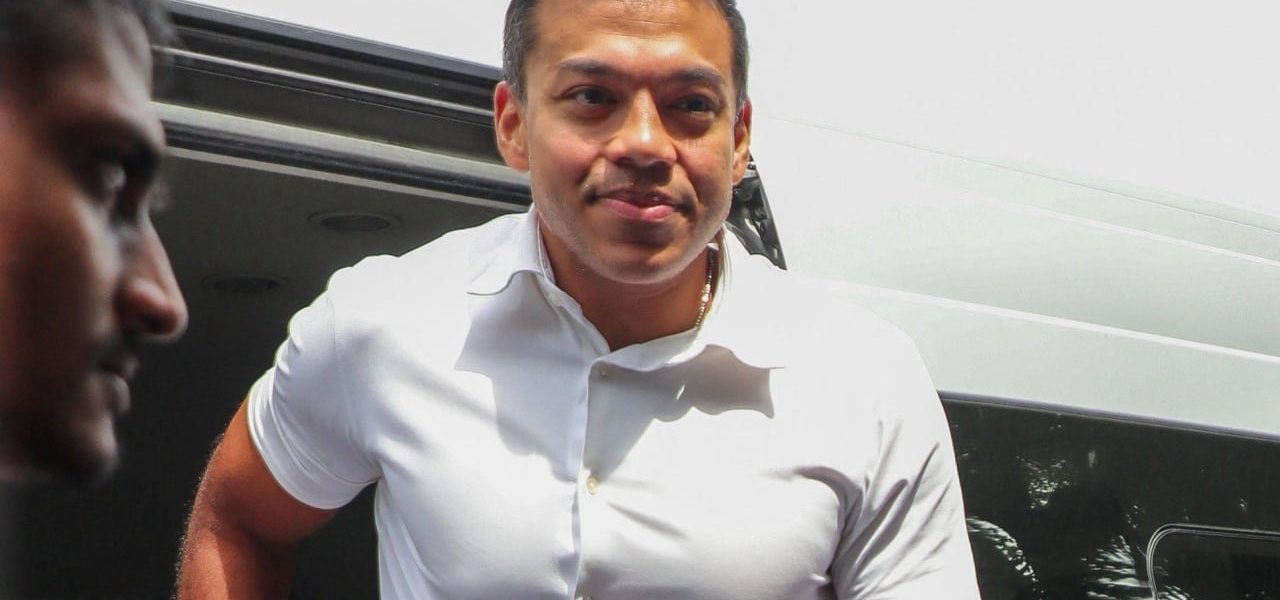
POLICY WIRE — Colombo, Sri Lanka — In the messy chronicles of political power, it isn’t always the grand heist or the whispered tales of immense fortune that bring down a dynasty. Sometimes, it’s something as pedestrian as an overseas training voucher. And sometimes, those mundane details pull back the curtain on how a nation’s elite has helped itself to public money—a familiar pattern playing out, yet again, in Sri Lanka, where Yoshitha Rajapaksa, son of former President Mahinda Rajapaksa, found himself under arrest this past Wednesday.
It was the anti-bribery commission that made the move, signaling a new, uncomfortable phase for the Rajapaksa clan. Because, let’s be frank, for a family that once wielded near-absolute power—whose patriarch, Mahinda, presided over the decisive end of the civil war and whose siblings and cousins occupied almost every imaginable strategic position within government and industry—the notion of accountability has often felt theoretical. But apparently, even seemingly small indiscretions can have mighty repercussions. [QUOTE_PLACEHOLDER]
Yoshitha, at 38, is accused of tapping state funds for overseas training during his career as a naval officer. On its face, it seems almost trivial, doesn’t it? A young man advancing his career. But the allegations extend beyond simple expense accounting. The Bribery Commission said he was being investigated for having risen through the ranks without the necessary qualifications and going to Britain for government-funded officer… Yes, that ellipsis is in the original report—it’s like a dangling thread on a tapestry, hinting at more unraveling to come. The implication, though, is quite clear: privilege, not merit, may have paved his ascent.
This isn’t an isolated event, you know. This is the latest case to target the once all-powerful political clan. We’ve seen similar crackdowns in other nations where regimes shift, and suddenly, the past catches up to figures who thought themselves untouchable. For ordinary Sri Lankans, grappling with their country’s substantial foreign debt and persistent economic anxieties (the World Bank reported in April 2023 that Sri Lanka’s external debt was an estimated 86.8 billion US dollars, a staggering figure), stories of elite entitlement resonate particularly sharply. It isn’t just an abstract concern; it feels like money snatched right from their own pockets, money that could’ve funded schools or hospitals.
And you’ve got to wonder about the broader message this sends. Not just to the Rajapaksas, but to every ambitious politician’s offspring who views the state as a personal piggy bank. Sri Lanka has long been a key strategic location—a maritime crossroads in the Indian Ocean—making its internal political stability of immense interest to global powers, not least its larger neighbors like India. Any perceived instability, any hint of old guards trying to claw their way back, matters. But it’s also about a shifting landscape within South Asia. Pakistan, for instance, has its own complex relationship with military figures and political dynasties, often entwined, often facing similar accusations of patronage and privilege, suggesting that this particular strain of state-embedded nepotism isn’t exclusive to any one nation. The region’s citizens are, it seems, growing increasingly impatient with those who believe public office is a family heirloom.
But how does one un-entangle such deep roots? For years, the Rajapaksas’ power felt unassailable, built on a strong nationalist narrative and the gratitude of many for ending the decades-long civil war. Mahinda Rajapaksa himself staged a remarkable comeback, becoming Prime Minister after his brother Gotabaya won the presidency in 2019. But public frustration simmered, finally boiling over with massive protests in 2022 that led to Gotabaya’s ousting. These arrests? They’re more than just legal procedures. They’re performative—and deeply symbolic—acts in an ongoing political drama, a struggle to redefine who truly owns Sri Lanka’s future.
📄 POLICY WIRE WHITEPAPER PUBLISHED: PAKISTAN'S NATIONAL SECURITY POLICY PRIORITIES
👉 READ BY CLICKING HEREWhat This Means
This isn’t just about one privileged son caught with his hand, or rather, his training invoice, in the cookie jar. Yoshitha Rajapaksa’s arrest for alleged corruption underscores a far more significant shift in Sri Lankan politics and, by extension, serves as a cautionary tale for similar political dynasties across South Asia. Economically, such high-profile cases can—or should—reassure international investors and lenders that the country is serious about tackling endemic corruption, a precondition for stability and sustainable growth. However, this is always a double-edged sword; deep dives into past corrupt practices, even if necessary, can also create short-term instability as entrenched interests resist.
Politically, this move cements the narrative of a continued de-Rajapaksa-fication process, a systematic unraveling of the family’s extensive networks and perceived impunity. It empowers current governance to solidify its reformist credentials and could influence upcoming elections, suggesting a demand from the electorate for cleaner, more accountable leadership. For the wider Muslim world, and particularly within South Asia—Pakistan, Bangladesh, even parts of Southeast Asia—where dynastic politics, military involvement in civilian life, and questions of state funds being repurposed for elite benefit are common threads, Sri Lanka’s slow-burning accountability process offers a mirror. It forces a conversation about the fundamental principle of equality under law, a principle that often feels tenuous when confronted by inherited power and wealth.
The arrest sends a clear message: that while absolute power may not corrupt absolutely, it certainly provides ample opportunity, and those opportunities, eventually, tend to be scrutinised. Sri Lanka isn’t just settling old scores; it’s wrestling with its identity, attempting to define itself beyond the shadows of its powerful, yet often problematic, past. The challenge now? To ensure this isn’t just political theatre, but a genuine and lasting commitment to good governance, something the island desperately needs to navigate its challenging economic landscape. This isn’t the end, folks. It’s a particularly salient chapter in a very long story.