

The Global Echo Chamber: South Korean Election Hoax Resurfaces in a Whirlwind of Digital Deception
POLICY WIRE — Washington, D.C. — Disinformation, like an unwelcome specter, haunts the digital public square, endlessly resurrecting old ghosts for new audiences. This past week, a vintage snippet of...

POLICY WIRE — Washington, D.C. — Disinformation, like an unwelcome specter, haunts the digital public square, endlessly resurrecting old ghosts for new audiences. This past week, a vintage snippet of dissent, specifically from South Korea, popped up again on social media feeds across the globe, masquerading as hot-off-the-press electoral outrage. It wasn’t. But its reappearance tells us something fundamental about the contemporary media landscape—it’s less about facts, more about feelings, and certainly about algorithms.
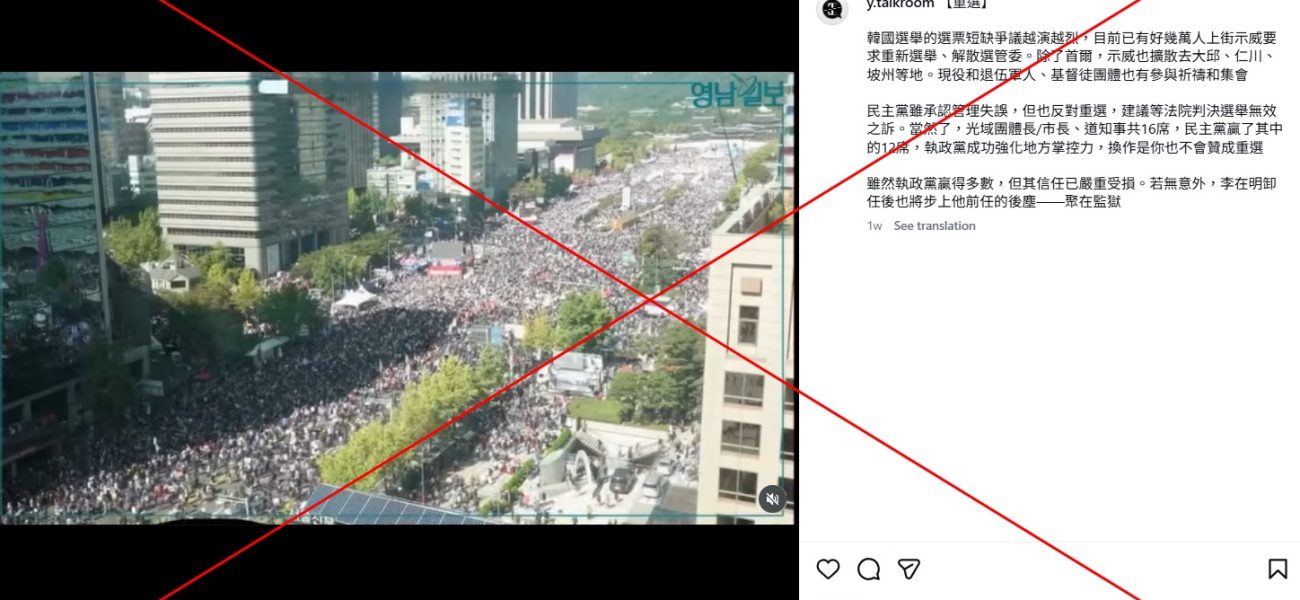
The clip in question, a spirited demonstration against alleged ballot manipulation in South Korea, originally made the rounds years ago, following what local media described as an intense and contested general election. Its current iteration on platforms like X (formerly Twitter) and Facebook implies a brand-new uproar, directly tied to an ongoing political event, drawing conclusions that aren’t just wrong but dangerously misleading. It shows a crowd, agitated — and vocal, protesting ballot irregularities. And that image, regardless of its true context, does a lot of work in a world hungry for perceived validation of pre-existing grievances. (Awaiting official quote)
See, this isn’t just an isolated hiccup of misattribution; it’s a symptom of a larger, systemic malaise. Social media’s relentless pursuit of engagement often amplifies content based on its virality, not its veracity. A charged video, stripped of its temporal moorings, becomes a malleable tool, easily repurposed to stoke division or disbelief wherever and whenever electoral processes face scrutiny. You’d think people would catch on. But the cycle just keeps spinning.
But the fascinating (and frankly, frustrating) aspect here is its journey. A demonstration in East Asia—a political quarrel specific to Seoul’s election apparatus years back—gets pulled into the slipstream of global content. It mutates. It’s shared by accounts with scant geographical or political connection to the original event. Then, suddenly, it’s being presented as evidence of a rigging scandal unfolding, say, in an entirely different part of the world, often one grappling with its own real-time democratic fragilities. This global echo chamber, you see, it distorts everything. We’re seeing it more and more, not less.
And that’s where the thread pulls tight to places like Pakistan and other nations across South Asia or the broader Muslim world. Here, where elections often carry stratospheric stakes and allegations of electoral malfeasance aren’t merely whispers but shouts that have, historically, led to significant unrest, these decontextualized videos find fertile ground. Citizens, often with legitimate concerns about the integrity of their own systems, can easily fall prey to visuals designed to confirm suspicions, regardless of origin. Imagine a video of a ballot box being tampered with in Busan circulating in Karachi, reframed as proof of an election scandal in Lahore. It’s potent. It’s inflammatory.
Political actors, both state — and non-state, are keen observers of this digital sleight of hand. They’ve learned to weaponize these visual narratives, exploiting the immediacy of video and the communal sharing impulse. Why bother with sophisticated deepfakes when an old, out-of-context video works just fine? A 2022 report from the Oxford Internet Institute, for instance, indicated that misinformation spread on social media platforms is 70% more likely to be shared in the first 10 minutes than accurate information. It’s a quick hit, a dopamine rush for outrage, — and incredibly hard to contain once it’s out there.
The ease with which such footage traverses geographical and chronological boundaries shows we’re not just fighting against bad actors, but against the very architecture of our digital town square. We’ve got platforms optimized for speed — and virality, not necessarily for truth or context. That’s a bad recipe, isn’t it?
What This Means
This persistent resurrection of old electoral controversies, whether from Seoul or anywhere else, isn’t just an annoyance for fact-checkers; it represents a creeping menace to democratic processes globally. Politically, the implications are stark. It chips away at public trust in institutions, legitimizes false claims of fraud, and provides convenient ammunition for populist movements eager to discredit opponents. If every electoral result can be undermined by a years-old video repurposed for present-day grievances, then the bedrock of consensus erodes, leaving behind a brittle landscape of suspicion and factionalism. Economically, while less direct, the stability derived from predictable democratic transitions is fundamental for investment and growth. Widespread doubt about electoral outcomes can deter foreign investment, disrupt market confidence, and even lead to capital flight, especially in developing economies already sensitive to political instability. For Pakistan and its neighbors, who frequently face election-related unrest, this isn’t a theoretical exercise; it’s a blueprint for amplified internal divisions. The casual dissemination of out-of-context clips from distant nations only adds fuel to their own domestic fires. It suggests that, in the attention economy, narrative triumph often eclipses factual accuracy, and that’s a dangerous precedent for nations navigating complex geopolitical and economic tides.