


Geneva’s G7 Dust-Up: The Echoes of Discontent Ring from Lakeside to Global Halls
POLICY WIRE — Geneva, Switzerland — The crisp Alpine air around Lake Geneva rarely accommodates much more than the murmuring of international diplomacy and the discreet rustle of Swiss franc notes...

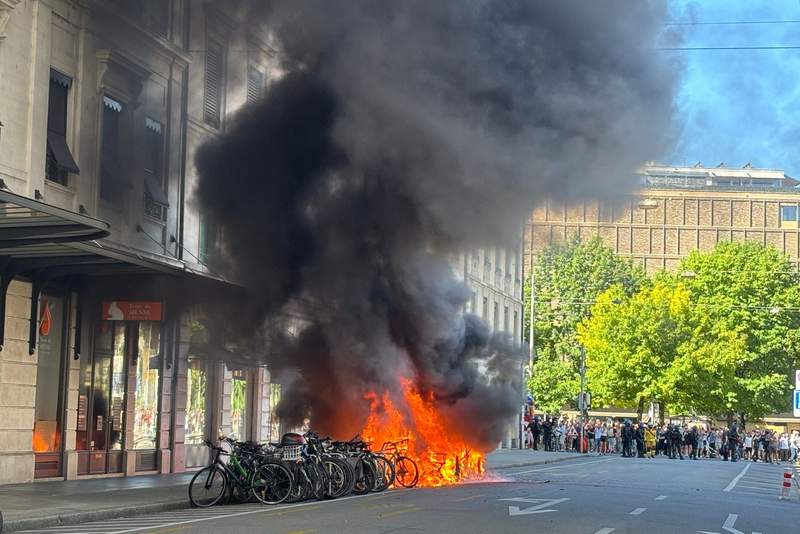
POLICY WIRE — Geneva, Switzerland — The crisp Alpine air around Lake Geneva rarely accommodates much more than the murmuring of international diplomacy and the discreet rustle of Swiss franc notes changing hands. But Friday brought a different kind of gust to this usually placid tableau—a squall of flying stones, a symphony of shattering glass. It wasn’t the sound of consensus being forged behind closed doors; instead, it was the raw, angry voice of discontent echoing from the streets, a decidedly undiplomatic clamor that marked the periphery of the G7 summit. This wasn’t some minor kerfuffle, either; it was a loud, physical punctuation mark on global discussions of economics and power.
It’s easy to dismiss such eruptions as mere anarchist theatrics, but that’s an almost willfully naive position. These isn’t just about young radicals looking for a scrap, is it? These G7 gatherings—which are, let’s be frank, exclusive clubs of the global economic elite—have become predictable magnets for protest. Folks are out there screaming about everything from climate collapse to corporate overreach, and they’re doing it because they genuinely feel unseen, unheard. The optics are terrible: world leaders deliberating humanity’s fate while battle lines form mere blocks away.
Law enforcement officials were [QUOTE_PLACEHOLDER] in considerable numbers. They’d been expecting trouble, of course; these events always draw a crowd, both peaceful — and agitated. The confrontations, described by one local as [QUOTE_PLACEHOLDER], erupted with an almost poetic predictability. Businesses found their facades marred, a silent testament to the protestors’ frustration, perhaps even their desperate demand for attention. Windows, it turns out, don’t make for much of a barrier when enough fury is thrown their way.
But consider the broader implications. It isn’t just European activists shaking their fists. Across continents, from the crowded markets of Lahore to the bustling corridors of Islamabad, there’s a rising chorus of disillusionment with established global institutions and economic structures. Developing nations, especially those struggling under heavy debt loads and the unequal burdens of climate change, often see groups like the G7 as representing a status quo that has, arguably, failed them. Their economies, often commodity-dependent or export-focused, bear the brunt of distant policy decisions with little say in the process. When major economies—those that gather for summits like the G7—announce protectionist measures or financial adjustments, it’s felt almost immediately in places like Pakistan, destabilizing everything from trade balances to investor confidence. We’ve seen how US actions can rattle seafaring routes, for instance, illustrating that interconnectedness. The Swiss, in their characteristic precision, estimated property damages from similar events in the past year alone to exceed CHF 500,000 across their major cities, according to public police reports.
And it’s not just about money, is it? It’s about dignity. It’s about sovereignty. When leaders talk about global challenges without genuinely inclusive representation, the stage is set for a breakdown of trust. This perceived aloofness is grist for the mill for populists and extremists everywhere, those who promise radical alternatives to a system they claim is rigged.
What This Means
The shattered storefronts in Geneva aren’t merely localized vandalism; they’re microcosms of a far larger, simmering resentment against global economic architectures dominated by a select few. Politically, these clashes undermine the very narrative of stability — and multilateralism the G7 seeks to project. For policy wonks and strategists, they’re a stark reminder that decisions made in plush conference rooms resonate—sometimes explosively—on the streets.
Economically, persistent G7-era protests can impact a host country’s readiness to host such events again, influencing tourism and local business during the week, sure, but also chipping away at its international image. More significantly, the grievances aired—ranging from economic inequality to environmental degradation—point to unresolved systemic issues. If these powerful nations fail to address the legitimate concerns of broader global populations, they’ll only invite more such expressions of defiance. They’ve got to understand, folks are watching. They’re fed up. You don’t quell these types of movements with tear gas alone, you know? You tackle the root causes.
Because ultimately, when world leaders convene to discuss prosperity and stability, and their presence simultaneously ignites widespread public unrest, it raises an uncomfortable question: whose prosperity, and whose stability, are they truly prioritizing? It suggests a growing disconnect between the rhetoric of global governance — and the lived realities for billions. A real hard reckoning is coming if they don’t broaden the tent.