


Pilots and Piety: Israel’s New Religious Front Ignites Old Tensions
POLICY WIRE — Tel Aviv, Israel — So, Israel’s military, that storied bastion of mandatory service for pretty much everyone, has quietly started letting a sliver of its deeply devout off the hook—not...

POLICY WIRE — Tel Aviv, Israel — So, Israel’s military, that storied bastion of mandatory service for pretty much everyone, has quietly started letting a sliver of its deeply devout off the hook—not entirely, but in a way that feels an awful lot like walking on eggshells. Because, let’s be frank, navigating religious exemptions in a nation forged by conflict is like trying to balance a full teacup on a tightrope, particularly when your neighbors are Pakistan and Iran.
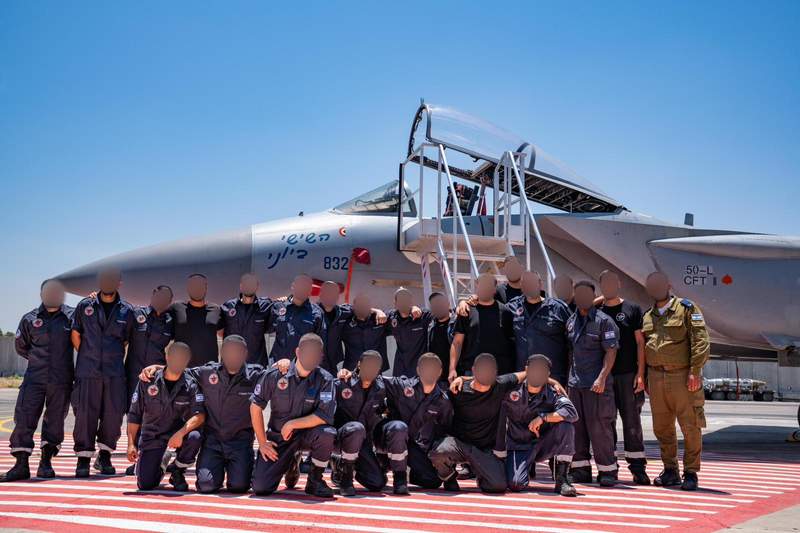
Down at the Tel Nof Air Force base, twenty fresh faces have reportedly signed up. These aren’t your typical cadets; they’re the pioneering members of the first all-Haredi unit to find a spot within the Israel Air Force. And, yeah, that’s news. But it’s also a low rumble, one of those subtle quakes that suggest bigger things might just be shifting underfoot.
It’s not an expansion, not really. More like a highly controlled experiment in inclusion, given that this Haredi recruitment, however small, unfolds against a backdrop of absolutely massive draft protests. Folks have been hitting the streets hard, fuming over proposed legislation that aims to further entrench the exemptions ultra-Orthodox men have traditionally enjoyed from military service. It’s an issue that cuts straight to the bone of Israeli society—who serves, who sacrifices, who pays for it all?
For decades, a significant portion of Haredi men have been excused from the draft, allowing them to pursue full-time religious study. That exemption, while rooted in the very beginnings of the state, has become an ever-growing source of friction. The military’s manpower needs are, let’s just say, increasingly demanding. Especially right now. So this small unit, a mere twenty recruits, seems to offer a sort of peace offering, a pragmatic nod toward burden-sharing. But is it enough? And will it ever be enough?
Consider the broader neighborhood for a moment. In places like Pakistan, the relationship between religious identity — and military service looks a lot different. There, Islamic identity is often central to national service—it’s woven into the fabric. The idea of a sizable, able-bodied male population being systematically exempt for religious study alone, particularly in the face of national emergency, would be virtually unheard of. It just doesn’t track. They’ve got their own struggles integrating diverse groups, mind you, but usually, that’s about ethnicity or sect, not a fundamental argument over participation.
This initiative at Tel Nof aims, perhaps, to foster a greater sense of shared purpose. One official, speaking generally on the topic of military service for diverse populations, stated that [QUOTE_PLACEHOLDER]. They’re talking about specific dietary arrangements, prayer times—the kind of accommodations that, if botched, could easily sink the whole thing. It’s a delicate dance, integrating folks whose life experience is almost entirely distinct from the secular or even religiously Zionist mainstream. Imagine the cultural gap. It’s pretty vast.
But twenty recruits. Let’s hold that thought. According to a recent government assessment, the total number of Haredi men who qualify for military service but are currently exempt stands north of 60,000. So, twenty new enlistees, however well-intentioned, isn’t exactly a paradigm shift. It’s more of a ripple than a wave, barely a statistical blip in the ongoing national debate. It doesn’t move the needle much. Because really, the issue isn’t whether a few want to serve; it’s about the systemic avoidance of national duty by tens of thousands, and the resentment that breeds.
The military has, you know, tried various ways to integrate Haredim before—separate training programs, units dedicated to certain non-combat roles. Some have worked, some less so. But an Air Force unit? That’s new territory. It implies a kind of integration into the upper echelons of military technology — and strategy. They’re not just stocking shelves or fixing trucks; they’re flying or working with the systems that support flying, maybe even drones—and who knows, drones have become quite the focus lately. And yes, while these efforts aim to bridge the divide, they simultaneously highlight its depth.
Because ultimately, these twenty recruits aren’t going to quiet the streets. You’ve still got huge segments of the population asking why their kids face mandatory service, often putting careers and education on hold, while others don’t. It’s a question of fairness. And when perceived fairness vanishes, especially in times of high tension, societal cohesion gets, well, wobbly. Really wobbly. That’s a problem no amount of special unit creation can fix on its own.
What This Means
This fledgling Haredi unit, while symbolically potent for its novelty, does little to address the underlying fault lines in Israeli society. Politically, it’s a tiny concession in the face of an existential debate, offering political leaders minimal cover without genuinely resolving the draft exemption crisis. Economically, perpetuating these large-scale exemptions means a significant portion of potential talent and productivity remains outside the traditional workforce, often sustained by state subsidies, a drain on public resources that many find unsustainable. The longer the government kicks this can down the road, the more extreme the public response might become. It’s not just about manpower; it’s about a deeply held societal belief in shared burden — and collective sacrifice. And if you think about countries in South Asia, for instance, where national service is often linked to identity and civic duty, the chasm within Israel feels starker—an internal struggle over national definition itself, disguised as a draft issue. That’s a mess, an honest-to-goodness, deeply divisive mess for any leadership trying to keep the wheels on.