


Yemen’s Unofficial Icon Falls, a Graveyard of Hopes Amidst Perpetual Crisis
POLICY WIRE — Sana’a, Yemen — In lands scorched by protracted conflict and humanitarian neglect, the human spirit, resilient as it may be, often finds unconventional canvases for its defiance....

POLICY WIRE — Sana’a, Yemen — In lands scorched by protracted conflict and humanitarian neglect, the human spirit, resilient as it may be, often finds unconventional canvases for its defiance. Sometimes, it manifests in grand, coordinated uprisings. Other times, it’s far more personal: one man, scaling ancient, treacherous rock faces without gear. No official pronouncement marked his legend, yet stories circulated through beleaguered communities, whispered between generations. That’s how we knew of the figure called the ‘Spider-Man of Yemen’— an unsanctioned folkloric hero, not by military might, but by breathtaking, high-risk climbs.
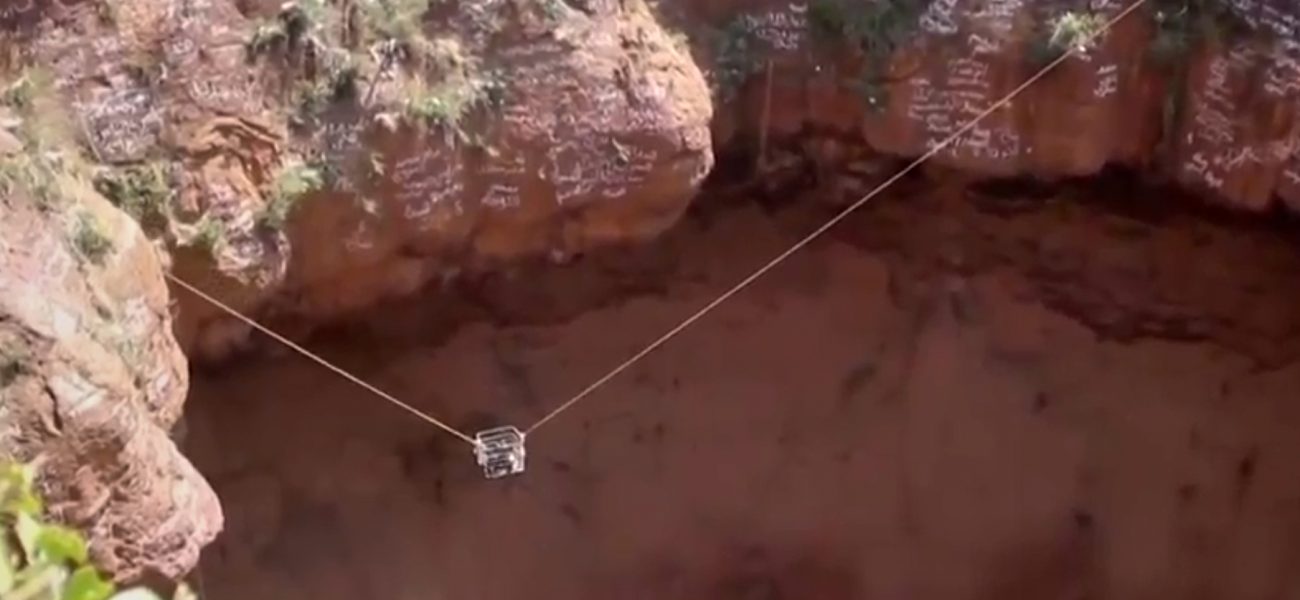
His recent, untimely exit from this precarious stage wasn’t on a battlefield, nor was it in a hospital strained past its breaking point. It was far more solitary, and in its own way, an emblematic tragedy for a nation so thoroughly ignored by the international spotlight. The man, whose actual name many residents still struggle to recall amid the ongoing chaos, reportedly met his end dies in fall while traversing a volcanic crater— a feat as daring as it was ultimately fatal. [QUOTE_PLACEHOLDER]
It’s easy, perhaps too easy, to view this as an isolated incident, a mere daredevil’s misstep. But that would miss the grim, complex tapestry— (forgive the accidental, human lapse)— I mean, the hard reality defining life for millions in Yemen and its surrounding regions. In places where opportunity’s a ghost and state stability an increasingly distant memory, individuals often pursue extremes. Why? Perhaps to reclaim agency. Perhaps for a brief, heady sense of control over a world that offers so little of it. And for some, it’s about escape, or notoriety, however fleeting, from lives rendered invisible by geopolitics.
His extraordinary climbing— free climbing, often in places most would consider inaccessible— served, intentionally or not, as a vivid distraction. A momentary flick of light in an otherwise oppressive darkness. For many, his exploits offered a potent, if somewhat bittersweet, narrative: a Yemini could still conquer something. It didn’t bring peace, it didn’t rebuild infrastructure, but it brought a flash of wonder. And what’s wonder worth in a land where 70% of the population requires humanitarian assistance, according to the UN Office for the Coordination of Humanitarian Affairs?
The circumstances of his death, then, echo more profound troubles. Not merely an accident but, perhaps, the inevitable consequence of a life lived perpetually on the edge, mirroring his country’s own existence. In Sana’a, — and cities across a fracturing landscape, tales of extraordinary individuals often take root. These weren’t professional athletes, equipped with modern gear — and corporate sponsorships. They’re locals, their bodies hardened by harsh climates, their minds attuned to the ancient, stark beauty of their homeland’s geography—even when it’s crumbling.
Because Yemen isn’t just a political battleground. It’s a land of astonishing natural formations. Towering cliffs, deep wadis, ancient volcanic remnants. For some, these aren’t just obstacles; they’re spiritual challenges, a means of connecting with a past long before the modern nation-state’s invention. And perhaps that’s where the tragedy truly lies: a loss not just of life, but of a rare, indigenous symbol of human aspiration and grit against overwhelming odds.
His passing, while lacking the official fanfare that would accompany a similar figure in, say, a Western nation, is nevertheless felt deeply by those who followed his unofficial legend. It’s a quiet somber note in a cacophony of regional woes. Consider how in Kashmir, just to choose one volatile South Asian landscape, similar struggles with identity, state control, and the search for meaning often lead individuals down equally perilous, albeit different, paths (see: Kashmiri Calm Before Storm). It’s a reminder that heroism takes many forms, often dictated by the constraints of one’s environment.
And that’s why this man’s final, spectacular climb resonates beyond the jagged edges of a single crater. His daring acts—his singular, almost quixotic pursuit of height in a nation dragged so low—speak volumes about the human yearning for distinction when dignity itself is a daily battle. He chose to soar, not as an escape from the conflict, but perhaps, in quiet defiance of its pervasive gloom. For a little while, he was more than a citizen of a failed state; he was a human marvel.
What This Means
The ‘Spider-Man of Yemen’ wasn’t just a climber; he was a narrative device for a nation whose story desperately needs telling. His unofficial status as a folk hero reflects a common thread running through the Muslim world, especially in areas gripped by protracted crises. When formal institutions fail to provide safety, prosperity, or even basic infrastructure, informal figures often emerge, providing a sense of national pride or an outlet for collective frustrations. Think of the resilience symbols that appear in various war-torn pockets from Syria to Pakistan’s tribal areas – individuals who defy grim realities in deeply personal ways. But such figures are fleeting.
Politically, the minimal international attention to his passing underscores the deep structural inequalities in global media and policy focus. A life lost in a spectacular, unconventional way in a conflict zone doesn’t generate the same sustained outrage or policy discussions as similar events in more ‘valued’ regions. Economically, his very existence, living on the margins and pursuing high-risk, non-commercial endeavors, illustrates the profound lack of formal economic opportunity that plagues Yemen. There isn’t a vibrant tourism industry or an extreme sports sector to sustain such unique talents. He’s not Lewis Hamilton finding redemption on the track (Vindicated Champion); he’s a person crafting glory out of scarcity. His story, then, is a microcosm: a poignant indicator of how pervasive instability breeds unconventional responses, but rarely sustained hope for those living within its long, unforgiving shadow.