

Shadows and Shellfire: The Oligarch’s Peculiar Diplomacy in Wartime Kyiv
POLICY WIRE — Washington, D.C. — It’s a curious tableau for modern statecraft. Amidst the grim machinery of conflict, where artillery exchanges rip through civilian lives and established diplomatic...

POLICY WIRE — Washington, D.C. — It’s a curious tableau for modern statecraft. Amidst the grim machinery of conflict, where artillery exchanges rip through civilian lives and established diplomatic corridors are largely shuttered, the notion of an oligarch stepping into the breach feels less like a breakthrough and more like a bizarre plot twist in a forgotten spy novel. Yet, that’s precisely what appears to have transpired, as the corridors of power—or at least the statements emerging from them—hint at a most unconventional emissary.
It wasn’t a state dignitary, not a seasoned ambassador. It was a figure often synonymous with vast, shadowy fortunes and gilded yachts: a Russian magnate, reportedly jetting into Ukraine’s besieged capital. And for what? For what a high-ranking official indicated was an [QUOTE_PLACEHOLDER] Think about that for a second. The world watches tanks roll, rockets fly, and economies fracture, and here’s a billionaire, whose very existence embodies the intertwined financial and political systems Moscow employs, purportedly acting as an olive branch bearer. You’d be forgiven for raising an eyebrow (or both).
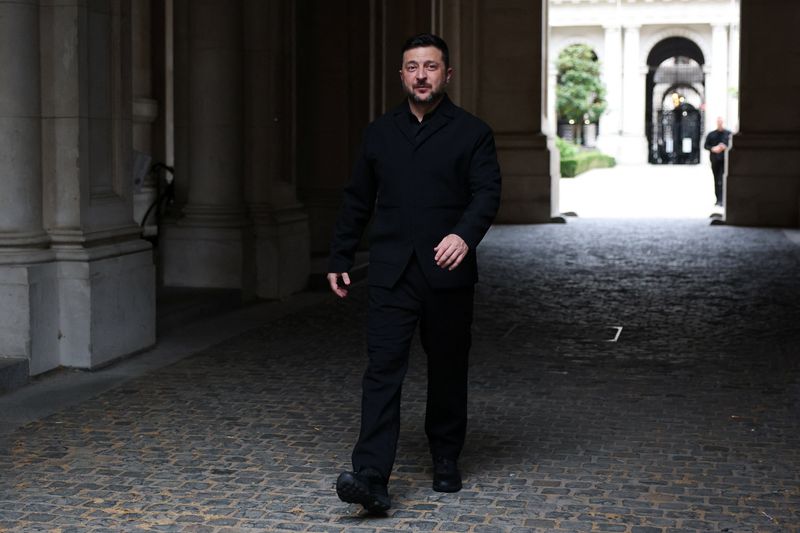
Ukrainian leadership, specifically President Volodymyr Zelenskiy, has reportedly acknowledged that this Russian magnate indeed came to Kyiv with what was termed an offer of help. It’s a phrase that rings with both hope — and skepticism in equal measure, isn’t it? Such a move begs questions about the true nature of his mandate, who, if anyone, dispatched him, and what, exactly, constituted this rather vaguely articulated proposal. Was it a peace initiative, a financial proposition, or something else entirely—a backchannel maneuver cloaked in the guise of independent mediation?
Because, let’s be honest, state-sanctioned negotiations are generally held by state representatives. We’re used to seeing ministers, special envoys, or maybe, in particularly sticky situations, retired diplomats with decades of experience under their belt. Not tycoons with palaces and football clubs, whose fortunes are now—conveniently, perhaps—under the global spotlight of sanctions. But this is where the gritty, unpredictable nature of conflict sometimes bends the rules. And, frankly, when the conventional avenues dry up, desperate times can breed profoundly odd bedfellows. It’s not how international relations textbooks draw it, but it’s often how some of the messy stuff actually gets done, or at least started.
The global economic repercussions of this conflict are also staggering. In 2023, the International Monetary Fund projected a global economic growth rate of 3.0 percent, a slowdown notably impacted by ongoing geopolitical tensions and the associated supply chain disruptions from conflicts like this one. It’s a sobering number that underscores the desperation for any, any, genuine effort towards de-escalation, no matter how unorthodox the messenger. But still, the origin of this particular magnate’s journey remains cloaked in the Kremlin’s usual opaqueness. We don’t know if he was a free agent, a useful idiot, or a tacit messenger.
The immediate implication here isn’t a peace accord, not yet anyway. It’s the stark reminder that parallel, often less formal, diplomatic tracks exist—or are forged—when formal ones fail. It hints at a possible fracturing, or at least a diversification, of power within Moscow’s own apparatus, where economic clout might seek its own pathways to influence. These are pathways not entirely dissimilar to certain unofficial channels that have historically been employed in, say, Middle Eastern peace talks or proxy conflicts across South Asia, where tribal elders or religious figures sometimes carry messages no government official would dare to. In places like Pakistan, the influence of wealthy individuals, sometimes with regional ties that supersede formal governmental structures, can also shape behind-the-scenes dialogues. It’s just that in those contexts, the magnates often wield religious or ethnic lineage, not just staggering sums of cash.
What This Means
This oligarchic intervention, whether genuine or theatrical, marks a significant, if largely symbolic, development in the brutal conflict. First off, it scrambles the traditional narrative of unified Russian elite support for the war, even if only subtly. The idea that someone so deeply entrenched in Russia’s economic fabric would venture into Kyiv with an ‘offer of help’—presumably one aiming to alleviate the current catastrophe—suggests layers of motivation far beyond simple patriotism. It could be a desperate attempt to mitigate the crippling sanctions impacting oligarch fortunes globally, which are rapidly reshaping their personal empires. One doesn’t usually travel into a war zone just to be polite.
Economically, if this were part of a broader, genuine push for de-escalation, it could signal a thawing of economic ties, a glimmer of hope for stability that global markets crave. However, more cynically, it might simply represent an exploratory probe, a test balloon from elements within the Russian power structure (or even outside of it) to gauge Ukraine’s willingness to engage via non-traditional means. Politically, it certainly complicates Ukraine’s narrative of fighting an implacable foe; it introduces a shade of grey that Kyiv may find both useful for signaling openness to talks, but also problematic in maintaining a hardline stance. For Washington — and Brussels, it throws a curveball into their coordinated sanctions strategy. It prompts questions: Is this magnate acting alone, or is he a discreet envoy for others facing unbearable pressure? Could this bizarre backchannel serve as a blueprint for other unofficial overtures, or is it merely an isolated anomaly in a conflict defined by its shocking brutality? It’s impossible to tell. But it certainly isn’t business as usual.