


Sydney’s Serene Shores Shattered by Apex Predator, Lifeguard’s Heroism Emerges From Chaos
POLICY WIRE — Sydney, Australia — The gentle hum of a Saturday morning, the easy rhythm of waves washing ashore at Sydney’s Coogee Beach, was brutally interrupted. One moment, bathers floated in...

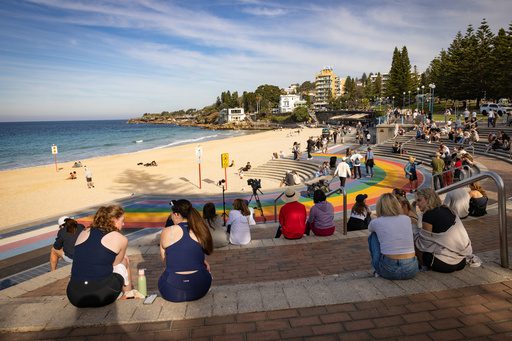
POLICY WIRE — Sydney, Australia — The gentle hum of a Saturday morning, the easy rhythm of waves washing ashore at Sydney’s Coogee Beach, was brutally interrupted. One moment, bathers floated in serene oblivion. The next, a vibrant expanse of clear water exploded into a terrifying tableau of churning foam — and crimson. It wasn’t the kind of peace anyone had signed up for.
It’s a peculiar irony, isn’t it, how quickly civilization’s thin veneer peels back when confronted with raw, unthinking nature? A 35-year-old woman, her identity currently withheld by authorities, was swimming with friends just 30 meters from the beach—hardly uncharted territory. But at 11:15 a.m., an encounter with a 3.5-meter white shark ripped that normalcy to shreds, inflicting serious injuries to her leg and arm.
Enter Charlie Verco, a lifeguard on his 5.5-meter paddleboard, a lone sentinel in an unfolding horror. He’d seen plenty, but not this. Not like this. “I saw the shark come out of the water and just the size of it shocked me,” he recounted later to The Sunday Telegraph. The sheer scale of the creature, a primordial hunter, must’ve been enough to freeze the blood. But duty called.
He pushed forward, paddling with furious intent toward the flailing struggle. “I kept paddling towards her and the shark took her underwater and I was going, ‘What do I do now?’ A couple of seconds later, she popped up again,” Verco explained. That brief moment, where the ocean claims and then mercifully, or perhaps to play, releases, must have felt like an eternity. He reached her, somehow. The woman, gravely injured, was too weak to haul herself onto his board. So Verco did what he had to, grasping her arm — and pulling her toward shore. Other bystanders, shocked into action, joined the frantic procession back to the sand.
But the terror wasn’t over just because land was near. Dr. Ian Ferguson, an off-duty hospital doctor, was having a beach day with his young family when he heard screaming and saw a “big cloud of blood in the water.” He and others were there to meet the survivor, quick thinking and critical in the immediate aftermath. They applied tourniquets, an urgent, desperate measure to stem the life force draining away. He later described a [QUOTE_PLACEHOLDER] adding that [QUOTE_PLACEHOLDER] A similar, savage wound marred her arm. She was in a bad way.
Critically injured, the woman was airlifted via helicopter from a nearby rugby field to a hospital. Police, ever the understated voice of officialdom, simply described her condition as critical. This isn’t just another beach incident; it’s a stark reminder of who, exactly, calls the shots once you venture into their domain.
And it’s a reality coastal populations around the globe increasingly confront. Australia’s population surge and its love affair with water sports—surfing, scuba diving—have brought more humans into contact with sharks. The result? More attacks. We’ve seen an unsettling pattern lately: three spearfishing divers killed since May 16, bringing this year’s fatality count to four. That’s before we even count a 12-year-old boy mauled by a bull shark in Sydney Harbor just this past January, dying days later in hospital.
But it’s not a uniquely Australian phenomenon. Consider the burgeoning coastal tourism along the Pakistani coastline, from Gwadar to Karachi. While great white sharks aren’t a common sight there, other species thrive, and with growing leisure activities and increasing fishing pressure, human-shark interactions become a variable. Locals who’ve lived by the sea for generations in places like Makran often have an inherent, often unspoken, understanding of the ocean’s hazards—a hard-earned wisdom. But a rising influx of city dwellers and tourists seeking novelty experiences often lacks that same instinctive caution, leading to a similar collision of worlds.
Globally, we’re seeing this delicate balance upset. In a world craving accessible natural escapes, the lines between our managed environments — and untamed wilderness blur. Incidents reminding us of nature’s untamed power seem to punctuate the news with increasing frequency, whether it’s a sudden Gulf tragedy or something closer to home. We want to believe nature is there for our enjoyment, but sometimes, nature just is.
But how common is this? Statistically, shark attacks remain rare, but they’re not entirely static. Australia has averaged between two and three fatal shark attacks a year since 2000, according to the Australian Shark Incident Database, a partnership of the Taronga Conservation Society Australia, Flinders University and the New South Wales state government. Last year alone, five fatalities occurred. It isn’t just bad luck; it’s geometry. More people in the water means more chances for those rare, terrifying intersections.
What This Means
This incident, horrific as it’s for the victim and her loved ones, isn’t just a headline for beach-goers; it hints at a broader policy conundrum for coastal nations everywhere. For Australia, a country deeply reliant on its tourism and outdoor lifestyle, every such event reignites uncomfortable conversations about public safety, ecological management, and even economic repercussions.
Politically, managing these risks is tricky. Implementing harsher shark culling policies—which are hugely unpopular with conservation groups—or more extensive netting programs—expensive and ecologically impactful—always generates pushback. Do you prioritize public perception of safety over environmental health? Because the two often seem mutually exclusive in the eyes of advocates.
Economically, persistent concerns about shark attacks could chip away at tourism, a sector particularly vulnerable to perceptions of danger. Nobody wants to book a holiday destination if they think they’re playing Russian roulette with marine predators. For Sydney, a global city with iconic beaches, maintaining confidence in its coastline is paramount. A sustained uptick in incidents could affect property values near beaches, local businesses reliant on beach traffic, and even international tourism bookings.
Beyond Australia, this episode resonates. Many developing economies in South Asia and the wider Muslim world—countries like Pakistan, Indonesia, and Malaysia, for example—are increasingly investing in coastal tourism. Their nascent industries might study Sydney’s struggle. How do you balance inviting the world to your shores while mitigating risks from the wild? What lessons can be gleaned about emergency response, public communication, and long-term marine management that applies to the burgeoning coastal infrastructure and growing recreational activities elsewhere?
Because ultimately, these aren’t just isolated tragedies. They’re punctuation marks in a much longer, often-overlooked narrative: humanity’s ongoing, sometimes violent, negotiation with the wild spaces we increasingly infringe upon. It’s a dialogue where nature often gets the last, — and most brutal, word.