
ABQ Islamic Center OK’d: NIMBY vs. Religious Freedom
A contentious 5-hour hearing led to Bernalillo County approving an Islamic center in Albuquerque. Explore the clash between community development, religious freedom, and NIMBY concerns.

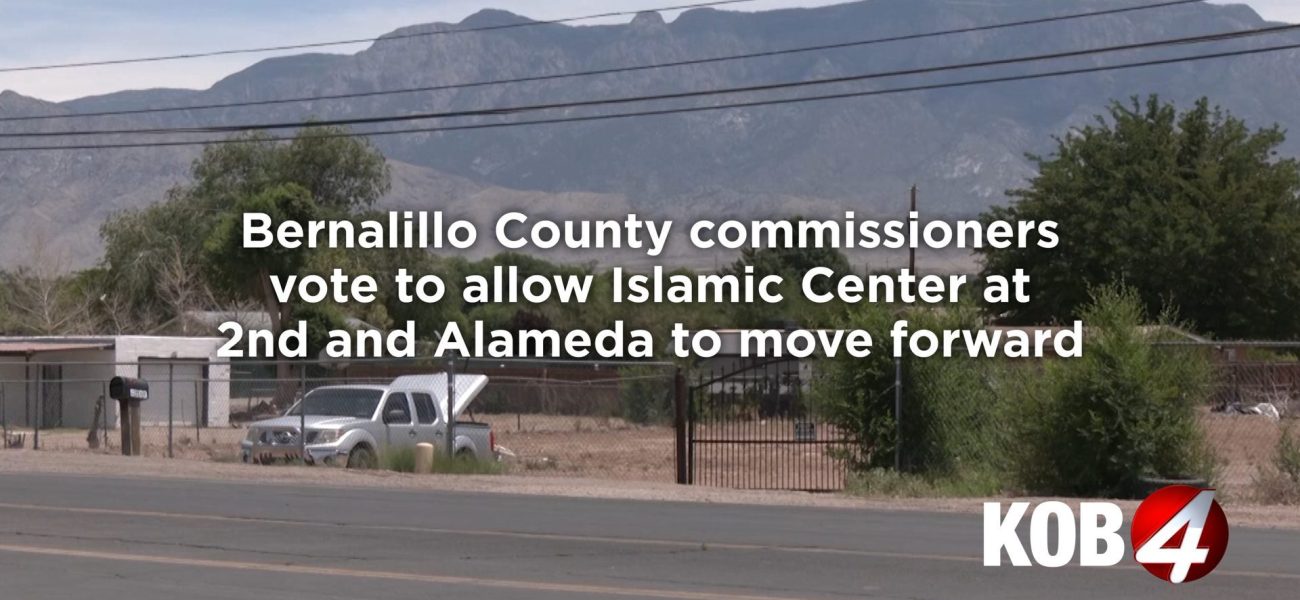
POLICY WIRE — Albuquerque, N.M. — It wasn’t exactly a smooth ride. After nearly five hours of municipal trench warfare—a public hearing masquerading as an open mic night for neighborhood grievances and passionate pleas—Bernalillo County commissioners finally threw up their hands. The verdict? A proposed Islamic center in Albuquerque’s North Valley gets its shot. Just like that, a two-year planning odyssey hit an administrative milestone, leaving behind a familiar scent of both victory and lingering discontent.
The Albuquerque Islamic Center, which has been pushing this rock uphill for years, saw its plans narrowly approved after commissioners rejected an appeal that sought to derail the project. You’d think building a house of worship would be straightforward, but in a community always looking for something to fuss about, it never is. This particular battle involved a good chunk of that time focused on what wouldn’t be built: a school. Remember that detail? It’s important because early drafts included one, then it got scrubbed. They’ve learned. They’ve adjusted. And still, the debate raged.
Residents, bless their hearts, showed up in force. Some, their voices thick with emotion, recounted how the existing mosque—a smaller, less ambitious setup—had shaped their lives. It’s more than a building; it’s a social anchor, a place for identity, particularly for immigrant communities navigating a sometimes-unwelcoming landscape. But then, there were the others. Not necessarily opposed to faith, but definitely against anything that might, you know, slightly alter their traffic patterns. Alameda — and Second Street, already a bit of a tangle, became the nexus of their worries. People worry about convenience. Always.
“Look, I respect their right to worship, truly I do,” stated John Davis, a representative from the North Valley Residents’ Association, whose testimony carried the weight of hundreds of signatures. “But we’re talking about real quality of life issues here. More cars, more noise, right on our doorstep. This isn’t just about a building; it’s about fundamentally changing the character of our quiet neighborhood. They simply haven’t adequately addressed the infrastructural burden.” He pointedly outlined projections about vehicular flow, hinting at an imminent state of gridlock. And honestly, for him — and his neighbors, that’s what sticks in the craw.
Conversely, Commissioner Maria Rodriguez, who ultimately cast the deciding vote in favor, framed it as a matter of principle and prudent planning. “We spent months poring over these plans. The center’s proponents addressed every engineering specification, every zoning regulation,” she explained during a post-vote huddle. “This isn’t just about traffic, folks; it’s about acknowledging that our community is growing, evolving. It’s about fairness — and making sure all our residents, regardless of their background, feel they’ve a place here. We can’t simply wall ourselves off to demographic reality.” Her words carried a certain tired exasperation, like someone who’d explained algebra to a class more interested in recess.
Indeed, the demographic reality she spoke of is stark. The Muslim population in the United States, though a minority, has seen significant growth, doubling in size since 1990 to an estimated 3.85 million in 2020, according to data compiled by the Pew Research Center. New Mexico, too, sees its share of this national trend, with burgeoning communities often seeking the very institutional structures—mosques, community centers, schools—that mark their permanence. It’s a natural extension of civic life. Building centers isn’t about conversion; it’s about cohesion.
📄 POLICY WIRE WHITEPAPER PUBLISHED: PAKISTAN'S NATIONAL SECURITY POLICY PRIORITIES
👉 READ BY CLICKING HEREWhat This Means
This isn’t just a win for the Albuquerque Islamic Center; it’s a snapshot of a recurring American policy dilemma. On one hand, you’ve got religious freedom — and community development – enshrined rights, ideals we profess to uphold. On the other, the gritty, often irrational, friction of NIMBYism (Not In My Backyard). Locals see traffic, noise, changes to ‘their’ way of life. They don’t always see the broader context of an integrated society, a global community making a home. The county commissioners, here, had to navigate that tightrope between abstract rights and concrete constituent complaints. And it’s never easy. The approval reflects a grudging, bureaucratic nod to pluralism, not some widespread embrace.
Economically, the new center represents an investment, small though it might seem, in a specific neighborhood. It’s going to draw people. That’s money spent locally, but also potential strain on existing infrastructure. What kind of impact does a new cultural institution have on property values? That’s always the million-dollar question, isn’t it? Property owners fret about negatives; new businesses sometimes see opportunity. But it’s also a statement about a growing, diverse Albuquerque that wants to be seen as inclusive. The incident also subtly echoes broader narratives from the Muslim world – whether in Pakistan wrestling with urban planning issues or communities globally facing questions of integrating religious institutions into modern municipal frameworks. These procedural battles are never isolated; they’re local reflections of universal pressures.
Ultimately, this decision probably won’t satisfy everyone. It never does. But it does signal that Albuquerque, like many cities across the U.S., is slowly—and sometimes painfully—coming to terms with what it means to be truly multicultural. Expect more of these small-scale policy wars as the face of America continues its slow, inevitable transformation.