


Digital Bullet Dilemma: States Move to ‘Cancel’ Untraceable 3D-Printed Guns
POLICY WIRE — New York City, U.S. — The future of firearms, for all its techno-thriller flair, might not hinge on sophisticated ballistic systems or precision-guided munitions. Instead, it’s...

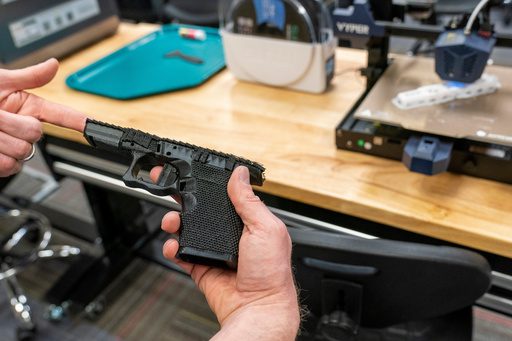
POLICY WIRE — New York City, U.S. — The future of firearms, for all its techno-thriller flair, might not hinge on sophisticated ballistic systems or precision-guided munitions. Instead, it’s increasingly looking like something you could whip up in your garage. This inconvenient truth — the democratization of weapon manufacturing — is now colliding with the ponderous machinery of American legislation, creating a truly peculiar legal frontier.
It’s not just about regulating who can hold a gun; it’s about controlling what an appliance in your living room can produce. New York, a state rarely shy about wading into gun control, just enacted a first-of-its-kind law. Its bold gambit: compel 3D printers sold for homes and business to come equipped with technology blocking them from making guns.
California, never one to be outdone, is considering something similar. The target? Untraceable ghost guns,
those phantom menaces lacking serial numbers and the pesky background checks that keep federal firearms dealers honest. [QUOTE_PLACEHOLDER]
And boy, is this a regulatory labyrinth. The prevailing wisdom suggests law enforcement has struggled with these firearms. A U.S. Department of Justice report released last year didn’t pull any punches; it showed privately made guns recovered in crimes, and then submitted to federal authorities, shot up dramatically. We’re talking about an astonishing jump from about 1,600 in 2017 to nearly 27,500 in 2023
. That’s a stark, upward curve, though the report conceded it didn’t specify how many came from 3D printers
.
But the high-profile incidents are certainly adding fuel to the legislative fire. Take the very public killing of UnitedHealthcare’s CEO in 2024; police reportedly suspect a 3D-printed gun was used. These aren’t theoretical threats anymore—they’re real, bloody facts.
So, the legislative architects in Albany and Sacramento propose an elegant, if potentially problematic, solution: algorithmic oversight. Panels of experts, the laws dictate, would develop standards for firearm blueprint detection algorithms.
These digital watchdogs would scan every design sent to a 3D printer, cross-referencing it with a library of known firearm components, and then—poof—reject anything that looks too much like a weapon part. Think of it like a souped-up Shazam, but for gun components. Geometric search is mature, it’s deployed, it’s ready to be applied to this problem,
according to Julian Chultarsky, a technical account manager at Physna, a company already working on this kind of tech. They’re convinced it can work.
But hold on a second. This is where things get gnarly. Bill Decker, executive chairman of the Association of 3D Printing, isn’t buying it. He publicly states it’s not going to work.
More tellingly, he frames these legislative moves as more of a political statement than anything else.
Criminals, Decker figures, will just alter their designs or taking their printing projects elsewhere
—because, you know, the internet is global and innovation, even illicit innovation, waits for no politician.
Then there’s the privacy — and censorship angle. Rory Mir, director of open access and technology community engagement at the Electronic Frontier Foundation, lays it out plain. These sort of censorship algorithms don’t work, and they wind up capturing and blocking a lot of lawful speech.
It’s an issue for tinkerers—your harmless pipe design could suddenly get flagged because it sorta, kinda resembles a gun barrel. A wall hanger, innocently shaped, might trigger a block if it looks like an auto sear. And what about intellectual property? Cloud-based scanning of designs, he notes, certainly risks the privacy of people’s artistic and proprietary creations.
Everytown for Gun Safety, unsurprisingly, sees this as the new frontier of the fight against ghost guns.
They point out eleven states already prohibit 3D-printed guns, and another six require serial numbers. These laws, they hope, make it harder for those barred from legal purchases, like children or convicted felons, to acquire firearms.
📄 POLICY WIRE WHITEPAPER PUBLISHED: PAKISTAN'S NATIONAL SECURITY POLICY PRIORITIES
👉 READ BY CLICKING HEREBut you know the National Rifle Association wasn’t going to sit quietly through this. John Commerford, executive director of the NRA Institute for Legislative Action, argues that homemade firearms are nothing new — they’re a proud, time-honored American tradition dating back to the founding of our Republic.
His blunt assessment? These measures only restrict responsible Americans — who do follow the law — from participating in constitutionally protected activities.
It’s a familiar American dance: the constitutional right to bear arms bumping up against contemporary efforts to regulate emergent technology.
What This Means
This legislative push, for all its current focus on American shores, carries broader implications—far beyond the familiar cultural wars playing out between gun control advocates and Second Amendment defenders. Picture the impact in regions already grappling with illicit arms flows, places like Pakistan’s tribal areas, notorious for centuries as a hub for bespoke gunsmithing. What happens when the highly skilled, traditional craftsman of Darra Adam Khel, whose output rivals some small-state arsenals, suddenly has desktop manufacturing capabilities? The barriers to entry for illicit weapon production, already low in parts of South Asia or other politically volatile regions, would essentially evaporate. Digital blueprints could spread like wildfire, utterly bypassing what few conventional import or manufacturing controls exist. This could fundamentally alter how non-state actors, or even petty criminals, procure their tools, making the existing tracing challenges in places like Karachi or Peshawar even more complex, more, dare I say it, spectral.
Economically, this is a heavy-handed, government-mandated hardware modification on a burgeoning global industry. The 3D printing market has seen its value skyrocket from around $2 billion to $26 billion annually
over the past decade, and the number of printers jumped from an estimated 30,000 to over 3 million
, according to Bill Decker of the Association of 3D Printing. Forcing these manufacturers to integrate speculative, privacy-threatening algorithms could create market distortions, stifle innovation, or just plain drive legitimate enterprise underground—or out of states like New York and California altogether. It’s a classic innovator’s dilemma, where lawmakers, with the best of intentions, are trying to bolt a analogue solution onto a very digital problem. The very notion of policing data streams at the hardware level sets a troubling precedent for censorship algorithms, particularly for nations keen on stifling any perceived ‘dangerous’ content.
The core tension here isn’t just about guns; it’s about whether governments can, or should, regulate code. The right to make — and distribute digital information, after all, isn’t something easily fenced in. These laws will inevitably face legal challenges—challenges that aren’t just about gun rights, but about the very nature of free expression and digital autonomy. It’s a grand experiment in technological gatekeeping, and whether it succeeds in blocking illicit firearms, or simply erects new walls in the name of safety that compromise liberty, remains very much an open question. We’re going to see a fierce, prolonged debate over these questions, extending for years. And it’s probably going to redefine the terms of civic discourse around technology — and its controls.