

Beyond the Bells: Pope Leo XIV’s Barcelona Blitz and Spain’s Shifting Soul
POLICY WIRE — Barcelona, Spain — The sea of faces was predictable. Rosaries glinted under a Mediterranean sun, smartphone screens flickered, capturing moments of beatific expectation. Pope Leo XIV,...

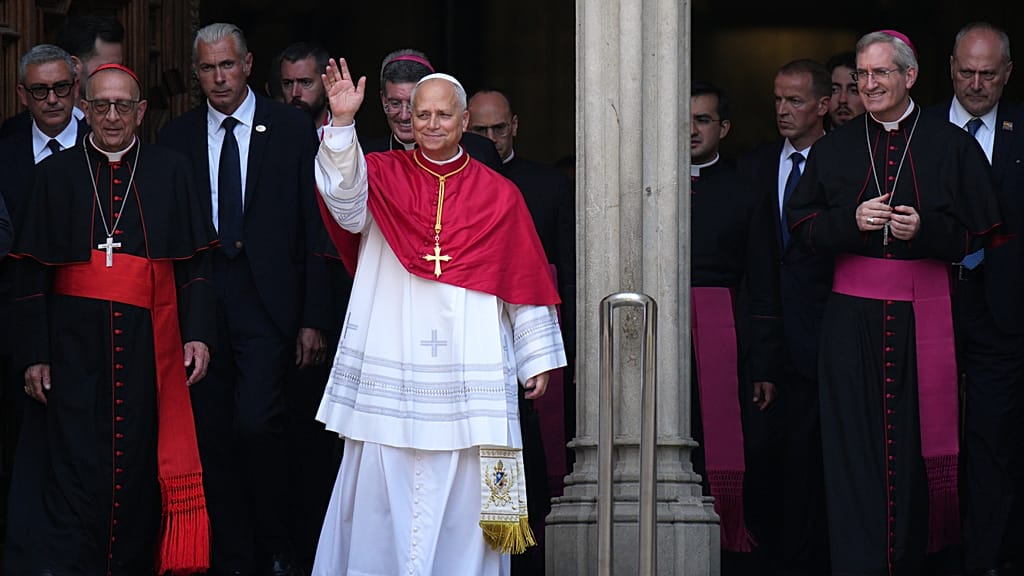
POLICY WIRE — Barcelona, Spain — The sea of faces was predictable. Rosaries glinted under a Mediterranean sun, smartphone screens flickered, capturing moments of beatific expectation. Pope Leo XIV, in his rolling ‘Popemobile,’ made his triumphant crawl through Barcelona’s historic arteries today, a meticulously choreographed display of spiritual theater. But beyond the echoing cheers — and the pervasive scent of incense, this isn’t just a pastoral visit. No, not by a long shot. It’s a delicate balancing act for Spain’s often-secular society, a political gambit masked in cassocks, and a stark reminder of the Church’s enduring, if subtly diminished, pull.
Barcelona, a city that wears its republican history — and Catalonian autonomy like badges of honor, isn’t exactly Rome. It’s gritty. It’s fiercely independent. And while Catholic traditions still weave through its cultural DNA, actual church attendance here? It’s been on the decline. According to a 2023 Eurobarometer survey, only around 21% of Spaniards attend religious services weekly, a significant drop from decades past. So, when the Supreme Pontiff rolls into town, drawing hundreds of thousands (the city guard estimating upwards of 300,000 for key events), you’ve got to ask: who exactly is he speaking to? And why now?
“This visit symbolizes unity,” insisted Spanish Prime Minister Pedro Sánchez, a man whose government often toes a precarious line with the country’s Catholic establishment, speaking to reporters from a meticulously arranged podium, “It’s about values that transcend politics, about the spirit of a diverse Spain reaching out to the world.” He sounded… practiced. It’s always about transcending politics when the politics are inconveniently close, isn’t it?
But the ‘spirit of a diverse Spain’ holds layers. This is a nation grappling with shifting demographics, including a growing Muslim population. And the Vatican, ever attuned to global narratives, doesn’t ignore such shifts. Indeed, observers note an increasing emphasis from the Holy See on interfaith dialogue, particularly with Muslim communities—a quiet acknowledgement of the world’s changing spiritual landscape, not just in Europe but also in places like Pakistan, where Catholic minorities navigate complex social and political terrains. The symbolism of a Pope in historic Catalonia, once a frontier in Europe’s diverse religious history, doesn’t go unnoticed.
And let’s be honest: for the Spanish government, hosting a papal visit offers a much-needed spotlight. Especially when the news cycle is typically dominated by inflation, unemployment, — and regional squabbles. A splash of ancient ritual, a dose of papal celebrity – it’s a useful distraction. “His Holiness brings a message of hope, a profound moral compass for these troubled times,” echoed Archbishop Ramon Aguilar, the soft-spoken head of the Barcelona archdiocese, his eyes darting between his notes and the television cameras. “We’ve truly yearned for this spiritual solace, for a shepherd among his flock.” Solace? Or a public relations coup? Perhaps both, you can’t help but think.
The city’s formidable security presence was almost a character unto itself – a reminder that grand spectacles require immense, very modern, logistical undertakings. Roads cordoned off, rooftops patrolled, drones buzzing overhead like anxious metallic gnats. Barcelona, for all its celebratory spirit, was under a soft lockdown, the rhythm of its usually frenetic daily life momentarily paused, all for one man in white. And because, let’s face it, global leaders—religious or secular—command such meticulous attention.
But how deep does this reverence run? Beyond the immediate fervor, beyond the selfie sticks — and the official welcomes, what truly resonates? Spain isn’t the Catholic stronghold it once was. Its youth, increasingly disenchanted with institutions across the board, aren’t exactly lining up for confession. Many simply see it as a show, a historical curiosity – like a particularly well-attended historical reenactment. Or they’re indifferent. And indifference, for any institution seeking to maintain its influence, can be far more threatening than outright hostility. Just look at the nuanced diplomatic shifts Paris navigates when dealing with ideologues. Influence requires engagement, or at least a perception of relevance. For the Vatican, maintaining that perception in a secularizing Europe, while also tending to global congregations, is an intricate dance.
What This Means
Pope Leo XIV’s visit isn’t just a religious event; it’s a political instrument, however subtle. For the Vatican, it’s about reasserting its soft power in a continent that often finds faith anachronistic. It’s an attempt to rally the faithful, yes, but also to signal its continued relevance on the international stage. Economically, Barcelona sees a momentary bump from pilgrim tourism, a welcome, albeit temporary, influx of euros. Politically, the Spanish government capitalizes on the positive optics, fostering an image of unity and international importance, however fleeting. But the real implications are deeper. It’s a barometer of Catholic Spain’s current spiritual health, revealing a paradox: a magnificent public display of devotion alongside quieter trends of secularization. The Church is still a force, no doubt. But it’s learning to wield its influence in an era where global narratives are complex, fragmented, and often, frankly, distracted. This isn’t your grandparents’ Europe; and the Pope’s strategic stop in Barcelona suggests the Vatican knows it all too well, carefully tending to the flock while eyeing the fences where other sheep now graze.