

Berlin’s Cold Comfort: Russian Exiles Wrestle With Ghosts of Strongmen Past
POLICY WIRE — Berlin, Germany — There’s a certain tragic irony to Russian political theater unfolding in a city like Berlin. It’s always been this way, hasn’t it? Dissidents, émigrés,...

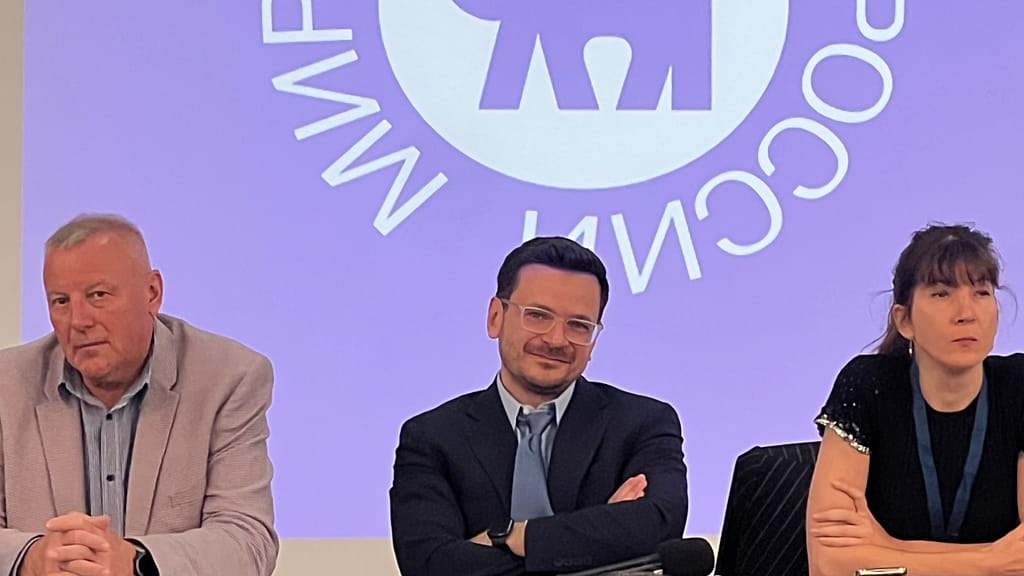
POLICY WIRE — Berlin, Germany — There’s a certain tragic irony to Russian political theater unfolding in a city like Berlin. It’s always been this way, hasn’t it? Dissidents, émigrés, revolutionaries—they’ve gathered in European capitals for centuries, plotting futures that rarely arrive, haunted by the very power they desperately wish to unseat. So, when the latest iteration of the Russian opposition movement convened here recently, the historical stage felt just a tad too familiar, the script almost painfully predictable. They’re still battling the strongman syndrome, only now the anxiety’s closer to home: who’ll replace the old one if they ever manage to pull it off?
It’s a peculiar thing, seeing a diaspora, often lauded as a bulwark against tyranny, seemingly so fractured. You’d think the shared enemy, the one sending drones — and censoring news, would be enough to forge an unbreakable unity. But politics, especially Russian politics, thrives on schisms. This recent gathering wasn’t just about formulating strategies against the Kremlin. It was, rather bluntly put, about leadership — and the nagging worry that history could, rather annoyingly, repeat itself with a new face. One prominent figure, Ilya Yashin, currently languishing in a Russian penal colony, has become a rallying cry for many, a symbol of resistance. But even in his enforced absence, the political imagination of some participants veered towards a decidedly uncomfortable concern: fear that Yashin might become a [QUOTE_PLACEHOLDER], which isn’t exactly the kind of ringing endorsement one hopes for when battling autocracy.
Because, really, when you spend two decades under one iron fist, the thought of another – however nominally democratic initially – feels a bit like swapping one straitjacket for a slightly more breathable one. That underlying current, the profound skepticism even for their own potential leaders, tells you a lot about the political exhaustion of a nation and its scattered representatives. You see this everywhere, not just in Russian opposition circles. Look at the challenges facing groups from the Muslim world or South Asia trying to build coherent, democratic alternatives from outside their home nations. Exiled Pakistani political parties, for example, have often found their energies consumed by internal squabbles and personality cults, often disconnected from the lived realities on the ground in Lahore or Karachi, much like their Russian counterparts in London or Berlin.
The conversation within these walls, therefore, wasn’t about the grand vision so much as it was about character, about power dynamics, and who exactly gets to wield the symbolic scepter if Putin’s grip ever loosens. And the name that kept coming up, almost as a bogeyman, was Yashin’s. It’s less about Yashin himself, one suspects, and more about the innate caution, a trauma really, ingrained in anyone who’s watched power corrupt, absolutely and consistently. They’ve seen this movie before, too many times. That’s why the ‘Mini-Putin’ anxiety wasn’t some minor side note; it was the whispered, almost paranoid, undercurrent of the entire proceedings. It suggested a profound lack of trust, even amongst allies against a common foe.
It’s not just optics or theoretical musings. The real battle, always, is for hearts — and minds, both within Russia and amongst its sprawling diaspora. And if the opposition can’t present a united front, or even articulate a truly fresh alternative that inspires confidence, then what’s the point? They’re already operating at a significant disadvantage, often viewed as out of touch or, worse, as Western puppets by the Kremlin’s effective propaganda machine. Take, for instance, the sheer scale of the information war: independent media outlets in Russia are virtually nonexistent, with only a handful of truly defiant online sources remaining, contributing to a stark media freedom ranking. Reporters Without Borders’ 2024 World Press Freedom Index placed Russia at 162nd out of 180 countries, illustrating the monumental task of any dissenting voice trying to break through state narratives. That’s a grim reality for any opposition movement, homegrown or exiled.
And so, the congress wrapped up, likely with more questions than answers. The fear of a [QUOTE_PLACEHOLDER] isn’t a condemnation of Yashin alone, but a damning reflection of the deep-seated apprehension that true, transformative change is a far more complex beast than simply changing the man at the top. Because old habits, old structures, — and old pathologies die hard. Especially when they’ve been ossifying for decades. You can hold a thousand meetings in safe, democratic havens, but if the internal trust isn’t there, if the specter of yesterday’s authoritarianism clouds tomorrow’s hopeful horizon, then it’s just another chat in Berlin.
What This Means
This dynamic signals a protracted, likely messy, struggle for Russia’s future, irrespective of the present regime’s longevity. The opposition’s internal anxieties about charismatic leaders — a figure like Yashin, seen through the lens of potential future autocracy — aren’t abstract academic worries. They reflect a deeper societal fear, bred by generations of political consolidation and the absence of robust democratic institutions. Economically, a fragmented and distrustful opposition provides no coherent alternative vision that might calm anxious markets or inspire foreign investment, should a political transition ever become genuinely possible. It points to a continuation of Russia’s resource-dependent economic model and its isolation from Western liberal democratic norms, regardless of who’s nominally in charge. Politically, the fear that a hero might morph into a villain suggests a lack of institutional trust, not just in the Kremlin but within nascent counter-movements. It implies a ‘leader-first, institution-second’ political culture, even amongst those fighting to reform it. This doesn’t bode well for a stable, multi-party future; it actually perpetuates a cycle where powerful personalities are scrutinized more than the systems they inhabit. We’re talking decades of deprogramming here. It won’t be simple. it puts Russia on a path that mirrors countries where transitions often swap one strongman for another without addressing the underlying systemic failures — a situation too often seen across the globe, from various corners of Africa to the historical power shifts in South Asian nations dealing with democratic backsliding. The struggle for a genuinely liberal and democratic Russia faces not only external repression but also deeply ingrained internal pathologies that even its fiercest opponents haven’t managed to shake.