
Red Card for Reality: US Visa Snubs Mar World Cup’s Global Ambition
POLICY WIRE — Washington D.C., USA — The beautiful game, they call it. And it’s—usually. But lately, even the world’s most unifying spectacle seems prone to the gnawing friction of...

POLICY WIRE — Washington D.C., USA — The beautiful game, they call it. And it’s—usually. But lately, even the world’s most unifying spectacle seems prone to the gnawing friction of geopolitics. Because, frankly, some dreams hit a wall faster than a well-struck free kick. This time, that wall came in the form of a U.S. Customs and Border Protection officer at Miami International Airport, slamming shut the World Cup aspirations of a Somali referee.
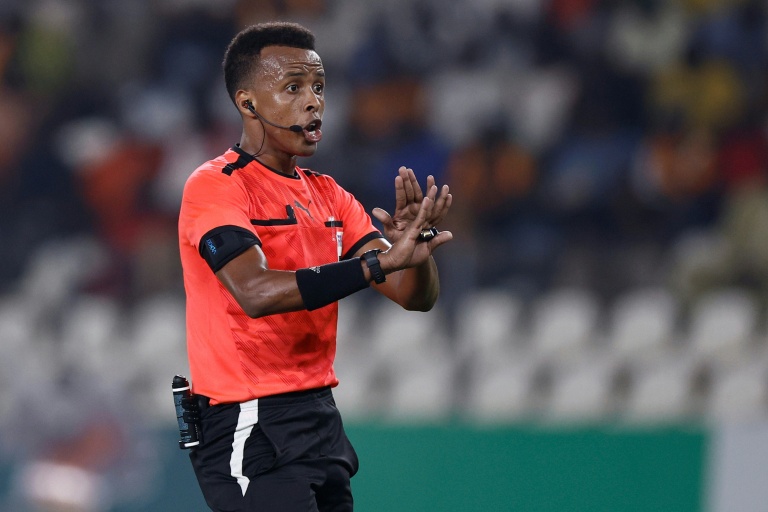
It wasn’t a disputed penalty call or a questionable offside trap that ended Omar Artan’s shot at officiating history. Nope. It was immigration policy. Artan, a figure largely unknown beyond elite refereeing circles until now, was turned back at the border last Saturday, refused entry to the United States. His offense? Well, the United States Customs — and Border Protection (CBP) said Artan was denied entry due to vetting concerns. You know, just vague enough to be frustratingly impenetrable. [QUOTE_PLACEHOLDER]
This episode rips through the carefully constructed façade of international cooperation that sports, particularly an event as massive as the World Cup, attempts to project. Artan was on the list of officials destined for what promises to be an expanded, gargantuan tournament, a celebration meant to bridge nations. But for Artan, that bridge didn’t even make it past the passport control desk.
FIFA, the global governing body, came out looking less like an omnipotent deity of football and more like a somewhat flustered, bureaucratic middle manager. It could confirm that match official Omar Abdulkadir Artan will be unable to train and officiate at the FIFA World Cup 2026 after he was denied entry into the United States. They washed their hands of it, declaring themselves powerless to influence the decision, which it maintained was the sole preserve of tournament co-hosts the United States. Not exactly a ringing endorsement of global sportsmanship, is it?
And let’s be real, this isn’t an isolated incident. Artan hails from Somalia, one of several countries on a travel ban list introduced by US President Trump’s administration as part of a broader immigration crackdown. For context, the U.S. State Department reported a global visa refusal rate of approximately 21.5% for non-immigrant visas in 2023, with rates often significantly higher for certain nations. It paints a picture, doesn’t it? But you’ve got to wonder about the specifics when someone is invited for an international event of this magnitude.
Down south, the Iranian national team had their own border troubles, albeit on the Mexican side after arriving. Imagine: you’re trying to prep for the biggest sporting moment of your career, and your support staff can’t even get into the country because of geopolitical squabbles. The U.S.—embroiled in a military conflict with the Islamic republic—refused to issue visas to 15 of their support staff. Iran coach Amir Ghalenoei complained on Sunday that the process of obtaining visas had delayed his team’s arrival by a week. He added: Usually in these tournaments, before technical matters, ethical and human considerations must be respected — which I think for us it was not the case. Harsh words, but can you blame him?
This simmering tension at the border is just one thread in the chaotic quilt leading up to the kick-off. Even Mexico City, one of the co-hosts, is wrestling with its own domestic headaches. President Claudia Sheinbaum vowed to ensure that threatened demonstrations by a teachers’ union over demands for salary raises don’t disrupt the opening game between her country and South Africa. Protesters, already dispersed with tear gas and rubber bullets near the Zocalo square on June 1, are certainly keeping security officials on their toes. Sheinbaum wants to guarantee… that the celebration of the World Cup is well-executed, in peace — and tranquility. We’ll see about that, won’t we?
Meanwhile, the usual sports narratives are trying to muscle their way through. Five-time World Cup winners Brazil, for instance, were among the squads getting familiar with their homes for a tournament that will stretch for five and half weeks until the final on July 19. Their star, Bruno Guimaraes, is out here saying his team should get the respect they deserve. He’s talking up Vinicius Junior — and Raphinha, pointing out Nobody else has five stars on their chest. A legitimate claim, perhaps, but a touch tone-deaf when a global event feels less like a party and more like a border checkpoint these days. Plus, Neymar, Brazil’s leading international scorer who was only recalled to the national team after a two-year absence for the World Cup, is recovering well from a calf injury, but he remains a doubt for Brazil’s first game against Morocco on Saturday. There’s always some drama, isn’t there?
France, the 2022 finalists and a favorite again, just dusted Northern Ireland 3-1, with Michael Olise netting a hat-trick. They’re off to their training base near Boston. You can almost feel the coaches across the continent thinking, if only we didn’t have to navigate international visa politics to just play the game. You know, the primary purpose.
What This Means
The saga of Omar Artan and the Iranian support staff isn’t merely an administrative hiccup; it’s a stark reminder that even universal events like the World Cup aren’t immune to the blunt force of national policy, especially regarding immigration. For developing nations, particularly those from the Muslim world or South Asia, it highlights a consistent vulnerability. Travel restrictions and visa complexities disproportionately affect individuals from these regions, turning what should be a straightforward professional journey into a bureaucratic gauntlet. It isn’t just about an individual referee or team personnel; it chips away at the perceived neutrality and inclusiveness of global institutions.
Politically, this sends a clear message: despite FIFA’s lofty pronouncements, host nations retain sovereign power over who enters their borders. For countries like the U.S. or any other nation grappling with its own internal policy debates, it means prioritizing national security and immigration rules above the desires of an international sports body. Economically, such incidents might not derail ticket sales in the short term, but they can tarnish the global brand of the host country, perhaps making future bids less appealing to organizations that genuinely seek to minimize friction for their participants. the disruption to teams, even if their key players eventually make it, affects preparation and morale—hard to quantify, but certainly not negligible. It underscores a persistent friction between a globalizing world that wants seamless movement and nations clinging tightly to their border controls. The grand promises of sports diplomacy often hit their practical limits at an immigration desk.