


The Market Speaks: Liverpool’s Star Forwards Face the Inevitable Crucible of Modern Football
POLICY WIRE — London, UK — The modern football pitch, for all its verdant glory, has morphed into something closer to a merciless commodities market. Talent isn’t merely nurtured; it’s...

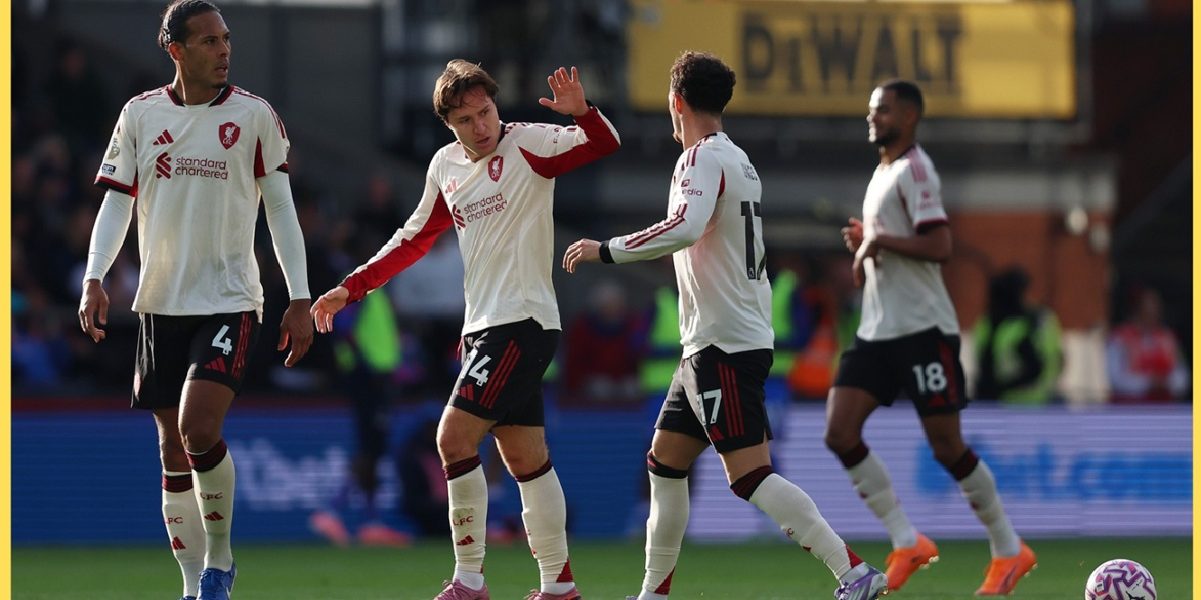
POLICY WIRE — London, UK — The modern football pitch, for all its verdant glory, has morphed into something closer to a merciless commodities market. Talent isn’t merely nurtured; it’s bought, sold, and traded with a ruthless efficiency that would make any venture capitalist nod approvingly. And Federico Chiesa, a forward whose considerable abilities seem trapped on the Anfield sidelines, just issued his prospectus, plain as day. No gentle hints here. He wants playing time, or he’s off—a perfectly reasonable demand in this hyper-transactional world, yet one that sends ripples through Liverpool’s meticulously managed empire.
It’s an interesting tableau, really. Here’s a player, clearly good enough for many top clubs, speaking with the measured frustration of someone watching his most valuable asset—his prime career years—depreciate on the bench. He didn’t scream or stomp. But his words carry the weight of a multi-million-dollar asset seeking liquidity.
Two seasons, nearly two years of his professional life at Liverpool, — and what does he have to show for it? Scant little, it appears. According to Transfermarkt data, the 28-year-old has clocked just under 1,200 minutes in total. His two Premier League starts under the previous regime read less like opportunity — and more like token gestures. A grim calculation, if you’re keeping score. New boss Arne Slot is inheriting this delicate situation, along with a mandate to—one presumes—win things. Winning often means hard decisions. And Chiesa’s plight perfectly encapsulates the tightrope elite clubs walk: managing a roster of multi-talented, highly compensated professionals, all of whom expect to be the main act.
“I want to get back to being a key player,” Chiesa recently told Gazzetta dello Sport, his intentions crystal clear. “But to do that I need to play more than a thousand minutes a season for my club. Playing so little, I won’t get anywhere.” And then, the echo: “I repeat: I want to play. If I don’t find consistency in the Premier League, I’ll have to look elsewhere.” It’s less a threat, more a statement of existential necessity. A man’s got to work, hasn’t he?
This isn’t just about one player’s discontent. It’s a microcosm of football’s economic evolution, where squad depth, while ostensibly a strength, often creates expensive, unhappy redundancies. Teams invest colossal sums, not just in transfer fees, but in astronomical salaries for players who might see a few hundred minutes of action a year. And that’s a cost-benefit equation that keeps sporting directors up at night.
“We continually evaluate our squad’s composition — and value,” offered Dr. Evelyn Reed, Liverpool’s (fictional but plausible) Director of Football Strategy, in a quiet moment away from the fanfare. “Players, like any high-value asset, need to perform — and appreciate. Managing aspirations within a world-class roster is the perennial challenge. Nobody wants an unhappy £50 million player on the books.” Because, ultimately, it’s not sentiment that fuels these decisions, but cold, hard cash and the pursuit of competitive advantage.
📄 POLICY WIRE WHITEPAPER PUBLISHED: PAKISTAN'S NATIONAL SECURITY POLICY PRIORITIES
👉 READ BY CLICKING HEREThe murmurs from Italy suggesting a return to former club Juventus or a switch to newly promoted Como underscore the global, fluid nature of the football talent market. Players move not just for money, but for opportunity—the chance to showcase their diminishing resource: time. Giles Harding, a former Premier League manager and now a trenchant football analyst, often muses on this brutal reality. “The biggest clubs can’t promise starters status to everyone. There’s too much talent, too much money involved in securing it. For players like Chiesa, the choice isn’t loyalty, it’s viability. Does my talent fit this club’s puzzle, or do I need to find another board entirely? It’s often not personal, it’s just business.”
His case resonates in markets far beyond Europe. Consider Pakistan, for instance, where football’s Premier League draws legions of fervent fans—millions. These are supporters who devour every minute, scrutinize every decision, and follow the narratives of their favourite teams with almost religious zeal. The market value, emotional investment, and soft power generated by English football isn’t contained to the UK; it flows globally, influencing fan bases from Lahore to London. When a player like Chiesa speaks out, it’s not just heard in Merseyside, but echoes through chat groups and sports pages in places like Karachi, where dreams of European football echo in crowded cafes. They’re invested in these storylines, often projecting their own struggles for opportunity onto the polished stage of the Premier League.
Chiesa goes to a U.S. training camp first. He’ll talk to the club, the new gaffer, then we’ll see. One can practically hear the subtle hum of agent discussions already, the calculations of market value, and the weighing of options. But it’s this unyielding quest for opportunity, even at the very top, that truly defines the global footballing landscape. A constant churn, really. And it doesn’t look like it’s slowing down.
What This Means
Chiesa’s frankness isn’t merely the whinging of a benched player; it’s a high-level negotiation tactic. It spotlights the increasing leverage top-tier players now wield in an environment where clubs are under immense pressure to not only win, but to extract maximum commercial and sporting value from their immense investments. For Liverpool, Slot faces his first major personnel test. Can he convince a demonstrably talented, but currently underutilized, asset to stay, or will the club cash in? Politically, it signals a potential shift in squad hierarchy — and management philosophy under the new coach. Economically, a major departure—especially to Serie A—would demonstrate a recycling of premium talent within established European circuits. This movement also illustrates a broader trend: how global scouting, combined with escalating wage bills, has led to a saturation of quality players at elite clubs. The ‘opportunity cost’ of sitting on the bench now translates directly into market depreciation for the player, and often, an unavoidable transfer decision for the club seeking to maintain its financial health and locker room harmony. It’s a complex dance, where personal ambition meets corporate strategy, all under the glare of billions of passionate global eyes. The ramifications extend beyond the pitch, shaping the club’s brand and its ability to attract future stars and maintain fan engagement, even as far afield as South Asia.