


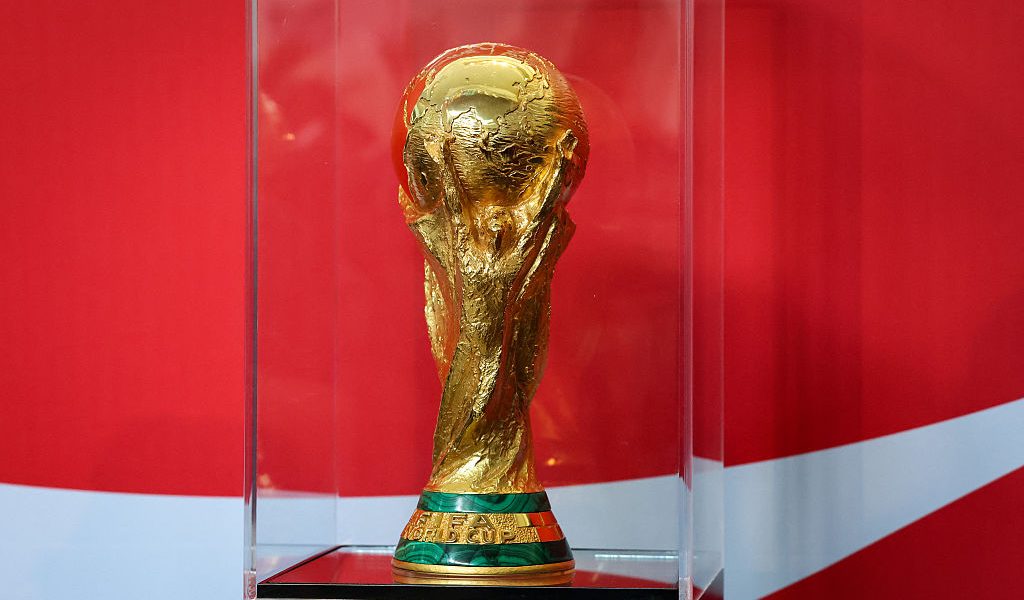
World Cup: Squad Lists Hint at Deeper Global Power Shifts, Geopolitics on Display
POLICY WIRE — Geneva, Switzerland — The ball, they say, is round. But the game, especially at the grand scale of the upcoming 48-nation World Cup, ain’t always fair, or even about who kicks...

POLICY WIRE — Geneva, Switzerland — The ball, they say, is round. But the game, especially at the grand scale of the upcoming 48-nation World Cup, ain’t always fair, or even about who kicks best. Take a peek beyond the usual rah-rah headlines and the meticulous spreadsheets of announced national squads, and what you’re really seeing is a geopolitical battleground in miniature. And it’s not just about the usual suspects anymore.
It’s official: all 48 participating nations have, with varying degrees of drama, unveiled their rosters. You’d think the story’s just about who’s in — and who’s out. Not quite. Look closely, and these lists are telling a deeper story of economic currents, shifting talent pools, and, yes, soft power. Consider, for instance, the hefty representation from clubs bankrolled by Gulf states. It’s hard to miss.
Think about the rosters themselves, a sprawling canvas of footballing aspirations. For every established European giant stocking up on homegrown talent, there’s an emerging footballing nation leaning on players honed in Europe’s most brutal leagues, or, increasingly, on those lured by the lucrative contracts now offered in burgeoning Asian circuits. Spain, for example, flaunts its Barcelona — and Real Madrid contingent, naturally. But glance at Saudi Arabia, or even Qatar, and you’ll find entire squads rooted domestically, albeit heavily influenced by massive investment and international coaching expertise.
“Our investments aren’t just about winning on the pitch, or building infrastructure,” asserted Sheikh Hamad bin Jassim, the former Qatari Prime Minister and a known football enthusiast, in a rare interview with a Gulf business paper last year. “They’re about branding, about projecting soft power onto a global stage. And, of course, about ensuring our youth, and our talent, can aspire to the very best, right here at home.” But the reality, for many, is that the best still gets pulled towards European behemoths. But what about the ones who can’t get that visa? That’s a different sort of global labor discussion.
And let’s be honest, there’s an element of quiet desperation to some of these picks, a hope that a single breakout performance could reframe an entire nation’s athletic narrative. Players like Iran’s Mehdi Taremi, an Olympiacos striker, and South Korea’s Son Heung-min, who’s still tearing it up for Los Angeles FC, represent a broader trend: the globalization of player movement, pulling top Asian talent into diverse, often surprising, leagues far from traditional European strongholds. This isn’t just about playing skill; it’s about cultural exchange, about visibility on the global stage. It’s a statement, loud — and clear, about who belongs at the top table, even if only by proxy through their star player.
But the money talks, as it always does. Globally, the collective market value of players selected for the 48 national teams now exceeds €17.5 billion, marking an astonishing 25% increase from the last tournament’s tally, according to a recent FIFA Economic Review. And don’t forget the clubs; European outfits, especially, keep raking in transfer fees for these rising stars, whether they hail from Bosnia or Burundi.
Javier Tebas, La Liga President, known for his acerbic observations, minced no words at a recent industry panel. “The game’s changing, isn’t it? The money talks. It always has. But now it shouts from new corners of the globe, demanding a seat at the table. And we, in Europe, well, we can either listen, or risk falling behind.” It’s a stark acknowledgment that the power balance, or at least the financial pull, ain’t as Euro-centric as it once was. You see, these lists are a scorecard of who can afford to play the global game.
What This Means
This isn’t just a football tournament; it’s an economic — and political pressure cooker. The very composition of these squads reflects the global flow of capital, talent development, and — in no small part — strategic national branding. The prevalence of players in European leagues from nations like Tunisia or Morocco highlights a sophisticated scouting network and an increasing financial willingness by European clubs to invest further afield. Conversely, the solidification of squads around domestically-based players in countries like Qatar and Saudi Arabia signals immense internal investment, aimed not just at improving national team performance but at developing self-sustaining football economies. They’re making bold moves in the global transfer market too. Remember Man United’s Ederson bet? It’s part of a larger trend.
From a South Asian and Muslim world perspective, the presence of strong contingents from Iran, Qatar, and even distant-but-football-passionate nations like Algeria, underlines the game’s deep cultural penetration in these regions. While cricket might still rule parts of the subcontinent, the World Cup casts an inescapable, alluring shadow. The aspirations evident in these squads reflect national ambitions far beyond mere sport: a desire for global recognition, cultural soft power, and a subtle assertion of influence on the world stage. It’s a big, messy, complicated world out there. And it’s all reflected in who gets to wear the national jersey this year. Because, at the end of the day, sport is never just sport.