

Energy Upheaval Reshapes Germany’s Green Ambitions Amidst Iran Conflict
POLICY WIRE — Berlin, Germany — The shadow of instability—a familiar player on the international stage, but never less menacing for its commonality—is once again reshaping global energy grids. It’s...

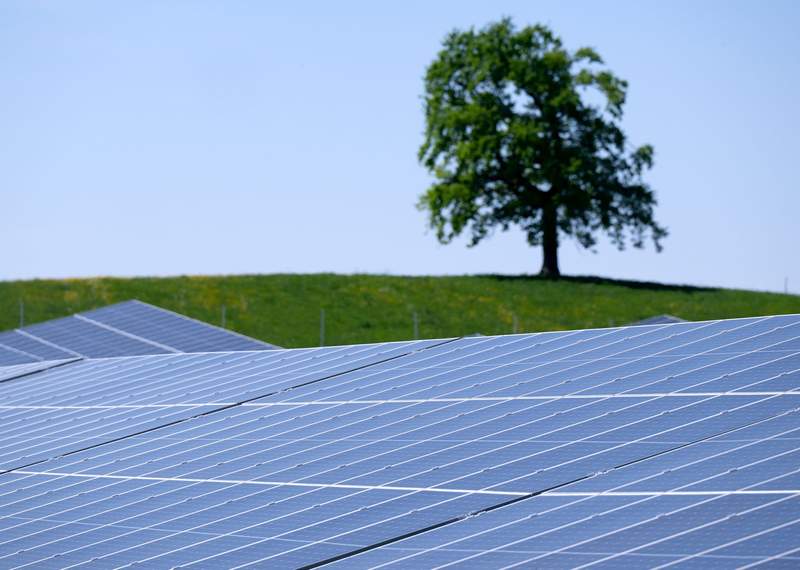
POLICY WIRE — Berlin, Germany — The shadow of instability—a familiar player on the international stage, but never less menacing for its commonality—is once again reshaping global energy grids. It’s not just about barrels of oil or cubic meters of gas this time, though those prices certainly feel it. Instead, the whispers of an expanding conflict, particularly as Iran’s posture hardens, have inadvertently spurred an unexpected boom right in the heart of Europe’s industrial powerhouse: Germany’s solar sector. This isn’t a sudden shift born of lofty green ideals alone; it’s a visceral, urgent scramble for energy independence. One that many would argue is long overdue.
It’s an irony not lost on seasoned observers: the very forces threatening global peace are simultaneously accelerating a future that, by most accounts, needs fewer fossil fuels. German solar firms, long seen as stalwarts of green tech, are now experiencing an astonishing surge in order volumes. These aren’t minor fluctuations; we’re talking about unprecedented demand that speaks to a deeper, more profound fear coursing through European capitals. They’re suddenly very keen on panels for rooftops, — and lots of ’em. The war premium on traditional energy sources—specifically, oil and natural gas—has become unbearable for many. And because of that, renewable alternatives, previously viewed as a slow burn investment, are now seen as a desperate necessity. We’ve seen this before, haven’t we? Crisis breeding innovation, but also, often, opportunism.
Germany, with its robust manufacturing base and an almost zealous commitment to its energy transition, finds itself uniquely positioned. While the government pushes incentives, industry is reacting to simple, brutal economics. It’s not about virtue signaling when your gas bill doubles. The fear of supply chain disruptions—remember how quickly pipelines became geopolitical bargaining chips?—and the volatility of the global oil market are driving unprecedented interest in self-sufficiency. You see it everywhere now, from small businesses installing massive solar arrays to individual homeowners scrambling to get off the grid. According to recent Eurostat figures, new renewable energy installations across the EU saw a staggering 28% increase in the last fiscal year alone, a direct response to this perceived energy insecurity.
But the narrative isn’t purely one of European introspection. The ripples of this instability spread far wider. In Islamabad, Karachi, and other urban centers across Pakistan, the same rising energy costs fueled by global anxieties — exarcerbated by events like the Iran war’s impact on oil prices — translate into stark, immediate burdens for the populace. For a nation already wrestling with economic fragility and persistent energy deficits, every uptick in crude prices is a punch to the gut of the ordinary citizen and a profound headache for policymakers. They’re looking at what Germany’s doing, surely, but with a different set of financial constraints. And it’s not just Pakistan; resource-poor economies across South Asia and parts of the Muslim world are particularly vulnerable, making their energy futures profoundly precarious.
The sentiment from executives within the German solar industry mirrors this newfound urgency. One CEO, speaking off the record, described it as [QUOTE_PLACEHOLDER]. There’s a clear understanding that while the current demand is politically motivated, it presents a golden opportunity to accelerate structural changes in energy infrastructure. They don’t want to miss this wave, that much is obvious. Many had forecast a gradual uptick in solar, perhaps a steady climb. This? This is a vertical launch. Companies that once struggled for investment are now finding capital practically flowing their way. You wouldn’t say no to that kind of money, would you?
The pace is blistering, but it raises questions about sustainability — of the industry’s capacity to meet such ravenous demand, and of the political will to maintain this momentum once the immediate crisis eventually recedes. And that’s the real trick, isn’t it? To make temporary solutions permanent structural changes. Because, let’s be real, the geopolitical landscape isn’t getting any calmer. These shifts in energy strategy aren’t just about Germany; they’re about how entire blocs adapt to a world that keeps finding new ways to surprise us all. We’re witnessing the hard pivot in real-time, compelled by circumstances nobody wished for.
What This Means
The swift uptick in Germany’s solar sector isn’t merely an economic trend; it’s a potent political and geopolitical statement. Economically, it signifies a massive re-allocation of capital towards renewable energy infrastructure, accelerating an energy transition that was always desired but often slow-walked. Expect increased domestic investment in manufacturing capabilities, possibly reducing reliance on overseas component suppliers, thereby solidifying Germany’s position as a green tech leader—and a rather wealthy one at that. For ordinary consumers, it could, in the long term, mean more stable and perhaps lower energy costs, cushioning them against the global petro-shocks that currently dominate headlines.
Politically, this dramatic surge represents a forced re-evaluation of energy security paradigms. Europe’s traditional reliance on imported fossil fuels is proving to be its greatest vulnerability, and Berlin’s actions will likely influence policy shifts across the continent. It reinforces the idea that true national security in the 21st century is as much about megawatts as it’s about missiles. The subtle irony here is that geopolitical turbulence—historically a trigger for resource conflicts—is now, paradoxically, catalysing investment in sources designed to render those conflicts obsolete. For countries like Pakistan, the German experience provides a difficult but illustrative template for resilience in a volatile world, even if their pathways differ drastically in terms of resource availability and capital. They can’t just wish away oil imports. But they can surely take notes on rapid diversification. It’s a pragmatic response, albeit one driven by a very inconvenient crisis.