

Dust and Silence: Another Santa Fe Incident Raises Questions Beyond the Roadside
POLICY WIRE — Santa Fe, N.M. — It’s a scene replayed too often across America’s vast, unyielding landscapes: a nondescript stretch of road, emergency lights slicing through the thin desert air, and a...

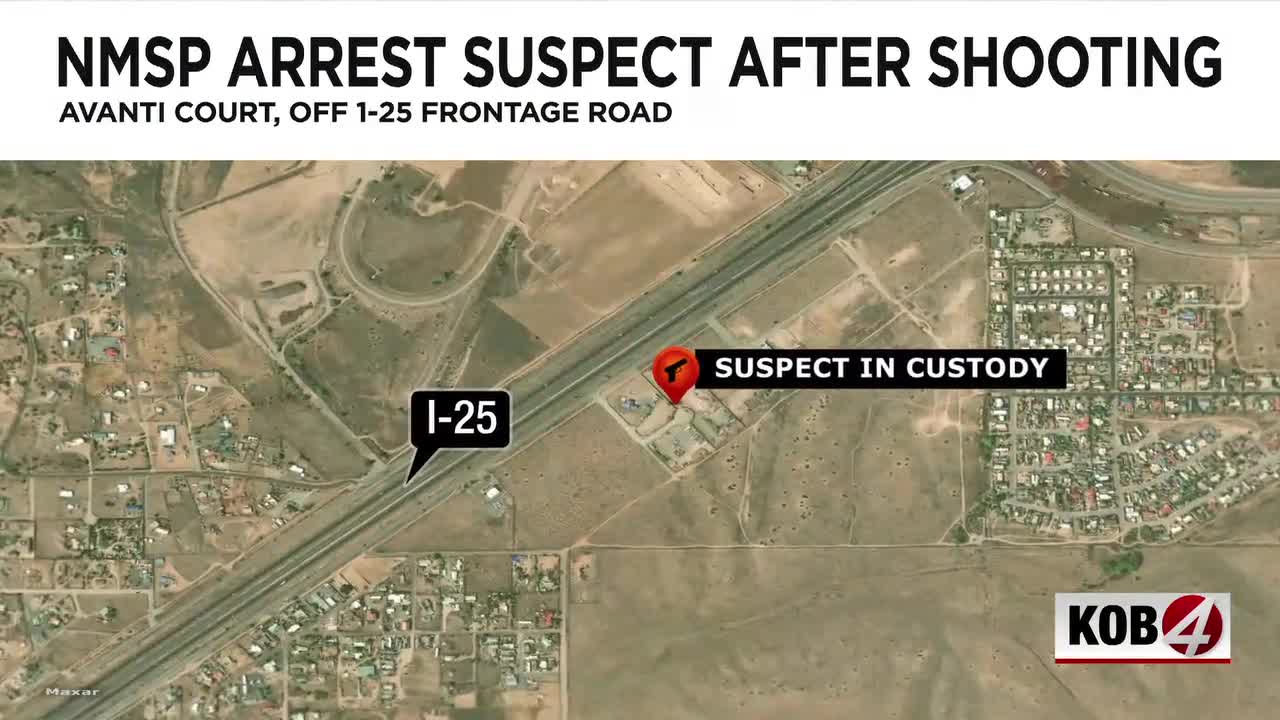
POLICY WIRE — Santa Fe, N.M. — It’s a scene replayed too often across America’s vast, unyielding landscapes: a nondescript stretch of road, emergency lights slicing through the thin desert air, and a curtain of official silence descending. South of Santa Fe, near the often-thrumming I-25, Avanti Court became the latest tableau for such a tableau, merely another pin on the national map of police encounters—a map whose contours we can barely discern, thanks to the very limited information filtering through official channels.
New Mexico State Police, ever the diligent investigators, are sifting through the aftermath. But what’s really to sift when initial statements confirm a deputy-involved shooting—where at least one Santa Fe County Sheriff’s deputy fired their weapon—and a suspect already hauled in? We’re told with bureaucratic swiftness that [QUOTE_PLACEHOLDER] a boilerplate assurance that, while ostensibly reassuring, often leaves more unsaid than clarified. The lack of discernible public threat is always good news, obviously. But its immediate pronouncement can sometimes feel like an effort to close the file before it’s truly opened.
[QUOTE_PLACEHOLDER] This phrase, delivered with a precision honed over decades of similar incidents, stands as the most revealing insight from the initial police report. Limited details, it turns out, are a feature, not a bug, in the operational transparency of many law enforcement agencies. But this isn’t just about what happened on Avanti Court. It’s about what it signifies about information flow, public trust, and the opaque processes that govern state-sanctioned force.
Here in New Mexico, much like in many parts of Pakistan’s Khyber Pakhtunkhwa province, locals often harbor a deep-seated, if quiet, skepticism regarding official narratives of security incidents. In both contexts, communities grapple with the stark realities of security forces operating under high-stress conditions. In Karachi or Lahore, just like in Santa Fe, an incident involving uniformed personnel firing their weapons resonates beyond the immediate participants, casting long shadows of doubt or questions over broader policies and accountability mechanisms. It’s a fundamental issue: how do societies reconcile the need for effective law enforcement with the imperative for transparency and public oversight? The answer, more often than not, involves an uneasy truce between the public’s right to know and an institution’s perceived need for control over its own narrative.
For journalists like us, that phrase, limited details, it’s both a challenge — and an indictment. It forces us to connect dots that authorities are often keen to keep scattered. Because a single incident on a quiet street—say, on Avanti Court—isn’t isolated. It feeds into a broader perception of policing. And perceptions, we’ve learned, often shape reality far more profoundly than cold, hard facts ever could.
This event, contained to a short police bulletin, doesn’t even begin to scratch the surface of why this particular suspect was taken into custody, what led to a deputy firing their weapon, or what preceded the swift containment. That information, crucial for public understanding and informed civic discourse, remains elusive, relegated to an internal investigation’s quiet chambers. For now, the public is merely asked to avoid the area due to heavy police presence. That’s a directive, not a dialogue. It’s a notification of an event, not an explanation. It’s, perhaps, a sign of just how normalized these situations have become.
And when a police incident like this plays out, we rarely get the full picture quickly. Studies from the Vera Institute of Justice indicate that fewer than 5% of all officer-involved shootings result in criminal charges against officers nationally, underscoring the complexities of these investigations and the high bar for proving misconduct. This isn’t to prejudge, of course. It’s simply to highlight the structural realities that define such events. But it does mean that citizens, particularly in states like New Mexico with their unique cultural and historical dynamics, often feel like outsiders peering into a closed system.
What This Means
The incident on Avanti Court—seemingly a routine law enforcement action—unspools a thread of critical political and economic implications. Politically, the recurring narrative of limited details erodes public trust. When information is scarce and reactions are formulaic, it fosters a vacuum where speculation thrives and institutional legitimacy can wane. This isn’t an attack on law enforcement, but a observation of its outcome. This opacity creates friction, occasionally boiling over into protests or demands for reform. For elected officials, particularly those beholden to a varied electorate across New Mexico, navigating public demands for transparency while supporting police operations becomes a delicate dance.
Economically, persistent concerns over public safety and police conduct, even when unsubstantiated by concrete evidence, can subtly deter investment and tourism. Santa Fe, with its reliance on a picturesque, safe image, can’t afford a perception of instability. But these low-level, high-impact incidents, however localized, cumulatively contribute to the mental ledger residents keep—an accounting that ultimately influences civic engagement and community stability. When every flash of police lights or unexpected road closure leads to immediate questions rather than immediate answers, the social contract becomes, well, frayed. Look no further than ongoing debates in urban centers regarding budget allocations for policing versus social services—a glimpse into the city’s fray. It’s an escalating cost, whether financial or social, that few jurisdictions can indefinitely absorb without consequence.
But there’s also the ripple effect. How does this type of reporting—quick, sparse, officially constrained—affect policy debates? It ensures that discussions about police training, use-of-force protocols, or even mental health responses remain reactive rather than proactive. Without comprehensive, timely data, meaningful reform is difficult to craft. Instead, we get stop-gap measures and endless inquiries, often fueled by public outcry rather than informed policy-making.
In the end, while the suspect is in custody and the deputies are reportedly safe, the real casualty might just be public enlightenment. The story of Avanti Court isn’t over when the crime scene tape comes down; it’s only just begun its quieter, more insidious work of shaping community attitudes and, ultimately, policy outcomes. It’s a microcosm of a much larger, ongoing dialogue that shows little sign of yielding easy answers.