


Hormuz Strait at Razor’s Edge as Trump Weighs Iran Deal Amidst Geopolitical Volatility
POLICY WIRE — Washington, D.C. — The Strait of Hormuz, that economic jugular for global energy, remains a crucible of Washington’s peculiar brand of diplomacy: threatening to blow up regional allies...

POLICY WIRE — Washington, D.C. — The Strait of Hormuz, that economic jugular for global energy, remains a crucible of Washington’s peculiar brand of diplomacy: threatening to blow up regional allies one day, then hammering out peace deals the next. And now, the White House buzzes with a high-stakes reckoning, as President Donald Trump gathers his closest advisors to render a “final determination” on extending a ceasefire with Iran.
It’s a peculiar spectacle, these so-called negotiations. While U.S. and Iranian envoys quietly — or not so quietly, as leaks reveal — thrash out terms, the air crackles with accusations and the distinct odor of crude oil. The tentative agreement, reportedly brokered over weeks, suggests a 60-day pause in hostilities. But don’t confuse a pause for peace; it’s more like a held breath before the next inevitable plunge.
Trump’s demands aren’t exactly subtle. They’re etched in all-caps across his favored social platform: Iran must swear off nuclear weapons, full stop. The Strait of Hormuz must be pried open for international traffic, its treacherous waters cleared of any unpleasant surprises — say, sea mines. And that, naturally, would come after all naval obstructions placed there during the current unpleasantness are, well, “DESTROYED.”
But the Mullahs aren’t playing pat-a-cake. Mohammad Bagher Qalibaf, a top Iranian negotiator who recently cooled his heels in Qatar, laid it bare. “Words, guarantees? They’re air. Missiles, those are our guarantees. Action, not empty promises, is the currency here.” He’s not wrong, seeing as U.S. and Israeli operations have knocked Iranian facilities about a bit just this past year, even while talks were supposedly limping along. Because why talk when you can launch, right?
The core issue, of course, is the atom. Vice President JD Vance, ever the realist, frames the war’s “accomplishments” with cautious optimism. “We’re not just trying to put a band-aid on this; we’re talking about a genuine, generational rollback of their nuclear ambitions,” Vance quipped earlier this week, alluding to behind-the-scenes haggling over uranium enrichment levels and that pesky stockpile.
And what a stockpile it’s. According to the International Atomic Energy Agency (IAEA), Iran sits on a chilling 440.9 kilograms (that’s 972 pounds, if you prefer the imperial measure) of uranium enriched to 60% purity. Just a hop, skip, — and a technical jump from the 90% needed for weapons-grade material. And you’ve gotta wonder, with their three primary nuclear sites already getting a good beating last year, just how much of that fissile stuff is even salvageable for Trump’s proposed “destruction” scheme.
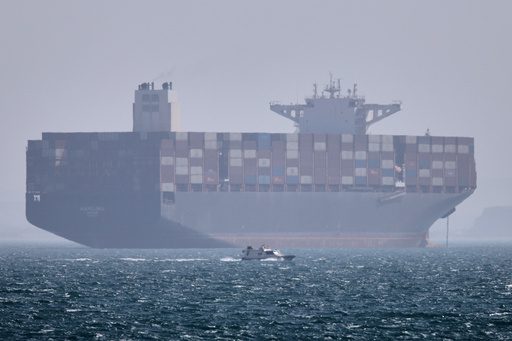
The stakes couldn’t be higher for global markets, especially given that around a fifth of the world’s oil and gas traditionally transit the Strait. Its partial closure since late February, courtesy of Iran’s naval antics (which now apparently include tolls and a formalized “gatekeeper agency”—oh, the irony!), has sent global fuel prices absolutely soaring. It’s a mess felt in Islamabad as much as it’s in Indianapolis. That’s why, probably, U.S. Secretary of State Marco Rubio found himself shaking hands with Pakistan’s top diplomat, Ishaq Dar, this week. Islamabad, bless its beleaguered heart, has been playing the thankless role of go-between, trying to coax these two titans into some semblance of rationality.
But Washington’s commitment to diplomacy sometimes hits peculiar bumps. Case in point: Trump’s recent broadside against Oman. A staunch U.S. ally, no less. “Don’t you dare consider any deal with Iran to share control of the strait, or we’ll have to blow them up,” was the gist. Talk about complicating the mediator’s job! Still, Iran’s Foreign Minister Abbas Araghchi managed a call with his Omani counterpart, expressing “solidarity in the face of any threat.” You can almost hear the diplomatic eye-rolls from Muscat.
But diplomacy, for all its posturing — and threats, soldiers on. The current truce, however ragged, has somehow prevented a return to full-blown warfare for seven weeks. That’s something, at least, even if it feels less like peace and more like a collective breath-holding exercise until the next shoe drops. Or the next missile. Or, heaven forbid, the Strait finally buckles under the pressure.
What This Means
This whole situation is less about a deal — and more about managing an extraordinarily volatile holding pattern. Politically, President Trump’s “final determination” carries monumental weight. A full withdrawal from any agreement risks an immediate escalation, pushing global energy prices through the roof just as economies around the world struggle. Such instability creates unpredictable ripples, disrupting everything from tourism markets to intricate supply chains. For Iran, walking the tightrope between international pressure and domestic defiance is key to their regime’s survival. Their insistence on leveraging military might – ‘missiles over words’ – reveals a deep distrust forged by decades of Western sanctions and covert operations, even as it isolates them further.
Economically, the continued throttling of the Strait of Hormuz is a ticking time bomb. Every day it remains constrained, global commerce pays the price. Sanctions relief and an open waterway could ease inflation pressures worldwide, offering a lifeline to developing nations in South Asia and beyond. But given Iran’s newfound taste for charging tolls and establishing agencies to manage ‘their’ strait, any resolution will face enormous implementation hurdles. And the diplomatic dance involving mediators like Pakistan underscores the immense regional pressure points; failure to contain this conflict means spillover effects across the wider Muslim world, forcing nations to pick sides, or suffer the economic fallout. The path forward is treacherous, a true testament to the razor’s edge upon which these high-stakes geopolitical negotiations always perch. Indeed, Iran’s global reach, already exposed by legal actions in Europe, makes any move here impactful far beyond its immediate borders.