


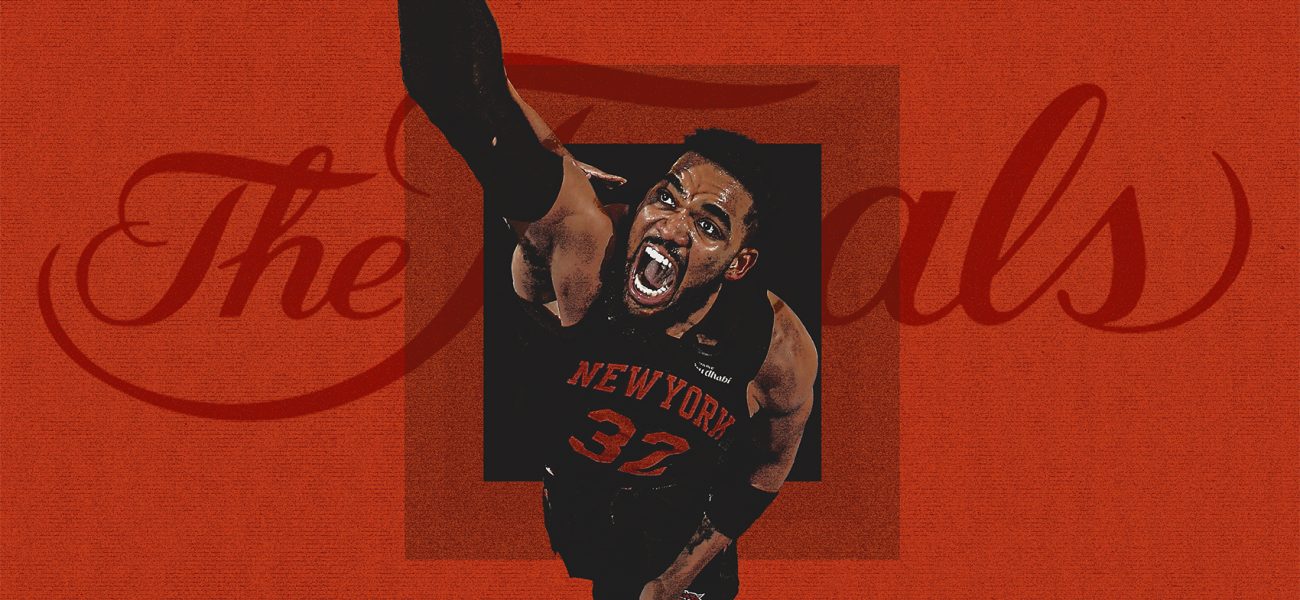
The Silent Architect: How Karl-Anthony Towns’ Subtle Evolution Reshapes the Knicks, and the Politics of Professional Sport
POLICY WIRE — New York, USA — The often-brutal clarity of public expectation, much like the relentless churn of a legislative session, rarely accounts for the quiet, painstaking metamorphosis...

POLICY WIRE — New York, USA — The often-brutal clarity of public expectation, much like the relentless churn of a legislative session, rarely accounts for the quiet, painstaking metamorphosis occurring behind the scenes. In a city where impatience is a virtue and the spotlight is a searing lens, Karl-Anthony Towns has engineered such a transformation. It isn’t just about baskets; it’s about the sophisticated art of adaptation, a mastery of self in service of a collective, reminiscent of any seasoned diplomat navigating treacherous geopolitical currents.
After a career marked by immense individual talent that often felt misdirected, Towns, at 30, has nudged the New York Knicks into the NBA Finals, a feat unimaginable just a few short months ago. His secret? [QUOTE_PLACEHOLDER] he offered, displaying a calm that belied the roaring anticipation around him. It’s a mentality — a kind of studied indifference to transient highs and lows — that seems almost alien in a sports landscape built on hyperbole and instant gratification. And yet, here we’re, watching it work wonders.
He’d reiterated that steely message, by the way, after the Knicks swept the Cavaliers, booking their long-awaited trip. “It’s a magical thing, a historical thing. It’s something that New York has been dying for for a long, long time,” he acknowledged. But he also tacked on a sobering truth: “But once we get in those cars and go to our respective homes, it’s gonna be back to business.” No time for victory laps; the policy goals remained firmly in sight.
For years, Towns embodied potential, a lanky phenom from Piscataway, New Jersey, seemingly destined for immediate superstardom. Drafted first overall in 2015, he put up numbers that only a select few had ever matched as rookies. But raw output doesn’t always translate into organizational success. His journey to the Finals isn’t as the sole, dominant protagonist but rather as the crucial, evolving piece that finally unlocked a contender built around superstar Jalen Brunson. Knicks Head Coach Mike Brown hit it on the head: [QUOTE_PLACEHOLDER] Brown understood the deeper play. To truly ascend, he noted, “you have to bring more to the table.”
And he has. The preceding season’s bitter end — and subsequent coaching change shook things up significantly for Towns. New offensive principles, new timing for touches, a whole new strategic playbook. He admitted, “I just don’t know. But we’re figuring it out. It’s just different.” This wasn’t a mere tactical adjustment; it was a wholesale renegotiation of identity. The process took time, — and frankly, a few ugly stretches. Early on, despite the Knicks’ wins, his scoring dipped, shooting numbers sagged. He logged less floor time than usual. But this curtailed workload was part of Brown’s long-term vision—a calculated political maneuver, if you will, to ensure key players wouldn’t burn out prematurely, a familiar dilemma for any administration eyeing a sustained campaign.
Josh Hart, a teammate, didn’t mince words about the initial period. “There was moments I went home and I’m like, ‘Damn, am I ass? Do I suck as a basketball player?’” The internal doubt, the struggle to reconcile one’s self-perception with an imposed new role—it’s the stuff of high-stakes governmental reforms or corporate restructuring. Towns, however, channeled it differently, focusing on defense — and rebounding, steadily building an expanded toolkit.
Then, when trouble loomed in Round 1 against Atlanta, when Brunson found himself stifled and the offense stagnated, Towns stepped into the vacuum. He became the playmaking hub, a strategic anchor—a central authority providing structure to a beleaguered unit. This reorientation revamped their attack, allowing teammates like Brunson, Hart, — and Anunoby to thrive off-ball. [QUOTE_PLACEHOLDER] Towns observed, relishing the unexpected leadership. His average of eight assists per game across a critical seven-game stretch shows this transformation in stark, statistical relief, according to Dunke and Threes’ estimated plus-minus metric, which evaluates a player’s impact on winning.
But when the Cavaliers presented a different challenge in the Conference Finals, necessitating fewer high-post actions, Towns pivoted again. He didn’t dig in his heels. Instead, he embraced a more aggressive scoring role. [QUOTE_PLACEHOLDER] he stated, a philosophy that might well serve leaders in Pakistan navigating regional alliances. His block and steal rates, both career highs this postseason, tell their own story of a player leaving no stone unturned in the pursuit of collective victory. He’s showing how essential the ‘quiet catalyst’ can be. The kind of player you build around, sure, but also the kind of character whose willingness to compromise and adapt proves far more valuable than a rigid, albeit talented, approach.
Now, he faces his greatest test yet, likely drawing the primary defensive assignment against Victor Wembanyama, an ascendant force that has challenged all conventional wisdom. It’s a challenge that demands everything: facilitating, spacing, attacking, rebounding, defending. It’s a vast mandate—not unlike the comprehensive policies required to tackle endemic economic instability or infrastructure deficits across South Asia. His success in this final showdown isn’t just about basketball. It’s about a man proving that leadership, in its most profound sense, lies not in dominating every facet, but in fluently and expertly performing “whatever the team needs me to do, the player the team needs me to be.” It’s an example for those seeking progress beyond rigid doctrines, advocating for a flexibility that understands the broader context and demands of the moment. We’ve seen these dynamics in political parties trying to unify disparate factions; it often demands immense sacrifice from key players, but the outcome can be revolutionary.
What This Means
This saga transcends the hardwood, offering compelling lessons for the political — and economic spheres. Karl-Anthony Towns’ journey isn’t just a sporting triumph; it’s a microcosm of the delicate interplay between individual ambition and collective good, a constant negotiation where personal brand must sometimes cede to institutional imperative. His embrace of varied roles — from star scorer to defensive anchor, from primary playmaker to adaptable attacker — reflects the very flexibility often demanded of political figures or business leaders in an increasingly unpredictable global climate. Consider the leader in Islamabad, tasked with balancing internal economic pressures against external diplomatic obligations, or a CEO restructuring a multi-national conglomerate. A rigid adherence to an initial, defined role often spells disaster. Success, as Towns demonstrates, hinges on a pragmatic, often gritty willingness to reassess and reconfigure, sometimes dramatically altering one’s perceived strength to buttress the collective endeavor.
Economically, this shift speaks to the value of diverse skill sets in a workforce. An individual who can pivot and adapt becomes indispensable, increasing their ‘market value’ within an organization far beyond mere specialized output. The Knicks are now leveraging Towns’ multifaceted utility, an organizational strength that has both political and economic analogs. The cost of a major personnel shift — like a star player redefining his role — is always high, involving discomfort and short-term efficiency dips. But for New York, that calculated risk is clearly paying dividends, demonstrating that strategic investment in versatility, even if it means initially curtailing traditional strengths, can unlock a profound and sustainable competitive advantage.