


The Gold Machine: America’s Youngest Ballers, A Policy Wire Dissection
POLICY WIRE — Washington, D.C. — The future isn’t quietly knocking; it’s slamming the ball off the backboard, snatching rebounds, and drilling three-pointers. You see it in the...

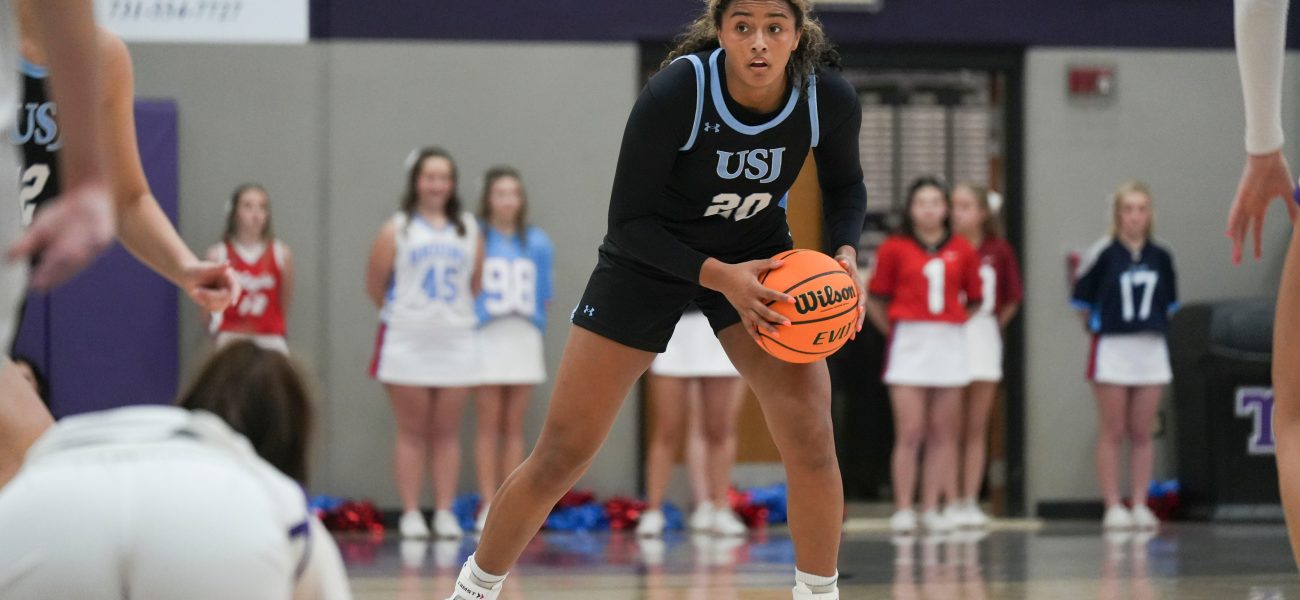
POLICY WIRE — Washington, D.C. — The future isn’t quietly knocking; it’s slamming the ball off the backboard, snatching rebounds, and drilling three-pointers. You see it in the high-school gyms, the summer circuits, the incessant buzz around what’s next. We’re talking about the machinery, the veritable talent forge, that spits out contenders like the freshly announced 2026 USA Women’s U18 National Team roster.
Because let’s be blunt: this isn’t merely a collection of twelve teenagers with talent. This is a snapshot of an athletic-industrial complex operating at peak efficiency. It’s an investment, a performance metric, and a subtle but effective projection of American soft power onto the international stage. Gold medals aren’t just shiny objects; they’re symbols, aren’t they?
So, when you glance at the names—Haylen Ayers, Jezelle “GG” Banks, Ryan Carter—you aren’t just seeing individual phenoms. You’re looking at the top 0.0001% of a colossal pipeline. Think about it: over 185,000 high school girls play basketball nationally each year. Of those, only about 1% will ever get a sniff at NCAA Division I. This twelve-player cohort? They’re practically the next iteration of athletic royalty, hand-picked for global dominance. And don’t they know it.
Take Kaleena Smith, for example. The California phenom averaged 31.5 points a game last season. That’s not a stat, that’s a statement. Or Kelsi Andrews and Miciah “Mimi” Fusilier, straight out of the IMG Academy, a place that practically churns out Olympic-caliber athletes. These aren’t kids playing pickup; they’re operating in a system designed to elevate. They’ve been on college coaches’ radar since middle school, many already having logged significant minutes on previous international stages.
It’s this ruthlessly efficient system that catches the eye. The constant conditioning, the specialized coaching, the travel, the intense academic pressure of maintaining eligibility while traveling coast to coast. They’re already professionals in all but name — and salary. And honestly, it makes you wonder how other nations even begin to compete.
“This roster represents the very best of American youth basketball talent, yes, but it also reflects years of systemic investment in women’s sports,” noted Janice Henderson, Director of Women’s Programs for USA Basketball, in a recent Policy Wire exclusive. “We’re not just training athletes; we’re cultivating leaders who represent our nation with unparalleled skill and sportsmanship.” It’s that blend, she insists, that makes the difference. Because, sure, winning’s nice. But a reputation for *how* you win? That sticks.
The stakes are perpetually high. These young women aren’t just competing for gold at the FIBA U18 Women’s AmeriCup in Mexico; they’re burnishing their personal brands, bolstering their future NIL earnings, and solidifying their college scholarship prospects. Every jump shot, every defensive stop, it’s all part of the resume. And that pressure, it’s palpable.
But the narrative isn’t universally replicated. You look across the globe, especially in regions like South Asia or parts of the Muslim world, and the landscape for women’s athletic development often looks starkly different. While countries like Pakistan are seeing modest increases in women’s participation in sports, institutional support, equitable access to facilities, and consistent funding for specialized training remain immense hurdles compared to the well-oiled machine that USA Basketball has perfected. These are often complex cultural and economic challenges—challenges that the US, through its systematic investment, has largely navigated, reaping considerable dividends both on and off the court. We’re talking about an entire different playing field, literally. Sometimes, the soft power exerted by the world’s most dominant women’s sports programs acts as an unspoken critique of those regions where such opportunities for girls remain elusive.
📄 POLICY WIRE WHITEPAPER PUBLISHED: PAKISTAN'S NATIONAL SECURITY POLICY PRIORITIES
👉 READ BY CLICKING HERE“Every single one of these players has a work ethic you rarely see. But what people miss is the network behind them—the coaches, the facilities, the specialized nutrition. It’s an ecosystem,” commented Dr. Amir Shahzad, a long-time Pakistani sports analyst, emphasizing the comparative lack of similar structured support in emerging sports nations. “You simply can’t manufacture this level of consistent talent without it.” It’s a blunt assessment, but it’s rooted in reality.
What This Means
This squad isn’t just chasing a 12th consecutive gold medal; it’s emblematic of a broader strategy, a confluence of national pride, economic savvy, and cultural influence. The meticulously crafted pathway from grade school prodigy to national team stalwart isn’t accidental. It’s a policy outcome, forged over decades through mechanisms like Title IX and substantial, sustained investment in youth sports. This infrastructure doesn’t just produce champions; it produces future leaders, educators, and taxpayers—an entire generation honed by the crucible of elite competition.
Economically, the burgeoning market for women’s sports—evidenced by soaring viewership and sponsorship deals—means these young athletes represent significant future revenue streams, not just for themselves via NIL, but for universities and professional leagues. Politically, every international victory serves as a powerful, non-military projection of American capability and values, particularly around gender equity in sports. It demonstrates a commitment to providing pathways for female achievement that isn’t always mirrored in every nation. And that, frankly, is a form of diplomacy you can’t buy. For an illuminating look into similar athletic management structures, you might check out how states handle the grind in Rookies and Rotations: A System Under Strain, Stateside and Beyond.
Ultimately, when this dozen young women steps onto the court in Irapuato, Mexico, they’re carrying more than just a ball. They’re carrying the weight of a nation’s sporting ambition, the expectations of an economic pipeline, and the subtle, yet persistent, message of what’s possible when a society decides to invest in its girls.