

Kyiv’s Expanding Reach: No Russian Logistics Safe as Ukraine Ratchets Up Pressure
POLICY WIRE — Kyiv, Ukraine — The chess pieces on the Ukrainian battlefield? They just got a much wider board. Russian commanders, long comfortable with their deep-seated supply arteries, are finding...

POLICY WIRE — Kyiv, Ukraine — The chess pieces on the Ukrainian battlefield? They just got a much wider board. Russian commanders, long comfortable with their deep-seated supply arteries, are finding their logistical lifelines — those quiet, forgotten routes snaking behind what they’d considered their ‘safe’ zones — are suddenly painted red on Ukraine’s targeting maps. A subtle but potent psychological warfare component underpins the kinetic reality. They’re telling Moscow: you can run, but you can’t reliably hide your critical gear, your fuel, your munitions, your people.
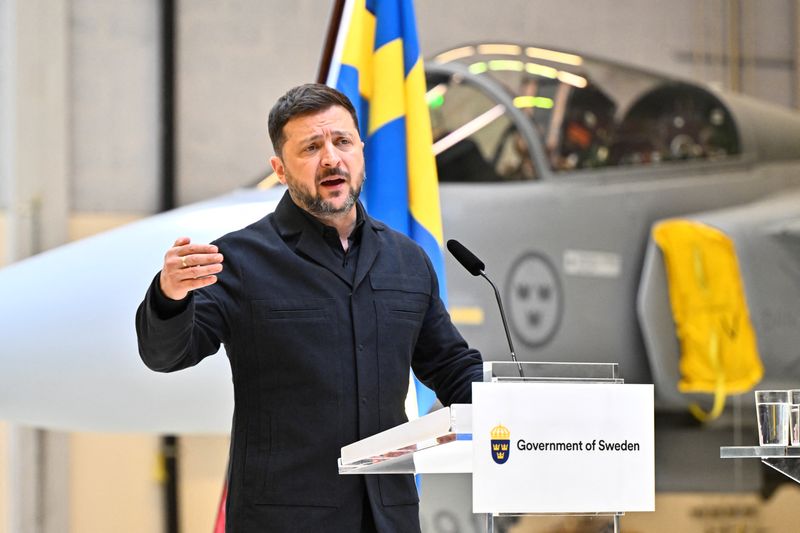
It’s a declaration that arrived not with thunderous fanfare, but through the deliberate, measured words of Ukrainian President Volodymyr Zelenskiy. He’s made it plain: his military now possesses the reach—and more critically, the explicit political green light—to strike Russian logistics and personnel deep within the swaths of Ukrainian territory Russia currently occupies. We’re not talking about a minor nuisance. We’re talking about a wholesale recalibration of how Russia can sustain its brutal, grinding operation.
“Every kilometer behind their lines now presents a danger. We’re telling them: you can’t establish comfortable bunkers. You can’t ferry supplies without risk. You can’t gather forces with impunity,” a senior Ukrainian defense official, speaking on background from Kyiv, confided to Policy Wire. It’s a blunt warning. Because if you can’t fuel your tanks or feed your troops, then even the most hardened lines eventually falter.
The extended reach, bolstered by Western-supplied precision weaponry—systems like the much-discussed ATACMS missiles—now puts targets up to 300 kilometers (about 186 miles) behind the front lines squarely in Ukrainian crosshairs. A recent report from the Stockholm International Peace Research Institute (SIPRI) highlighted that advanced artillery systems and long-range missiles supplied to Ukraine surged by nearly 60% in the last year, demonstrating a significant escalation in offensive capabilities. It’s not just a bluff. It’s an undeniable change in dynamic.
But this isn’t solely about exploding fuel depots — and rattled generals. This is about reshaping Moscow’s cost-benefit analysis. A European diplomat, requesting anonymity to discuss sensitive strategic assessments, put it crisply: “This isn’t about immediate tactical gains alone; it’s about making Russia’s entire occupation infrastructure—logistics, command, rear-echelon support—an intolerable burden. A slow strangulation, if you will, that chips away at their capacity to sustain the war. They can’t just bully their way through with sheer mass anymore; there’s an operational cost to every kilometer.”
And for good measure, think of the broader implications. The continuing instability, the constant threat to critical infrastructure, doesn’t just destabilize Eastern Europe; it ripples outward, particularly affecting fragile economies already navigating tumultuous waters. Nations from Lahore to Cairo are feeling the pinch of elevated global energy prices and disrupted grain shipments, phenomena tied directly to this protracted conflict. A sustained war, even with Kyiv’s new capabilities, translates into persistent geopolitical stress points—a veritable strait of woes for many, demanding careful diplomatic navigation.
Consider the cumulative effect: a driver making a clandestine run with munitions through the night now knows the night sky might betray him. A quartermaster thinking he’s safe 100 miles back now understands he’s just another target in a drone operator’s crosshairs. It’s a grinding psychological warfare campaign married to increasingly sophisticated munitions.
Kyiv isn’t just seeking to reclaim territory; it’s aiming to render Russia’s continued occupation militarily and economically untenable. And while Western capitals applaud the increased effectiveness, there’s an unspoken anxiety: how does Moscow react when every aspect of its military operations is fair game, even those it deemed secure? The answer will likely involve more of the ugly surprises this conflict has routinely delivered, escalating the stakes for everyone involved.
What This Means
Zelenskiy’s declaration, backed by confirmed capabilities, represents a fundamental shift in Ukraine’s strategy, moving beyond simply defending the front lines to actively dismantling the Russian occupation apparatus from within. Politically, it consolidates Western resolve and potentially signals to fence-sitting nations—including many in the Global South, from South Asia to the wider Muslim world—that Ukraine isn’t merely fighting for survival, but actively pushing for victory with strategic ambition. It suggests that Kyiv’s strategic goals are expanding beyond defense to offense in depth, raising the long-term prospects for Russian attrition. For Moscow, it forces an expensive and difficult reallocation of resources, pushing critical assets further from the front lines and stretching an already stressed logistical network. Economically, this prolonged war of attrition, with deeper strikes and more extensive disruption, will likely continue to rattle global markets, particularly for energy and agriculture. These are commodities upon which developing economies, such as Pakistan’s, rely heavily. The direct and indirect economic costs will undoubtedly continue to weigh on governments already contending with domestic challenges, underscoring the interconnectedness of global stability. This isn’t just about battlefield control; it’s about controlling the narrative, the tempo, and the economic burden of this long, drawn-out conflict, reminding everyone that the costs of conflict extend far beyond the immediate hostilities.