


Bisping’s Verdict: McGregor’s Welterweight Gamble Against Holloway Hinges on Punch, Not Grapple
POLICY WIRE — Las Vegas, USA — It isn’t always the bigger dog in the fight that decides to throw its weight around. Just ask former middleweight champion Michael Bisping, a man who knows a thing or...

POLICY WIRE — Las Vegas, USA — It isn’t always the bigger dog in the fight that decides to throw its weight around. Just ask former middleweight champion Michael Bisping, a man who knows a thing or two about octagon dynamics. His take on Conor McGregor’s strategy against Max Holloway at UFC 329 flies squarely in the face of what logic — and McGregor’s significant physical advantage — might suggest. We’re talking about an Irish phenom who’s wrestled exactly once against this same opponent before—many moons ago—and won, but won with a torn ACL for good measure.
Bisping, now a veteran UFC commentator, pretty much scoffs at the notion of McGregor utilizing his substantial bulk to ground Holloway. The pair are set to clash on July 11th at Las Vegas’s T-Mobile Arena. And it’s been 13 years, mind you, since McGregor first outpointed Holloway, kicking off what would become Hall of Fame-level careers for both. They’ve since stacked titles at featherweight — and grabbed various other golden baubles at lightweight. But here’s the kicker: Holloway has never competed at welterweight, a division McGregor has graced thrice. [QUOTE_PLACEHOLDER]
There are wrinkles here, deep ones. McGregor, after all, carries a hefty five-year absence from the cage, a hiatus precipitated by a brutal broken leg suffered during his 2021 loss to Dustin Poirier. But he will possess a natural size advantage over the 34-year-old Holloway, who, let’s be honest, has probably aged better in the interim. Bisping, however, believes McGregor will lean into raw power, a strategy he elaborated upon for The Independent, citing insights from prediction market experts at casino.org/us. It’s an interesting read for anyone, say, contemplating investment strategies or, you know, planning national budgets in uncertain times.
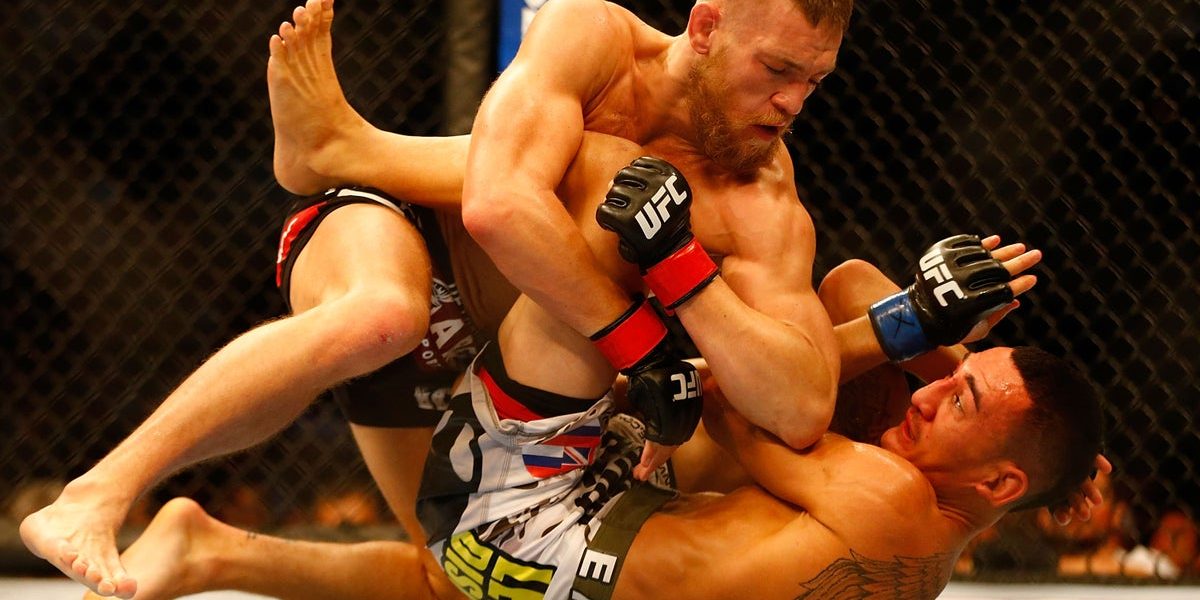
The reasoning is pretty blunt: Wrestling is one of the most cardio-heavy aspects of mixed martial arts. It’s so tiring trying to take down another human being that has good takedown defence. And Conor historically is very explosive but tends to fade as the fights go on, so I don’t think we’ll see Conor shooting [for a takedown]. He doesn’t mince words. I wouldn’t say it’s the smart approach, anyway, Bisping asserted, painting a picture of McGregor doing what he does best. Conor’s best chance is to go out there, believe in his left hand, land the big shot, knock him out, and then – you know – blow the roof off the T-Mobile Arena. I don’t think anyone’s shooting for a takedown in that fight. A clear, definitive stance. The entire saga has the makings of a Hollywood production, a common enough narrative now for marquee sporting events worldwide, echoed even in the fervent devotion to athletic idols you’d witness from Rawalpindi to Rajasthan, where larger-than-life figures hold a peculiar sway over the public consciousness, much like political strongmen.
Funnily enough, McGregor did deploy an unusually wrestling-centric approach in spells of his initial encounter with Holloway. Though, to be fair, he was also hamstrung by an injury then, which likely informed his tactics. McGregor, frankly, is desperate for a victory, his last triumph in the Octagon coming in 2020 against Donald Cerrone. Prior to that, his preceding win was a 2016 KO of Eddie Alvarez, the very bout that crowned him lightweight champion. Holloway, typically a lightweight now, recently held the Baddest Motherfr title before losing it in a one-sided points defeat to Charles Oliveira, who, in a twist, successfully out-grappled the Hawaiian for five rounds in March.
📄 POLICY WIRE WHITEPAPER PUBLISHED: PAKISTAN'S NATIONAL SECURITY POLICY PRIORITIES
👉 READ BY CLICKING HEREYet, Holloway remains an all-time great featherweight, a status solidified by twice knocking out Jose Aldo — after McGregor famously did so in 13 seconds — as well as former champion Anthony Pettis, amongst other impressive showings. For his part, McGregor seems bullish. I’m out so long, five years. My body’s fresh, my mind is sharp, I’m ready to come back. I’ve got a great opponent, I’ve got a great deal off the UFC. I’m very, very happy. They honored me, finally. The opponent is a man that I’ve beaten before in Max Holloway. He is an established fighter, an accomplished fighter, former UFC world champion, multiple-time, former UFC ‘BMF’ world champion. This is a quality opponent, — and our last bout was martial-arts mastery by yours truly, so I plan on doing it again. I plan on showing my growth — and my improvements in there. I’m very, very excited for it. Preparation has gone very well. We’re living, breathing, and sleeping in the gym. Big words. You’d expect nothing less, wouldn’t you?
What This Means
This isn’t just about a fight; it’s about the ever-evolving business of elite athletic longevity — and branding. McGregor’s self-proclaimed sense of being honored by the UFC hints at a complex relationship between a superstar and his corporate overseers. The implicit power dynamic, where a fighter, even one on a long losing streak, can command terms and leverage his global appeal, suggests a peculiar form of economic negotiation often unseen in other professional sports. It’s almost a proxy political tussle for influence within a vast, commercialized enterprise, a fight as much about perception and market share as it’s about physical prowess.
And Holloway’s consistent performance, despite a recent grappling defeat, positions him as a crucial gatekeeper, an embodiment of skill overcoming pure hype. The choice of striking over wrestling by McGregor, if Bisping is correct, reduces the tactical variables to a binary, high-risk proposition: land the knockout or likely lose on points. This strategy also serves as a potent marketing hook. Spectators, particularly in markets burgeoning with new combat sports enthusiasts—from Mumbai to Manila, which often includes a strong affinity for wrestling disciplines historically—tune in for definitive, explosive finishes. For Policy Wire readers tracking global entertainment economics and the shifting sands of public engagement, understanding these tactical decisions offers a peek behind the curtain of a multi-billion dollar industry that continues to reshape how athletes, and by extension, their originating nations, are perceived on the global stage. It’s a commercial enterprise, pure and simple, but with all the theatricality of India’s most heated digital debates.