


Shadow of Monsoon: Arid Southwest Braces for Disruption Amidst Policy Gaps
POLICY WIRE — ALBUQUERQUE, N.M. — In the sun-baked plains of New Mexico, the arrival of June doesn’t just herald the turn of a calendar page; it signals the subtle shift of the political tectonic...

POLICY WIRE — ALBUQUERQUE, N.M. — In the sun-baked plains of New Mexico, the arrival of June doesn’t just herald the turn of a calendar page; it signals the subtle shift of the political tectonic plates, particularly for anyone managing public utilities or drawing up disaster response budgets. It’s not just about a fresh start to a new meteorological season; it’s a time when state agencies brace themselves for what often feels like nature’s annual interrogation of their preparedness, an unspoken review of every dike and drainage pipe, every emergency broadcast system, and every carefully planned water allocation strategy.
Weather gurus here, those folks who literally get paid to read the skies, refer to this period, alongside July and August, as a defined meteorological summer, categorized by predictable—or, in the era of erratic climate, increasingly unpredictable—temperature trends and precipitation patterns. We aren’t talking astronomical markers here; that formal summer solstice on June 21st? It’s a distant thought when the conversation among agriculturalists, emergency services, and frankly, anyone reliant on the land, turns to a single, consuming obsession: water.
It’s not all sunshine and gentle breezes, even as [QUOTE_PLACEHOLDER] And believe me, that sort of warming is, at first glance, an everyday expectation in a state known for its fierce sun. But for policymakers, that slight deviation from the norm, when juxtaposed against an impending season of wild swings, becomes a flashpoint for anxiety. You see, the Atlantic Hurricane Season has just gotten underway, and, as local meteorologists note with an almost palpable tension, [QUOTE_PLACEHOLDER] That countdown isn’t just for storm chasers; it’s a stopwatch for public infrastructure and crisis management plans across the region.
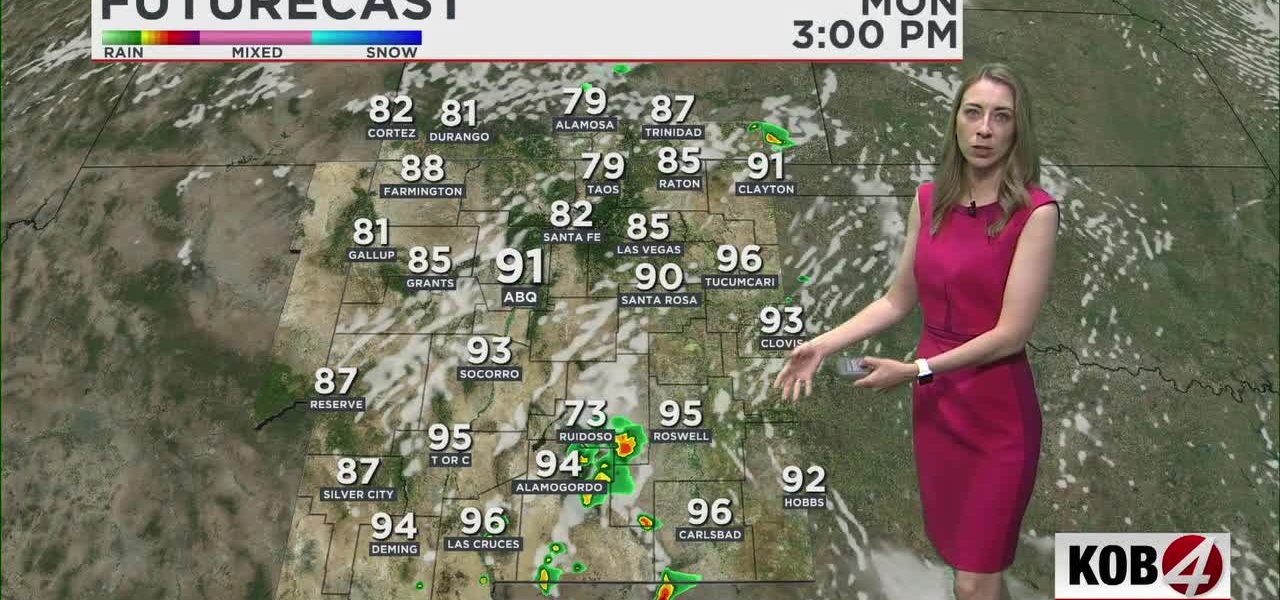
This early June, much of New Mexico might appear dry. You’d think that’s a good thing, given the threats on the horizon. But clouds, those seemingly innocuous puffs, were starting their formations—not unlike storm clouds gathering on the political horizon, mind you—in the southwest, western, and south-central mountain chains. They were predicted to make their slow, stately march east-northeastward throughout the day. This gradual increase in cloud cover over central areas of the state by late afternoon and evening sounds rather tranquil, doesn’t it? Yet, it’s a precursor, a subtle stage-setting before nature’s dramatic entry. A small part of the region, notably areas [QUOTE_PLACEHOLDER] faced [QUOTE_PLACEHOLDER] later that day, according to a local report, with activity slated to shift eastward as night fell.
What minuscule rainfall these regions might capture wouldn’t necessarily solve any long-term drought. [QUOTE_PLACEHOLDER] states one forecast from KRCBG, painting a picture of almost negligible relief. That’s barely a sip for parched earth, just enough to tantalize without truly sating. But here’s the insidious twist: even these meager precipitations come with danger. [QUOTE_PLACEHOLDER] This isn’t just about localized deluges; it’s about the landscape’s inability to cope after years of fire and aridity. It’s a cruel paradox: an arid region needing rain desperately, but unable to safely absorb it when it does come. Some of these storms, as the original briefing from KOB.com’s Amanda Goluszka noted, aren’t even about the rain. [QUOTE_PLACEHOLDER] Dry downbursts – wind that simply kicks up dust instead of delivering precious moisture – it’s an almost darkly ironic offering from the sky.
📄 POLICY WIRE WHITEPAPER PUBLISHED: PAKISTAN'S NATIONAL SECURITY POLICY PRIORITIES
👉 READ BY CLICKING HEREAnd things don’t look to simplify much. Tuesday and Wednesday, it turns out, were expected to bring [QUOTE_PLACEHOLDER] There’s a [QUOTE_PLACEHOLDER] reported for that region, according to state weather services, an uncomfortable quantitative measure of impending trouble. a handful of storms could intensify, becoming [QUOTE_PLACEHOLDER] This escalation, timed between 4 p.m. and midnight on Tuesday, presents a specific challenge for evening commutes — and disaster response teams. But it’s not universal; the Four Corners area, ever the enigma, was pegged for [QUOTE_PLACEHOLDER] This fragmented, inconsistent meteorological forecast means policymakers are never dealing with a single, clear problem but a patchwork of highly individualized, spatially variable challenges. It’s a planner’s nightmare.
What This Means
This isn’t merely about forecasting rain or sun; it’s about governance in a changing climate. The predictable cycles that once informed agricultural practices, municipal water planning, and infrastructural investments are now unreliable, requiring dynamic and flexible policy responses. The [QUOTE_PLACEHOLDER] becomes a liability in a state that has seen its landscapes repeatedly scorched by wildfires, rendering soil incapable of absorption. Every drop of rain is a double-edged sword – desperately needed for replenishment, but a potent engine of destruction on denuded land. The financial implications are considerable: increased spending on emergency services, re-engineering storm drains, and potentially substantial costs for post-flood recovery. Water woes here, they’re not new; they’re just getting more complicated. It forces state legislators and local councils to reconsider zoning regulations, particularly around flood-prone areas, and to invest heavily in resilient infrastructure, which isn’t cheap, especially when competing for federal funds.
Consider the echoes of this situation in other arid, often populous regions of the world, like Pakistan. There, the capricious nature of the monsoon, exacerbated by climate change, dictates the very fabric of life. In July 2022, Pakistan endured catastrophic flooding that killed over 1,700 people and displaced millions, destroying vast swathes of agricultural land and critical infrastructure. The financial impact was estimated to be in the tens of billions of dollars, and the slow, agonizing recovery continues to ripple through its economy and political landscape. Both regions—New Mexico and South Asia—confront the brutal reality that their climate’s annual dance now comes with unpredictable, high-stakes moves. For governments in Islamabad or Santa Fe, managing these climate shocks requires foresight, cross-agency collaboration, and sustained funding for adaptation and mitigation—often at the expense of other pressing social or economic demands. The inability to predict the exact path or intensity of storms translates into chronic uncertainty for farmers, businesses, and indeed, entire communities, forcing difficult policy choices about land use, resource allocation, and even human displacement. But who’s gonna pay for it all? That’s the real policy question lurking beneath these cloud formations. And it’s not a simple answer.