


The Tropicana Tango: Tampa Bay’s Tactical Follies Ignite Roster Debates Amidst Lingering Defeats
ST. PETERSBURG, Florida — There are losses, and then there are object lessons—the kind that peel back the layers of strategic decision-making to reveal the fragile bones beneath. For the Tampa Bay...

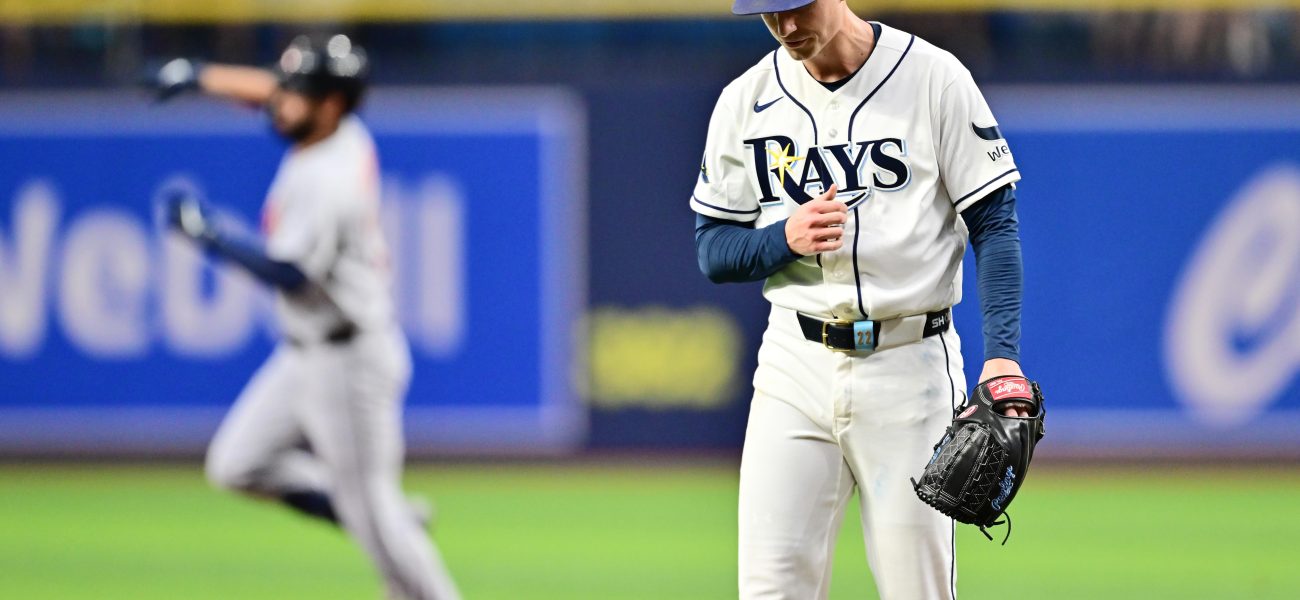
ST. PETERSBURG, Florida — There are losses, and then there are object lessons—the kind that peel back the layers of strategic decision-making to reveal the fragile bones beneath. For the Tampa Bay Rays, Friday night’s stunning 10-9 unraveling against the Detroit Tigers wasn’t just a defeat; it was a particularly brutal dissection of modern baseball’s high-stakes gambles, played out under the glaring, indifferent lights of Tropicana Field. The scoreboard, that stark arbiter, told only a sliver of the tale. The real story lay in the grinding, existential dread that slowly, inexorably, permeated the stands as an improbable comeback effort eventually sputtered, leaving more questions than points on the board.
It’s easy enough to focus on the numbers, isn’t it? To tally the runs, dissect the home runs, — and cast blame where it seemingly lands lightest. But tonight’s debacle felt heavier, pregnant with implications for a franchise that often prides itself on outmaneuvering its wealthier peers. How do you square the cold reality of yielding double-digit runs—to a team, let’s remember, ranked 29th out of 30 MLB clubs in runs scored this season (ESPN data, June 1, 2026)—with a front office celebrated for its acute analytical prowess? It’s a stark mismatch, isn’t it? Like a seasoned diplomat stumbling over basic pleasantries.
The stage was set, tragically, by Griffin Jax. The right-hander, a converted reliever on whom the organization had pinned its hopes for rotation stability, managed all of four innings, surrendering six earned runs. He walked the lead-off man in the third—always a portent of doom, that—before ceding three monstrous home runs. And these weren’t just garden-variety dinks; they were rockets launched with apparent impunity. One wonders what sort of internal deliberations led to a reliever, whose value often lies in brief, high-intensity bursts, being tasked with carrying a bulk of the early load against *any* team, let alone one desperately scrounging for offense. One analyst, speaking off-the-record earlier this week, likened it to ‘bringing a knife to a drone fight’—an amusing, if pointed, observation.
The procession of subsequent relievers didn’t exactly staunch the bleeding. Trevor Martin, a reliever with a well-earned reputation for salvaging innings, logged three workmanlike frames, but not before allowing another pair of solo shots. And Cole Sulser? He navigated the eighth without a long ball, a minor victory, perhaps, but still coughed up two more runs on base hits. Ten runs. Just think about that. They were practically begging the Tigers to stop scoring, like a supplicant in a parched desert seeking water. Yet, the torrent continued. Because, sometimes, once a dam bursts, there’s just no holding back the deluge.
But the true agony, as any seasoned fan will tell you, wasn’t the early collapse. No, it was the tantalizing, excruciating glimpse of a potential escape. Junior’s two-run blast in the fourth. Ryan Vilade’s three-run missile in the sixth. These were not modest swings; they were acts of violent, hopeful defiance, the kind that temporarily quiet the internal monologue of doom. Vilade’s 438-foot shot, exiting the bat at 110.1 mph, practically dared the fates to ignore the Rays’ renewed resolve. Then, in the eighth, a base-loaded walk, followed by Nick Fortes’ two-run double — and Ben Williamson’s two-run single. And suddenly, it was 10-9. An entire stadium held its breath, witnessing what felt less like a baseball game and more like a fever dream of statistical impossibility. They couldn’t, could they? But no. It all died there. A single, solitary run separated a moral victory from another dispiriting chapter.
📄 POLICY WIRE WHITEPAPER PUBLISHED: PAKISTAN'S NATIONAL SECURITY POLICY PRIORITIES
👉 READ BY CLICKING HEREManager Kevin Cash, ever the stoic face of the franchise, conceded later, “Look, nights like this aren’t just about pitches; they’re about the entire infrastructure, about resilience when your carefully laid plans hit a wall. We didn’t execute, plain — and simple, but the questions it raises? Those go far beyond a single box score.” Meanwhile, from the strategic quiet of the front office, Erik Neander, President of Baseball Operations, offered a more economic appraisal. “Every dollar we commit, every prospect we develop—it all comes down to performances like these. We’re constantly evaluating return on investment, and tonight… well, tonight’s performance highlights the brutal unpredictability even in our most measured calculations.”
To compound the misery, the injury report read like a grim coda: Taylor Walls sidelined with a hamstring issue, and Chandler Simpson—fresh off an apparent collision with his own helmet after sliding into second—gushing blood. Just another Tuesday, eh?
What This Means
For Policy Wire readers, this seemingly localized sports story holds surprising resonance, echoing the perennial tensions between tactical innovation and brute force in geopolitics, or perhaps, the economic fallout of misallocated resources. The Rays, celebrated for their ‘Moneyball’-esque approach, have long carved out success by meticulously optimizing marginal gains. But a performance like Friday’s suggests the limits of such granular calculations when confronted with wholesale strategic collapse. It raises urgent questions about the sustainability of converting players out of their established roles, especially when core rotational assets falter. What’s the fiscal impact of relying on unproven talent, or stretching existing personnel past their breaking point? A prolonged string of such losses, regardless of analytics, invariably translates into dwindling fan engagement, reduced merchandise sales, and an overall erosion of brand equity—a sobering prospect for any publicly visible entity. In an increasingly interconnected sports economy, where even the smallest franchises compete for global attention and investment (consider, for instance, the intricate financial structures that propel collegiate sports into broader, often contentious, global arenas), repeated operational missteps threaten far more than just a place in the standings. They speak to the organizational health, the investor confidence, and the raw economic power of a brand in a very direct and punishing way. The Rays’ current dilemma is not unlike that faced by smaller, resource-constrained nations in the Muslim world, often forced to make hard choices in resource allocation and strategic defense, knowing one bad gamble can lead to cascading failures across an entire system. You can only get so many things wrong before the entire edifice starts to groan.