


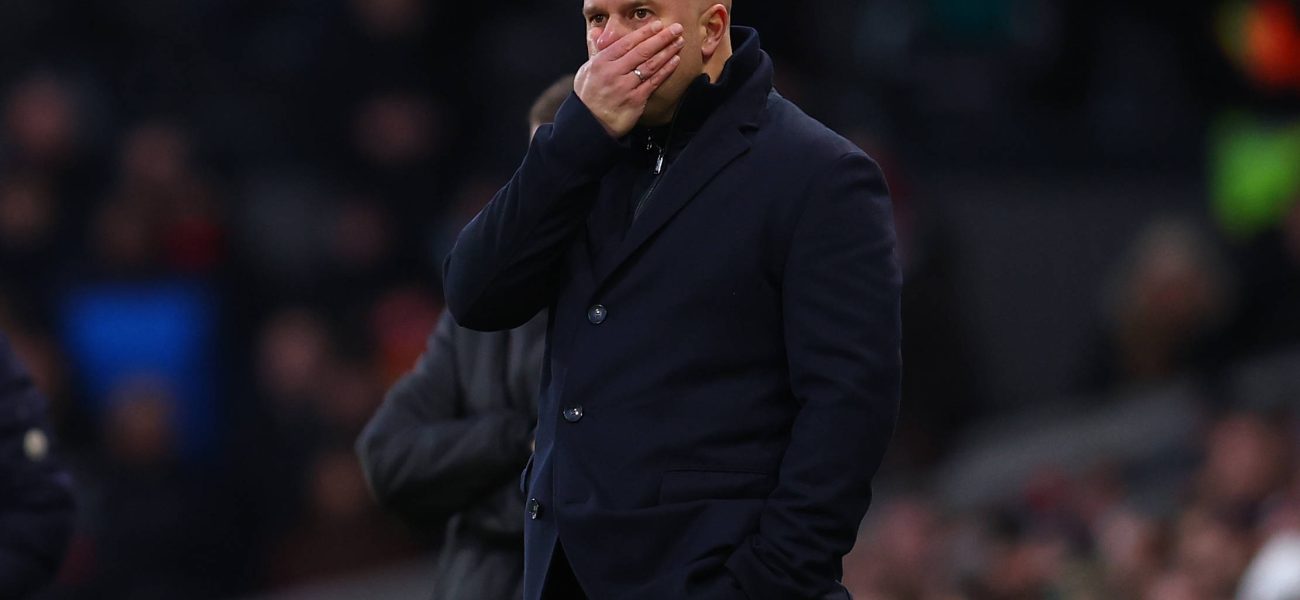
Anfield’s Executive Cadre Sealed Slot’s Fate Months Ago, Sources Confirm
POLICY WIRE — London, UK — The narrative of modern football, a sport increasingly tethered to corporate maneuvering, often presents sudden shifts as meticulous, fresh evaluations. But peel back the...

POLICY WIRE — London, UK — The narrative of modern football, a sport increasingly tethered to corporate maneuvering, often presents sudden shifts as meticulous, fresh evaluations. But peel back the carefully curated press releases, and you’ll find the cold calculus usually predates the public outcry by months. Such is the case, Policy Wire understands, with Liverpool Football Club and their recent—though ostensibly recent—decision regarding head coach Arne Slot. His tenure, or rather, the belief in its ultimate efficacy, was reportedly weighed, found wanting, and privately decided upon long before the final, theatrical axe fell.
It wasn’t a sudden epiphany that shook Anfield’s hierarchy. Instead, it was a protracted, agonizing bleed. The whispers among the club’s power brokers, led by Football CEO Michael Edwards and Sporting Director Richard Hughes, weren’t about if Slot would be replaced, but rather, when the inevitable would finally manifest. The popular narrative suggests the decision came at the season’s close, a product of a comprehensive review. Not so. My sources, deeply entrenched within the club’s labyrinthine executive structure, point to March as the watershed. That’s when Liverpool’s campaign—a sputtering, often baffling affair—truly came undone.
Three matches in particular, brutal defeats against elite opposition, tore through any lingering illusions. They weren’t just losses; they were tactical capitulations. The Reds conceded eight goals, yes, but the real issue was how hollow they looked doing it. Intensity, that once defining, almost spiritual trait of a Liverpool team, evaporated. Players, once giants, shuffled like specters. And for the club’s brain trust, the writing wasn’t just on the wall; it was etched in granite.
“We don’t operate on sentiment, not when billions are at stake and expectations touch the sky,” a senior figure close to Michael Edwards relayed on condition of anonymity, encapsulating the cold, hard reality of big-club management. “March exposed fundamental structural issues that a mere change in luck wouldn’t fix. The performance metrics, player output under pressure—they all told a story that couldn’t be ignored for long. It becomes less about hope, more about managing a commercial asset.” And a lucrative one at that. As of 2023, Liverpool ranked among the top ten most valuable football clubs globally, with Forbes estimating its worth at approximately $5.29 billion, fueled heavily by commercial and broadcasting revenues. A decline on the pitch directly threatens that bottom line.
The decision, effectively, was taken behind closed doors long ago. The remaining fixtures, a grim procession of middling results, served only to rubber-stamp an internal conclusion that Slot simply wasn’t the man to steward the club beyond Jürgen Klopp’s monumental legacy. It left a sour taste for many, particularly the faithful following from places like Pakistan, where Liverpool shirts are as ubiquitous as local cricket jerseys. But this isn’t merely about sporting aesthetics. It’s about a club that’s a massive, multi-continental enterprise.
Richard Hughes, the club’s recently appointed sporting director, apparently saw in Andoni Iraola, then of Bournemouth, the stark contrast needed. Hughes, who brought Iraola to Bournemouth and witnessed his magic firsthand, championed his relentless pressing, his clarity of vision—attributes precisely what Liverpool supporters felt was missing. “The data and the eye test confirmed it: Iraola builds highly functional units, squeezing every drop of performance from his squads without relying on exorbitant spending sprees,” Hughes is said to have told close associates. “That’s the kind of pragmatic efficiency you need when navigating modern football’s financial fair play tightropes and intense pressure. You want results, but you also need sustainability.”
📄 POLICY WIRE WHITEPAPER PUBLISHED: PAKISTAN'S NATIONAL SECURITY POLICY PRIORITIES
👉 READ BY CLICKING HEREBecause that’s the thing. In today’s hyper-capitalized sports, patience is a commodity in short supply. You might endure a disappointing season—every giant has them. But stagnation? That’s an existential threat. It’s why, when the atmosphere at the club turned sour, when confidence looked shattered, the decision-makers had to act. Removing Slot, Policy Wire confirms, was a resolution already months old, just awaiting the right moment to surface. The identity crisis on the touchline needed a surgical intervention, not a Band-Aid.
What This Means
This early, calculated decision to part ways with Slot isn’t just football gossip; it’s a window into the cold, strategic heart of top-tier professional sports. In a world where European club football is increasingly dictated by geopolitical investment—think Saudi Arabian funds, Qatar’s sovereign wealth, and U.S. hedge funds—the perception of stability and future profitability is everything. A major club seen to be adrift on the pitch risks not only domestic honors but its global brand appeal, lucrative sponsorship deals, and the attraction of elite talent.
For Liverpool, this move signifies a proactive (if belatedly announced) correction of course. It’s a boardroom admitting error swiftly, mitigating against longer-term financial damage from continued underperformance. The choice of a successor like Iraola, known for maximizing output without record-breaking transfers, speaks volumes about a shifting focus. It implies an acknowledgement that endless spending isn’t always the answer, and shrewd management, extracting maximum value from existing assets and intelligent recruitment, might be the more sustainable path forward for navigating stringent Financial Fair Play rules and fierce market competition. The decision, when viewed through a business lens, wasn’t about who *deserved* more time. It was about mitigating risk — and protecting a multi-billion dollar enterprise from a potentially irreversible downturn.