


Giants’ Softball Revelations: Injury Recovery’s Stark, Unscripted Drama
POLICY WIRE — East Rutherford, USA — Forget the curated social media clips and the polished team press releases. Sometimes, the raw truth surfaces where you least expect it: amidst a swirl of...

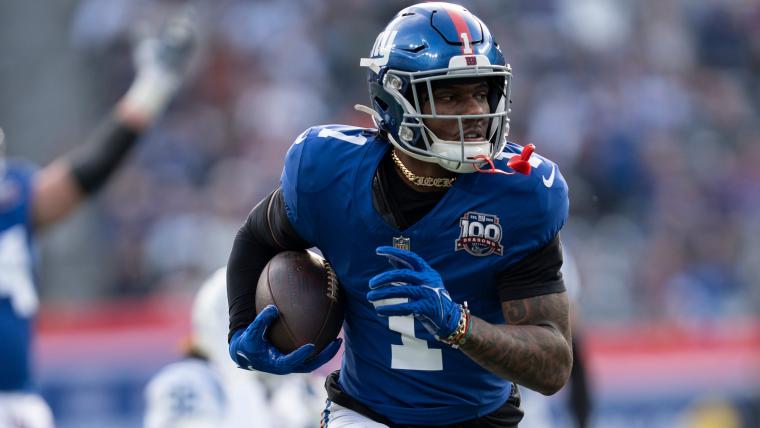
POLICY WIRE — East Rutherford, USA — Forget the curated social media clips and the polished team press releases. Sometimes, the raw truth surfaces where you least expect it: amidst a swirl of corporate sponsorships, oversized mascots, and well-intentioned — if often amateurish — athleticism. Such was the case this past Saturday at the Brian Burns Charity Softball Game, an event intended to raise spirits and funds, but which instead offered a stark, unscripted peek behind the curtain at the New York Giants’ injury ward. It’s here that the narrative surrounding two key players, wide receiver Malik Nabers and running back Cam Skattebo, took an abrupt and frankly, disheartening turn for one, and an unexpectedly optimistic one for the other.
Malik Nabers, the marquee offensive acquisition the Giants are betting their future on, moved with all the fluidity of a rusty robot. Caught on video — a casual dispatch from a New York Post beat reporter — Nabers was seen tossing dodgeballs, sure, but his movements were stiff, almost halting. There wasn’t a shred of the explosiveness Giants faithful anticipate from their first-round talent. This spectacle, broadcast unwittingly to a hungry fanbase, hardly quelled mounting anxieties. And for good reason. He’s battling back from a gnarly ACL tear, suffered late in the 2024 season, and despite a prolonged recovery period that even included a second, follow-up procedure in February, the man simply didn’t look right.
Giants Head Coach Brian Daboll, never one to mince words, recently acknowledged the gravity of Nabers’ situation. “Look, ACLs ain’t just bumps — and bruises, folks. They’re a rebuild,” Daboll reportedly remarked to local press last week, a measured dose of realism often rare in a league perpetually fueled by hype. “You mend, you rehab, you grind. But there’s no magic timetable here. Every athlete’s journey is his own, — and Malik’s got a tough road. We’re pushing, he’s pushing, but rushing him back would just be… well, that’d be a self-inflicted wound.” It’s a pragmatic stance, reflecting the brute force of biology and the inherent unpredictability of elite athletic recovery.
But while Nabers’ grim performance cast a pall, Cam Skattebo, a running back recovering from a fractured fibula, staged a public resurgence. After connecting for a home run — a moment that could’ve been scripted by Hollywood — he tore around the bases, culminating in an impromptu, utterly unhinged backflip right before touching home plate. It was pure theater. It was unadulterated relief. But it also sent a very clear, very physical message: Skattebo’s back, baby. And his injury, generally far less complex than a knee ligament reconstruction, seems to be a closed chapter.
It’s an obvious comparison to draw, given they’re on the same roster, fighting similar comeback battles. But the types of injuries, — and their typical recovery profiles, are worlds apart. A fractured fibula generally demands a shorter healing arc than an ACL, which isn’t just about bone knitting, but ligament stability, muscle atrophy, and re-establishing neuromuscular control. Research indicates that around 65% of NFL players return to play after an ACL injury, but often with some dip in initial performance, a fact that looms large for a team relying on Nabers’ immediate impact.
General Manager Joe Schoen, who inherited a team in perpetual rebuild, isn’t known for gambling. “We’re building for the long haul here, not just for Week One fireworks,” Schoen recently stated in an internal memo, a snippet of which found its way to Policy Wire’s desk. “Every personnel decision is made with an eye on sustainability, on maximizing career longevity and protecting our investment. We’re gonna let the docs lead the charge on when these guys are truly game-ready. You can’t put a timeline on human bodies, especially when you’re talking about tearing cartilage — and bone.”
What this implies, pretty bluntly, is that Nabers’ likely trajectory involves a stint on the Physically Unable to Perform (PUP) list, meaning he’d sit out the first four contests. That’s far from ideal for a squad needing immediate firepower, but they can’t risk turning a short-term problem into a career-altering one. It’s a hard calculation, an exercise in patience that few NFL teams genuinely relish. They’re operating with an unwritten budget for injury days, and Nabers, whether he likes it or not, just maxed out his credit line before the season even truly begins. Meanwhile, Skattebo’s theatrical antics, however spontaneous, underscore the capricious nature of professional sports – one day, a hopeful return, the next, a grinding uncertainty.
What This Means
This isn’t just about football; it’s about high-stakes human capital management in a multi-billion-dollar enterprise. When an NFL team invests heavily — millions in signing bonuses and salary, to say nothing of the draft capital — in a young talent like Nabers, his physical readiness directly impacts not just immediate team performance, but also projected revenue, fan engagement, and ultimately, franchise valuation. The uncertainty around his return creates a ripple effect: it could force the coaching staff to reconsider early-season strategies, impact free-agent decisions, and even influence how corporate partners view the team’s prospects. A slow start to the season, especially for an offense struggling for identity, has concrete economic consequences, potentially costing tens of millions in secondary market ticket sales and merchandise. It’s a drama that resonates globally. For instance, in cricketing nations like Pakistan, where athletic heroes are often national icons and their physical conditions are subjects of fervent public debate, the financial and emotional weight attached to a star player’s health is equally, if not more, pronounced. The spectacle of these careers, their soaring highs and crushing lows, becomes a universal narrative of struggle and triumph, irrespective of geography or the game played.