


Algorithmic Aggravation: How AI Fakes Are Fueling Old Fires in Seoul
POLICY WIRE — Seoul, South Korea — It’s a weary dance, isn’t it? The subtle (or not-so-subtle) maneuvering between economic partners — and strategic rivals. In East Asia, this particular...

POLICY WIRE — Seoul, South Korea — It’s a weary dance, isn’t it? The subtle (or not-so-subtle) maneuvering between economic partners — and strategic rivals. In East Asia, this particular choreography usually features South Korea — and its gargantuan neighbor, China. Their relationship’s a Gordian knot of trade, historical grievances, and an increasingly assertive Beijing. Just when you think you’ve seen every twist, along comes a fresh wrinkle: artificial intelligence, now weaponized, as ever, for political ends.
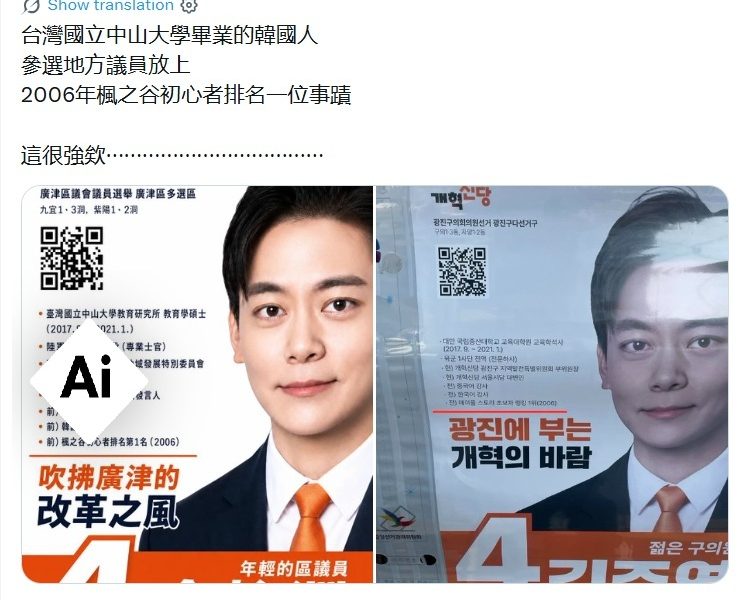
Nobody actually thought it was real. Not for long, anyway. But a digitally concocted campaign poster, depicting a leading South Korean opposition figure—someone Beijing wouldn’t exactly call a fan—standing a tad too cozily with a shadowy figure resembling Chinese President Xi Jinping, still managed to ripple across the Korean internet. It’s the stuff of instant viral outrage, even if the fakery was quickly exposed. A crude deepfake, some might call it. Others? A deliberate digital provocation, tailor-made to sow distrust right before a heated election cycle.
This isn’t some harmless prank pulled by an overzealous troll in a basement. It’s a calculated, if clunky, jab in a broader geopolitical tussle, adding another layer to the already fraught public sentiment in Seoul regarding Beijing. South Koreans, after years of perceived economic coercion and cultural appropriation, don’t exactly need much prompting to view anything vaguely pro-China with deep suspicion. And now, AI’s thrown its digital wrench into the works, manufacturing faux alliances.
“We’ve been through too much to simply dismiss this as mere digital mischief,” remarked Lee Jae-myung, leader of the Democratic Party and the likely target of the AI fabrication. “It’s a digital echo of real interference, a phantom limb of foreign influence attempting to distort our democratic process.” Strong words, for sure. But, because the poster originated on platforms with murky attribution—the digital equivalent of a note shoved under the door—it’s tough to pinpoint exact culprits. That, of course, plays right into the hands of those who prefer plausible deniability.
But the damage, small as it might appear on the surface, compounds a narrative that Beijing is increasingly trying to shape political discourse far beyond its borders. Just look at the Belt — and Road Initiative, a massive infrastructure drive. It’s got nations from Southeast Asia to the Persian Gulf caught in a similar bind, grappling with Chinese influence, sometimes beneficial, often onerous. The tactics vary, but the ambition doesn’t. And when it comes to technology, China’s certainly a frontrunner; some reports suggest they’re investing upwards of $147 billion annually into AI development, positioning them for widespread digital sway.
Of course, Chinese officials have—predictably, perhaps—brushed off the entire kerfuffle as South Korea’s internal affair. “Such sensationalist claims of interference are regrettable,” stated a spokesperson for China’s Ministry of Foreign Affairs, speaking on background. “We encourage all parties to focus on productive relations rather than unfounded conspiracy theories manufactured by domestic political rivals.” They always say that, don’t they?
📄 POLICY WIRE WHITEPAPER PUBLISHED: PAKISTAN'S NATIONAL SECURITY POLICY PRIORITIES
👉 READ BY CLICKING HEREStill, the episode highlights a terrifying new frontier in information warfare: the accessible, cheap, and convincing fabrication of reality. Anyone with a mid-range laptop — and a nefarious imagination can cook up an image, a video, a voice. It’s an age where ‘seeing isn’t believing’ is rapidly becoming the universal truth. For countries like Pakistan, for instance, which is navigating its own complex relationship with Chinese investment and has its fair share of highly charged political campaigns, this precedent is particularly alarming. What happens when deepfakes target its elections, exacerbating religious or ethnic divisions? The playbook writes itself.
What This Means
This AI-generated election poster, quickly debunked but not quickly forgotten, isn’t just about one election in South Korea; it’s a symptom of a much larger, global issue. First, it accelerates the decay of public trust in digital information. We’re already teetering on the edge, with algorithms shaping what people see; now we’ve got algorithms actively creating misdirection. Second, it deepens the existing anti-China sentiment in nations that already feel economically or geopolitically pressured by Beijing. It feeds directly into the narrative that China isn’t playing by the accepted international rules, even in the digital sphere. Third, it poses an urgent regulatory challenge for governments worldwide. How do democracies protect their information integrity when fakes are this easy to generate — and propagate? Because it’s only going to get slicker, isn’t it?
The incident forces a reckoning: who controls the narrative in the age of AI? And when a picture really isn’t worth a thousand words anymore, what are we left with?