


New Mexico’s Ephemeral Monsoon: Desert Mirage or Warning?
POLICY WIRE — Albuquerque, United States — For a land that defines itself by its stark, relentless sun and dust-dry arroyos, a splash of green—however brief—feels less like relief and more like a...

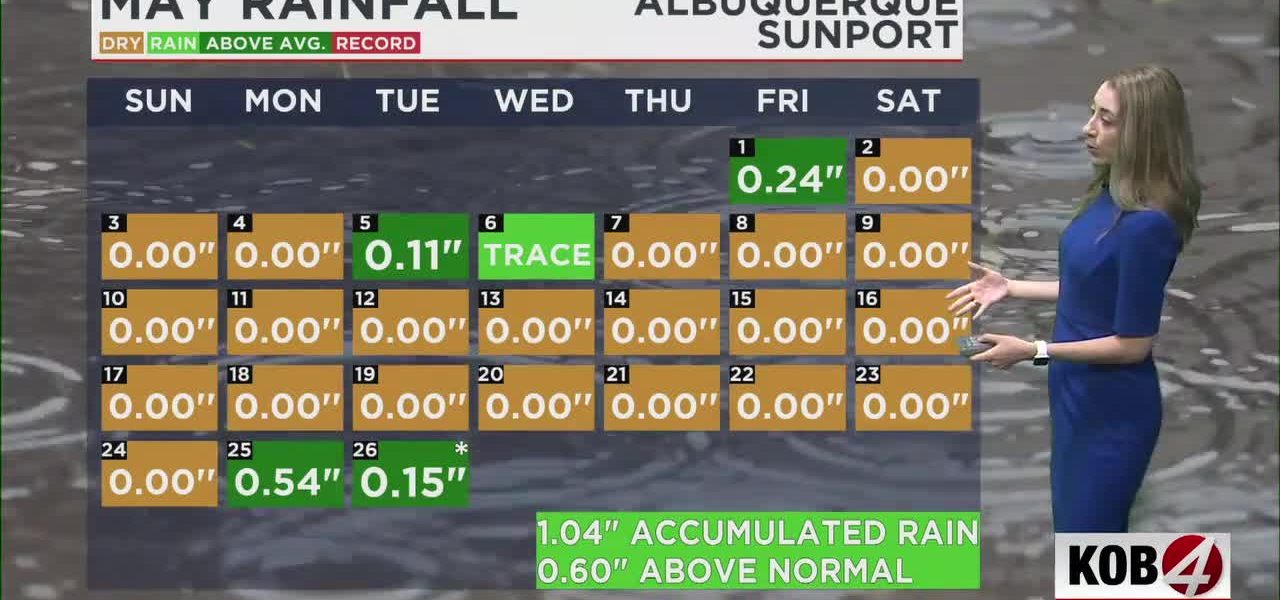
POLICY WIRE — Albuquerque, United States — For a land that defines itself by its stark, relentless sun and dust-dry arroyos, a splash of green—however brief—feels less like relief and more like a cruel tease. New Mexico, a state that routinely battles the creeping menace of extreme drought, found itself, for a glorious flicker, not just wet but *above average* for May rainfall. A strange thing, that. It’s like discovering an oasis that then, almost immediately, begins to recede back into the sand.
Because the party, as meteorologists warned, wasn’t gonna last. Turns out, what one part of the state gleefully collected, another just shrugged off. Much of the high desert has already flipped back to its default setting: parched. And what an almost-wet week it was for central — and western New Mexico. Tuesday, we’re told, [QUOTE_PLACEHOLDER] So, don’t go stowing those summer hats just yet. In fact, if you’re not out there right now, you’ve probably already missed the show.
It’s a peculiar meteorological divergence, isn’t it? One small corner of the state — far northeastern New Mexico, specifically — gets to keep the tap dripping. A low-pressure system is stubbornly holding court, churning out rain and storms for locales like San Miguel, Colfax, Union, and Quay counties. These lucky few might even see [QUOTE_PLACEHOLDER] if they’re near the Central Mountain Chain. Meanwhile, everyone else? Mostly dry, mostly sunny. This isn’t just about umbrellas versus sunglasses; it’s a stark reminder of how unequally even a meager bounty is distributed in an arid climate.
Consider Clayton, out there on the edge. It’s poised to receive [QUOTE_PLACEHOLDER] Sounds negligible, doesn’t it? Yet, coupled with an already saturated soil layer, those few drops could push Clayton and northeast Union County into a [QUOTE_PLACEHOLDER] Flash flooding. In a region where [QUOTE_PLACEHOLDER] are the baseline. It’s a paradox only the desert can conjure: the land so dry, it can’t absorb a few generous sprinkles. But hey, at least those in the [QUOTE_PLACEHOLDER] get to enjoy cooler temperatures, [QUOTE_PLACEHOLDER] compared to the 70s and 80s elsewhere.
And so, as we slouch toward June, most of New Mexico watches the fleeting moisture evaporate into the wide-open sky. [QUOTE_PLACEHOLDER] Not exactly a forecast to write home about, is it? We’re always on the precipice here—a quick pivot from hope to dry reality, the cycle repeating with an almost cosmic indifference. Because [QUOTE_PLACEHOLDER] Active with what, precisely? More sun, one imagines, after these ephemeral dalliances with rain.
📄 POLICY WIRE WHITEPAPER PUBLISHED: PAKISTAN'S NATIONAL SECURITY POLICY PRIORITIES
👉 READ BY CLICKING HEREWhat This Means
This seesaw battle between brief moisture and prevailing aridity isn’t just local weather chatter; it’s a stark policy signal, echoing far beyond New Mexico’s sunbaked borders. The sudden influx of water followed by rapid drying highlights the precariousness of water resources in arid regions worldwide. Politically, it fuels the ongoing—and often contentious—discussions around water rights, allocation, and infrastructure investment. Who gets the water? Who pays for its storage? These aren’t new questions, but each dry spell, each unexpected deluge, ratchets up the pressure on policymakers to devise sustainable, long-term strategies, especially as climate change accelerates.
Economically, agriculture, which remains a cornerstone of New Mexico’s rural economy despite its challenges, bears the brunt. A brief wet spell might delay crop loss but won’t undo years of soil degradation or dwindling reservoir levels. Farmers here, like their counterparts in other water-stressed regions—take, for instance, the agricultural belts of Punjab and Sindh in Pakistan, which rely heavily on glacial melt and seasonal monsoons—face constant uncertainty. Both regions grapple with over-extraction of groundwater, inefficient irrigation, and a future where extreme weather events are increasingly the norm. The United States Geological Survey (USGS) indicates that in states like New Mexico, irrigation accounts for nearly 75% of total freshwater withdrawals. When that water isn’t reliably replenished by consistent rainfall, it puts immense strain on both the state’s coffers and the livelihoods of its citizens.
The policy implication isn’t just about getting enough rain; it’s about making every drop count, about modernizing ancient water delivery systems, and about preparing for a future defined by hydrological extremes. It’s a challenge that, in its essence, transcends geography, linking the pecan groves of New Mexico to the rice paddies of Pakistan, each a stark reminder that even a ‘few days of rain’ can’t fundamentally alter the arid reality if foundational policies aren’t adjusted. There’s no magic bullet for desert living, just hard choices — and harder summers.