


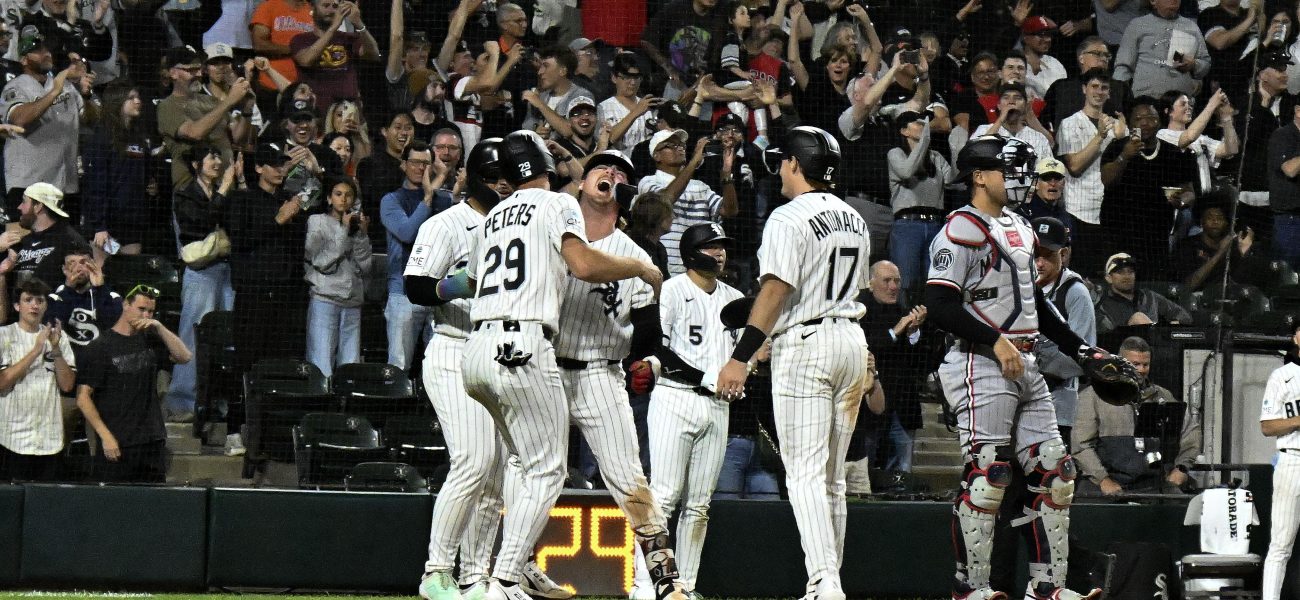
Windy City Tempest: Chicago Obliterates Twins, Sparking Existential Crisis for Fan Base
POLICY WIRE — Minneapolis, U.S. — It’s a strange thing, hope. Sometimes, it just vaporizes—gone like a ghost, leaving nothing but a lingering, slightly embarrassing scent of regret. That’s pretty...

POLICY WIRE — Minneapolis, U.S. — It’s a strange thing, hope. Sometimes, it just vaporizes—gone like a ghost, leaving nothing but a lingering, slightly embarrassing scent of regret. That’s pretty much what happened last night for anyone sporting Minnesota Twins colors. They didn’t just lose a ballgame to the Chicago White Sox; they evaporated, 15-2, in what can only be described as a rather spectacular public self-immolation. It wasn’t a defeat; it was a psychological operation, conducted under the guise of America’s pastime. The kind of performance that makes you question your choices, like buying that season ticket package, or, you know, still caring.
The night commenced with the familiar promise of competitive sport, a ritual often performed under conditions of collective delusion. Then, a peculiar phenomenon occurred: almost immediately, it was clear that only one team had bothered to show up for this particular rendition of the great American experiment. This wasn’t a close contest. This wasn’t even a noble struggle against overwhelming odds. No, it quickly devolved into something approaching slapstick, punctuated by the occasional home run from the visitors. It looked, to anyone observing, suspiciously like surrender, pre-emptive — and almost graceful in its finality. The White Sox piled it on—an impressive feat of scoring, sure, but also a sort of cold, clinical dissection of a rival. It’s the kind of win that leaves permanent scar tissue, etched onto the psyche of an entire metropolitan area. We don’t often see such thorough demolitions in professional sports; it was a tour de force of institutional failure.
This wasn’t about a single error or a momentary lapse of concentration. It seemed systematic. [QUOTE_PLACEHOLDER] became the unfortunate, recurring epitaph of the evening, chanted and re-chanted by observers trying to make sense of the carnage. And by ‘shitty,’ we don’t mean ‘a little off their game.’ We mean a full-scale operational breakdown. Imagine an intricately engineered machine—one designed for precision and power—suddenly deciding, mid-operation, to convert itself into a loose collection of parts, flailing wildly and producing nothing but sparks and frustrated groans. That was the Twins’ offense, frankly. While those Chicagoans ran across the plate, seemingly at will, the Twins batting performance was woeful, exemplified by an early stage where, by some accounts, they were swinging like a poop haul, and managed just One hit into eight. They were outmatched, outhustled, — and fundamentally outclassed.
Team performance like this naturally curdles fan enthusiasm. But it’s more than just fleeting disappointment. Because when a major league outfit delivers a spectacle of such comprehensive inadequacy, it’s not merely a bad game; it’s an indictment of planning, execution, and, perhaps most damningly, investment. This particular Tuesday (or was it a Wednesday? who could tell through the haze of ignominy?) will linger, probably far longer than it should. The memory flushed? Not likely, mate. Even if games aren’t over yet for the season, that particular game felt like it delivered a verdict. We remember This team was shitty.
They’ve got a game again, same old set of rules. But rules don’t mean much when morale is gutted. This sort of psychological hit is tough to rebound from. The bullpen, already stretched thin, continued its unfortunate pattern of failing to extinguish the flames of opposing batters. Prielipp leaves the game, — and still, the White Sox homer flame roared on. Then came the salami, Meidroth’s effort going back to back with Murakami’s twentieth. They gave it quite the crack. It was, let’s face it, a proper pasting, the sort you’d expect from a mismatched fight rather than two professional outfits.
The broader implications? They’re there, if you look. Just like the general sense of disillusionment that sometimes creeps into public discourse, watching a team flounder this badly has a way of eroding confidence—not just in the players, but in the entire enterprise. It’s a psychological drain, a tax on civic pride. Sports teams, you see, are more than just entertainment; they’re symbols of local identity — and collective aspiration. When they repeatedly play shitty, the abstract failure starts feeling much, much more personal. The Windy City has wrecked our hope, became a sort of fatalistic mantra for those still clinging to a TV remote or listening glumly to radio commentary. It’s indeed such a pity, but apparently they can’t beat the Po-ope.
📄 POLICY WIRE WHITEPAPER PUBLISHED: PAKISTAN'S NATIONAL SECURITY POLICY PRIORITIES
👉 READ BY CLICKING HEREWhat This Means
This humiliating defeat isn’t just about baseball; it’s a micro-level case study in organizational failure, economic commitment, and the fragile nature of public trust. Think of it: tens of millions of dollars invested in player contracts, facilities, and marketing—all culminating in a performance so abject, so devoid of competitiveness, that it fundamentally challenges the value proposition. For communities in the United States and indeed across the globe, especially in developing economies like Pakistan, the performance of national or regional institutions is often a direct reflection of collective investment and competence. When those institutions fail dramatically, it breeds skepticism about resource allocation — and leadership. For instance, the passionate cricket fan base in South Asia often views their national team’s performance not just as sport, but as a barometer of national will and capability, mirroring the almost existential dread of Minnesota’s baseball faithful right now.
The economic impact is subtle but real. Poor performance leads to dwindling attendance, reduced merchandise sales, and a general erosion of ancillary economic activity that major sports franchises often generate. According to a 2023 report by MLB’s official statistics partner, teams with prolonged losing records see, on average, a 15-20% drop in local broadcast viewership over a two-year period, impacting advertising revenue and ultimately, future investment in player talent. This is money that often circulates within a community. But, when that faith erodes, so does a portion of that revenue stream. It forces management to re-evaluate; it puts pressure on ticket prices — and sponsorship deals. A 15-2 thrashing doesn’t just record a loss; it broadcasts a message—a rather harsh one—about where the organizational priorities lie, or perhaps, where they’re failing to be met.
such high-profile collapses erode social capital. In an era where trust in institutions seems perpetually challenged, a highly visible, publicly funded (directly or indirectly) entity delivering such a poor return on investment sends a worrying signal. It prompts questions: are we getting our money’s worth? Are leaders accountable? Are we just tolerating mediocrity? These aren’t just questions for a baseball team; they’re the core interrogations communities pose to their political and economic leaders every single day. The pursuit of unquantifiable glory, in sports as in geopolitics, always comes with very quantifiable stakes.