


Silent Gears of Power: Australia’s Graphite Gamble Redraws EV Map, Unnerves Old Powers
POLICY WIRE — Canberra, Australia — It’s a quiet war, fought not with tanks or drones, but with shovels, policy documents, and increasingly, with permits. In a global chess match where nations jockey...

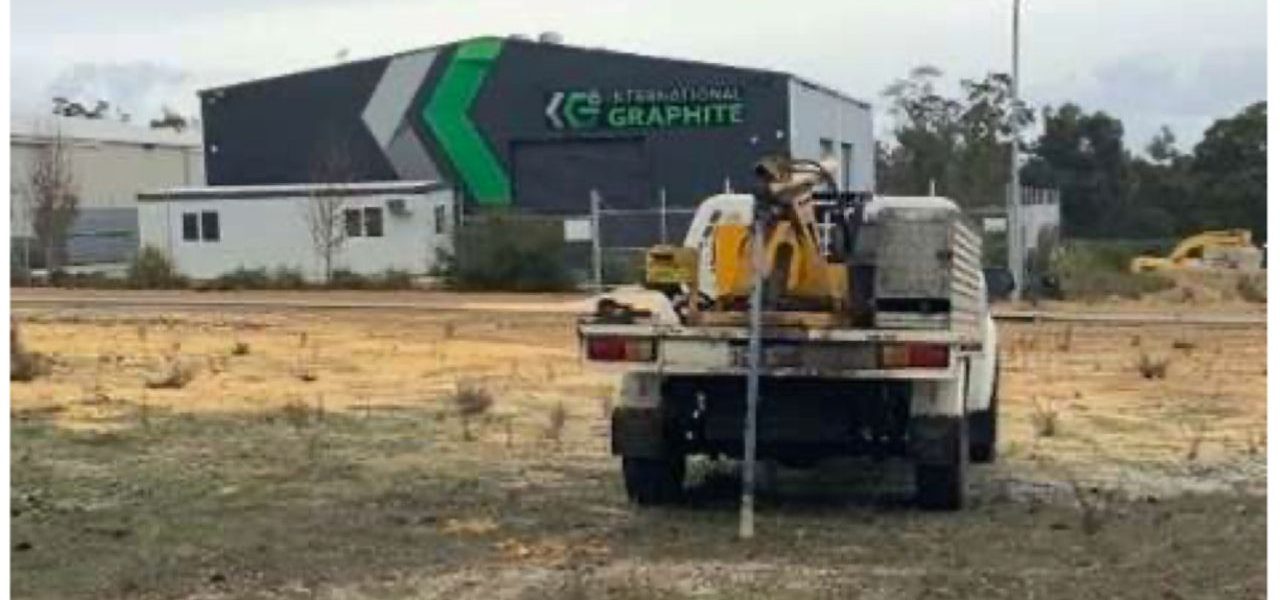
POLICY WIRE — Canberra, Australia — It’s a quiet war, fought not with tanks or drones, but with shovels, policy documents, and increasingly, with permits. In a global chess match where nations jockey for the raw materials of tomorrow, a remote Western Australian mining town just landed a decisive pawn forward. International Graphite—IG6 on the ASX—has secured the final building permit for its graphite micronising facility in Collie, a development that might sound dry on paper, but in reality, it’s a tremor in the tectonic plates of global supply chains. A strategic dirt, indeed.
This isn’t just about digging stuff out of the ground; it’s about control. And the permit isn’t some minor bureaucratic hiccup that’s finally cleared. It marks a clear, tangible step in Australia’s audacious, yet pragmatic, push to process its own critical minerals, not just export them as raw ore to established industrial powers, especially those in East Asia. The message is pretty stark: the West isn’t content to simply extract. It wants to refine. It wants to manufacture. It wants a slice of the value-add pie that’s long been dominated elsewhere.
“This facility in Collie isn’t merely a processing plant; it’s a statement,” declared David Williams, Chairman of International Graphite, during a recent analyst call. “We’re not just providing a product; we’re bolstering national energy security and positioning Australia as a serious player in the next generation of industrial metals. It’s about building a future, not just shipping off dirt.” He didn’t mince words. Because when you’re talking about graphite, you’re talking about electric vehicle batteries. And when you’re talking about EV batteries, you’re talking about national fortunes — and geopolitical muscle.
For decades, countries like China have meticulously built their chokehold over critical mineral processing. They’ve cornered the market on refining rare earths, cobalt, lithium, and, yes, graphite. The micronising process—taking raw graphite and grinding it into superfine particles suitable for anode material—has largely happened offshore. Not anymore, or at least, that’s the aspiration here. And why shouldn’t it? Australia’s sitting on mountains of the stuff. This isn’t a fleeting trend; it’s a full-blown industrial re-evaluation.
“We can’t just rely on others for what we truly need for our own industrial future and, frankly, for global stability,” said Western Australian Premier Roger Cook, speaking to local media about the broader critical minerals strategy. “Projects like Collie’s graphite facility demonstrate our commitment to onshore processing, creating high-skill jobs, and ensuring a robust, diversified supply chain for our allies. It’s about self-reliance, and smart economics.” But there’s a subtext here: a strategic play against decades of supply chain concentration.
The facility is now cleared to begin construction, and when fully operational, it’s projected to annually produce around 20,000 tonnes of micronised graphite. That’s enough to fuel a significant chunk of global battery production, given that anode material can be up to 10% graphite by weight. For context, the global demand for graphite for EV batteries is expected to grow by nearly 500% by 2030, according to the International Energy Agency. Those are big numbers; enough to make you gulp. But somebody’s gotta meet that demand. And China’s been doing it.
📄 POLICY WIRE WHITEPAPER PUBLISHED: PAKISTAN'S NATIONAL SECURITY POLICY PRIORITIES
👉 READ BY CLICKING HEREAustralia isn’t alone in feeling this shift. Countries like India and Pakistan, long reliant on imported technologies and raw materials for their burgeoning industrial bases, watch the critical mineral landscape with keen interest. They know all too well the vulnerabilities of global supply chains. From automotive manufacturing hubs to burgeoning tech sectors, the implications of securing steady, diverse sources of critical minerals are enormous. Any disruption far away can send ripples through their economies, influencing everything from smartphone costs to transportation grids. It’s a delicate balance. Pakistan, for instance, has its own minor graphite deposits and ambitious plans for mineral exploration—yet, the expertise and processing capability remain elusive, underscoring a regional development chasm. So, Australia’s moves resonate beyond just the Indo-Pacific alliance partners. They paint a picture of industrial opportunity — and constraint for the entire region.
It’s all part of a larger recalibration. They’ve identified twenty-six critical minerals for a reason. Because everything from fighter jets to smartphones needs these elements. And securing a processing permit for graphite in a sleepy town Down Under? That’s not small beer.
What This Means
This isn’t just local economic news; it’s a loud whisper on the global geopolitical stage. The International Graphite project in Collie signifies a growing trend among Western nations—and critical resource-rich countries—to regain control over their raw materials, particularly those essential for the energy transition. Economically, this means job creation and diversified revenues for Australia, moving beyond being a mere quarry to becoming a value-adder. But politically, it’s a direct challenge to the current industrial hegemons who’ve skillfully leveraged their processing capabilities into significant strategic leverage.
For nations in South Asia and the broader Muslim world, which are striving for their own industrialization and energy independence, Australia’s onshore processing efforts serve as both an aspiration and a potential cautionary tale. While the immediate impact might be an alternative source of processed graphite—the long-term message is that true economic sovereignty comes with controlling the entire supply chain, not just the extraction or consumption points. It foreshadows a fragmented global market where different blocs vie for self-sufficiency, potentially leading to more resilient, but perhaps less efficient, supply routes. It certainly ups the ante for domestic industrial policy globally.