


Vigilante Fury Erupts in Chattogram Amid Rising Impunity
POLICY WIRE — Chattogram, Bangladesh — The thin veneer of state-controlled justice can crack, you know. Sometimes, it shatters completely. In Bangladesh, where institutional trust often runs as thin...

POLICY WIRE — Chattogram, Bangladesh — The thin veneer of state-controlled justice can crack, you know. Sometimes, it shatters completely. In Bangladesh, where institutional trust often runs as thin as riverine delta soil, raw public anger occasionally bypasses the measured pace of law entirely, boiling over into streets — and then, things get messy. Really messy. That’s what we saw explode in Chattogram this week.
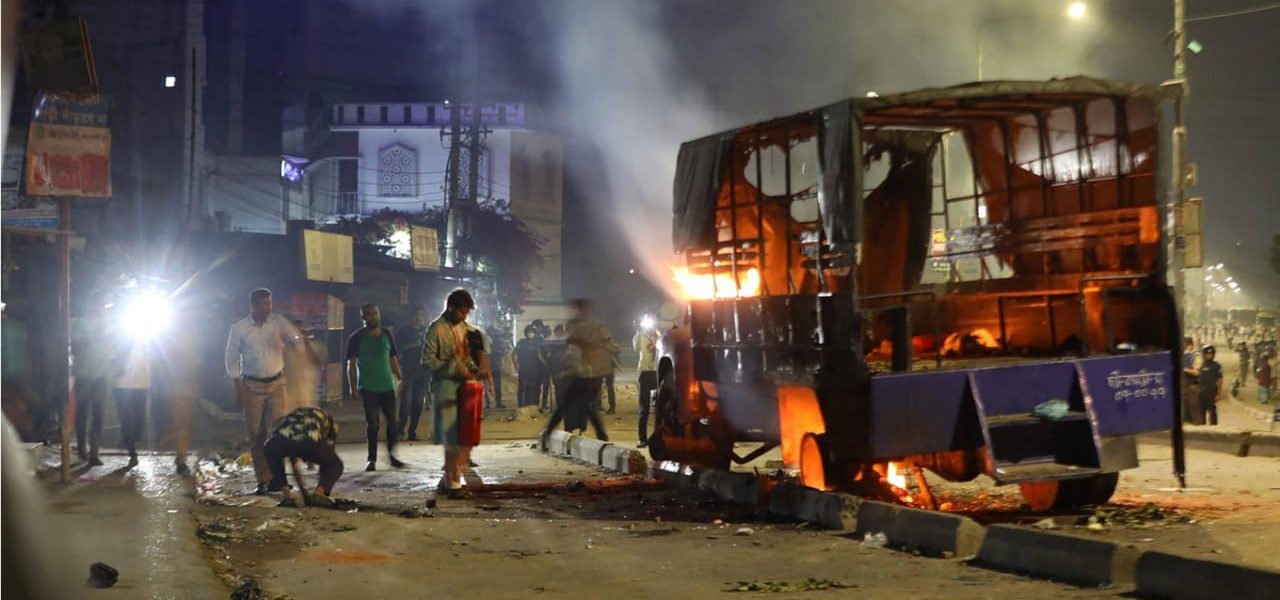
It wasn’t a sudden, unprovoked riot. No. It was a pressure cooker finally blowing its lid. Locals, fed up with what they see as a sluggish system, took matters into their own hands, or tried to, at least. We’re talking about a moment when a collective fury coalesced around one man, Monir Hossain, accused of a horrifying act: the alleged rape of a four-year-old girl. And then, as the story unfolds, a furious throng clashed with police, all in a bid to seize a suspect accused of raping a four-year-old girl. [QUOTE_PLACEHOLDER]
See, this kind of explosive, near-vigilante justice doesn’t just spring up out of nowhere. It’s got roots, deep ones, in a widespread public perception that the state’s grip on protecting its most vulnerable citizens is, well, tenuous. But what’s brewing beneath that anger? It’s a societal sickness that’s been festering. The South Asian country has seen a spike in reported cases of violence against women and children, fuelling widespread anger.
You can practically feel the temperature rise across the nation. Imagine the sheer audacity: police said the suspect, Monir Hossain, was detained by locals. They found him first. They’re the ones who collared him. The sheer fact that it was the community, not the official apparatus, that initially apprehended him speaks volumes about who people trust — and don’t trust — to mete out accountability. He was being handed over to the authorities on Thursday when tensions boiled over among the burgeoning crowds.
But that hand-over was the flashpoint. Police, performing their duty, ended up battling the very public they’re meant to serve — and protect. They fired tear gas — and used batons; protestors hurled bricks and stones. And then, we hear officials said on Friday. But what did they say? The specifics get muddled fast in the chaos. The official narrative, however well-meaning, sometimes just doesn’t resonate when people feel profoundly let down.
Consider the raw statistics. It’s grim. Reports indicate an alarming surge in such incidents. A particularly stark reminder comes from data compiled by Ain o Salish Kendra (ASK), a Bangladeshi human rights organization, which documented 821 reported rapes across Bangladesh in just the first nine months of 2020, with 192 of those involving children. That’s a devastating count, isn’t it? And those are just the *reported* cases. Many, we all know, simply vanish into the shadows, unheard, unpunished.
Bangladesh, like much of South Asia and indeed segments of the Muslim world, wrestles with this complex issue of gender-based violence. The official legal frameworks exist — there are laws, there are courts. Yet, implementation can falter. Corruption, social pressures, victim-blaming, and simply slow processes contribute to a pervasive sense of impunity for perpetrators. It creates a breeding ground for frustration, an acute feeling that justice is not just slow, it’s frequently denied. That frustration corrodes faith in the entire governmental edifice.
📄 POLICY WIRE WHITEPAPER PUBLISHED: PAKISTAN'S NATIONAL SECURITY POLICY PRIORITIES
👉 READ BY CLICKING HEREWe’ve seen these sorts of dynamics play out across the region — from India to Pakistan — where egregious acts of violence against women and children ignite furious public backlash. Sometimes it’s about demanding stricter laws; other times, as in Chattogram, it becomes about demanding immediate, almost extra-judicial retribution, a collective primal scream for balance where the scales of justice feel inherently lopsided. This isn’t unique, but every eruption serves as a chilling reminder of just how fragile public order can be when fundamental expectations for safety and accountability are repeatedly unmet. It’s an old song, really, but the refrain gets louder with each incident.
What This Means
The unrest in Chattogram isn’t just a local disturbance; it’s a searing manifestation of a much broader, systemic issue gnawing at the heart of Bangladesh’s governance and social contract. Politically, the ruling Awami League government, already grappling with accusations of authoritarianism and a struggling economy, now faces intense public scrutiny over its ability to provide fundamental safety and justice, especially for women and children. This eruption of collective rage signals a deep trust deficit between citizens — and state institutions. For a government that prides itself on stability, these episodes represent direct challenges to its legitimacy, pushing issues like judicial reform and law enforcement accountability to the fore.
Economically, this sort of sustained social instability—even if localized—carries costs. Investor confidence, always skittish in developing nations, can be eroded. It signals a society on edge, less predictable. the social capital consumed by these widespread frustrations diverts attention and resources that could otherwise be channeled into development. The cost of a society constantly fighting for basic justice impacts everything, from daily commerce to long-term national planning. You can’t have robust economic growth when folks are, quite literally, clashing with cops over a suspect because they’ve lost faith in the system’s ability to deal with horrors. This volatile situation creates ripples that can affect Bangladesh’s standing in the wider Asia region, where such perceptions of state failure can dictate foreign investment and diplomatic relations.
But perhaps most critically, the Chattogram episode underlines a growing regional pattern where calls for swift, definitive, and often punitive justice escalate as traditional legal mechanisms are perceived as inadequate or compromised. It’s a dangerous spiral, you know. The state’s failure to deter such crimes and provide credible avenues for justice ironically strengthens the appetite for popular forms of retribution. This puts an immense burden on any government, forcing them to balance public outcry with due process — a balancing act that’s almost impossible to maintain when the crowds are baying. And that’s not just a Bangladeshi problem, by the way, it’s an uncomfortable reality playing out across so much of South Asia.