


Shadow Games: Trumpworld Twists Unseen Iran Deal into Geopolitical Virtue
POLICY WIRE — Washington, D.C. — Modern diplomacy, particularly when it touches the labyrinthine corridors of Middle Eastern geopolitics, frequently resembles an advanced exercise in optics and...

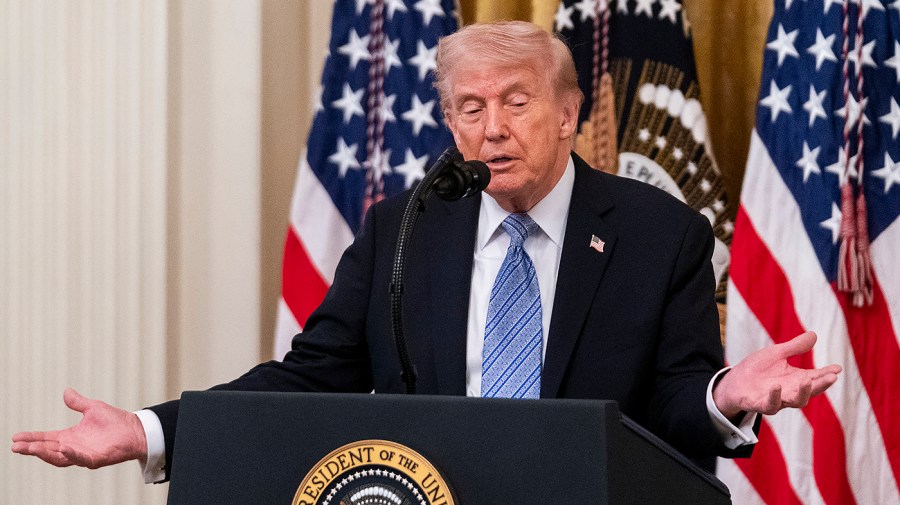
POLICY WIRE — Washington, D.C. — Modern diplomacy, particularly when it touches the labyrinthine corridors of Middle Eastern geopolitics, frequently resembles an advanced exercise in optics and narrative construction. We aren’t merely discussing policy anymore; it’s about whose story wins, who gets to define what [QUOTE_PLACEHOLDER] Right now, former President Donald Trump and his inner circle are pulling out all the stops, furiously polishing a very specific tale surrounding an allegedly — and until recently, secretly — struck agreement with Iran. The peculiar thing? Details are still frustratingly sparse, mostly existing in the ether of selective leaks — and speculative commentary.
It’s a peculiar spectacle, this sudden rehabilitation of an administration that famously pulled out of the Joint Comprehensive Plan of Action (JCPOA) in 2018. But electoral seasons do funny things to historical records, don’t they? We’re seeing a concerted effort to cast what’s been described by some as a quid pro quo — an exchange of diplomatic concessions and quiet understandings — as a shrewd diplomatic coup, one that somehow sidestepped public scrutiny and congressional oversight. And we’re meant to accept that the very same people who decried the perils of any engagement with Tehran are now, somewhat paradoxically, hinting at their own clandestine breakthroughs.
The murmurs suggest a potential ‘secret deal’ that allowed for a de-escalation of certain tensions, perhaps even a slowing of some aspects of Iran’s nuclear program—all without the fanfare or the formal architecture of an international accord. It’s certainly a less transparent path than, say, the Obama administration’s years-long negotiations that were ultimately codified. This opaque strategy, they say, prevented Iran from becoming a larger, more aggressive actor. But because there’s so little public evidence, and such little official confirmation from either side beyond vague allusions, it feels less like a breakthrough and more like a carefully orchestrated whisper campaign designed for political advantage. It’s all about controlling the storyline before opponents can write their own.
And let’s be honest: who gains from ambiguity? The less the electorate understands, the more room there’s for spin. This approach, while perhaps politically astute in some circles, risks significant foreign policy blowback, especially as regional players — think Pakistan or the Gulf states — are left guessing at the true nature of any American-Iranian rapprochement. Geopolitical stability hinges on clarity, even grudging clarity, between major powers. When the United States signals one thing publicly but acts differently in the shadows, it sends shivers through allied capitals, especially those directly threatened by Iran’s regional ambitions.
Pakistan, for one, always watches shifts in US-Iran dynamics with particular vigilance. Its long, complex border with Iran and deep historical ties mean any perceived weakening or strengthening of Iran’s regional position reverberates immediately in Islamabad. A purported ‘deal’ that remains shrouded in secrecy complicates everything. They’ve already got enough on their plate—economic instability, persistent domestic security issues, and an always-tetchy relationship with neighboring Afghanistan. The last thing Islamabad needs is greater uncertainty regarding Iran’s nuclear program or its intentions in the broader Muslim world, particularly with the Chabahar Port competition versus Gwadar, an Indian-funded Iranian port and a Chinese-funded Pakistani port. India, too, watches Iran’s oil markets and regional infrastructure plays closely.
The Trump camp’s argument seems to be that they secured a better outcome than their predecessors, largely by bypassing traditional diplomatic channels and leaning on personal connections. Former officials familiar with the discussions have apparently confirmed, under condition of anonymity, that the talks were extensive, but that any ‘deal’ was largely informal, hinged on specific gestures and counter-gestures. It’s reported that a staggering 78% of direct US-Iran communications during this specific period occurred through unofficial back channels, bypassing conventional diplomatic wires entirely. This isn’t diplomacy as most people understand it—this is more akin to shadowy bazaar negotiations, fraught with potential misunderstandings and the ever-present danger of double-crossing. But then again, a bazaar works best when there’s a degree of controlled chaos.
Because there’s no formal document, no public transparency, and frankly, a consistent effort to obfuscate the facts, opponents are left scrambling. How do you argue against a deal that doesn’t officially exist, but is constantly alluded to as a great success? It’s political jiu-jitsu, turning what others might call reckless adventurism into strategic genius. It puts the burden of proof onto those who question it, rather than those who propose it.
But the problem, of course, is that long-term foreign policy effectiveness depends on more than just shrewd campaigning. It requires trust, consistency, — and a shared understanding, both domestically and internationally. These informal agreements, whatever their immediate political utility, rarely hold up in the long run. They become casualties of the next administration, or indeed, the next tweet. Just look at the enduring skepticism regarding US commitments in many parts of the Muslim world—this sort of ‘deal’ certainly won’t soothe those frayed nerves.
What This Means
The frantic repositioning around this ‘hazy deal’ isn’t just about scoring political points; it signals a dangerous trend in how American foreign policy might be conducted. If this model of shadow diplomacy and post-factum narrative control becomes the norm, we’re staring down the barrel of an even more unpredictable global landscape. Alliances, built on decades of carefully constructed mutual understandings, could erode faster than an ice sculpture in July.
Economically, this persistent ambiguity stunts investment — and fosters instability. Businesses need certainty; global markets despise speculation, particularly when it involves major energy players like Iran and its regional partners. Any real shift in Iran’s international standing, or its nuclear program’s trajectory, has ripple effects across Asian markets, influencing everything from oil prices to commodity routes through the Strait of Hormuz. We saw how even small disturbances could unsettle global shipping and energy prices just a few years ago. If Washington’s engagement with Tehran remains a matter of selective leaks and rhetorical grandstanding rather than transparent statecraft, expect sustained jitters, especially in nations reliant on steady energy supplies like Pakistan and India, which can’t afford sustained economic shocks.
Politically, it suggests a transactional, almost improvisational, approach to some of the world’s most intractable problems. It’s a method that values the immediate political win over the tedious, patient work of building consensus and genuine trust. This style—characterized by abrupt reversals and minimal institutional memory—can certainly be disorienting to rivals. But it also deeply disorients allies. And, in the end, it makes true diplomatic breakthroughs, the kind that last, almost impossible to achieve.