


Enrique’s Shadow Looms: Arsenal’s Golden Dream Faces Familiar Foe
POLICY WIRE — London, UK — The confetti from the Premier League celebrations, one might argue, has barely settled, yet the discourse among the footballing cognoscenti has already swiveled with almost...

POLICY WIRE — London, UK — The confetti from the Premier League celebrations, one might argue, has barely settled, yet the discourse among the footballing cognoscenti has already swiveled with almost jarring immediacy towards the gravitas of a European final. David Raya, Arsenal’s newly crowned Golden Glove recipient, isn’t dwelling on the domestic triumph—a matter of relative historical novelty, it turns out, after a 22-year drought. He’s staring down a much more formidable, and intimately known, challenge in the form of Paris Saint-Germain’s manager, Luis Enrique. A man, he notes, who won’t simply play along for politeness’s sake.
It’s an oddly personal twist in the grand tapestry of professional sport: the Spanish tactician Enrique, who handed Raya his international debut, now stands as the chief architect tasked with dismantling Arsenal’s dream of securing a trophy that has forever eluded them. And make no mistake, Raya believes that particular history creates a dynamic few others can fully appreciate. This isn’t just another coach; it’s the original impresario for his national career.
The 30-year-old custodian, riding the crest of arguably his finest professional season, finds himself in Budapest this weekend, primed for a clash against PSG. He’s not exactly giddy about it, not in the way one might be after securing a league title. But there’s a quiet determination there, an almost dispassionate assessment of the tasks ahead. Having secured the Premier League prize, this Champions League final, and even the looming World Cup, represent an escalating scale of achievement. That’s the modern footballer’s treadmill—always another summit, always another peak to conquer. One hardly has time for much reflection, does one?
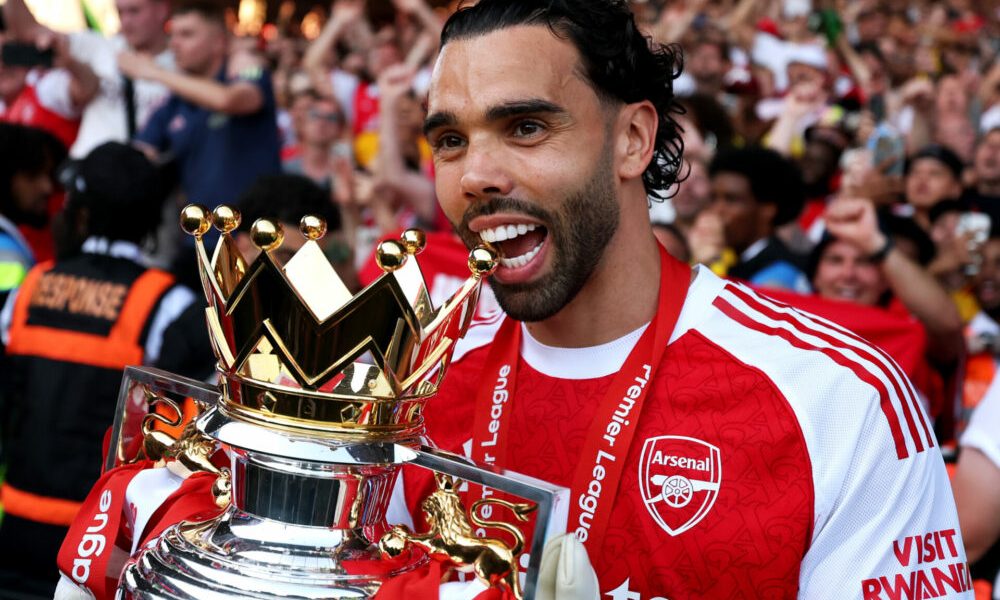
Asked about the sheer glee of being a Premier League winner, Raya offered the measured perspective of a man already focused on the next horizon. [QUOTE_PLACEHOLDER] he reflected to AS. “With the whole journey we have been on, and being able to win the Premier League in the end, it makes me feel very proud of this team, this club, the staff, and above all the fans. It makes us very happy.” Noticeably absent were details of raucous post-match revelry; he wasn’t among those swarming the Emirates pitch at 3 AM. No, he’s more of a private celebrator, preferring to mark milestones within the tight-knit circle of players — and staff.
But the collective nature of his recent successes was, shall we say, a consistent refrain. His individual accolade—the Golden Glove, secured for an unprecedented third successive season according to official Premier League records—was quickly framed as a triumph for the entire defensive unit. “I’m in a very good spell,” he confirmed. “Not only personally, but the clean sheets we have kept, I think that is a collective thing.” It’s a good line, isn’t it? Deflect individual glory, champion the team. A classic footballing maneuver.
Then there’s Mikel Arteta, the manager Raya suggests has sculpted this outfit into champions through sheer, bloody-minded perseverance. “I think the work that the manager has done is incredible,” Raya stated. “He never gives up and that is a message he has always passed on to us.” It sounds almost like a sermon, doesn’t it? That kind of unyielding resolve is probably precisely what’s required to compete with Europe’s footballing royalty—and to keep a player like Raya grounded amidst escalating expectations. The immediate, singular focus now is clearly on that final. The Premier League “objective is done,” he says, as if ticking a box on a very well-paid checklist.
📄 POLICY WIRE WHITEPAPER PUBLISHED: PAKISTAN'S NATIONAL SECURITY POLICY PRIORITIES
👉 READ BY CLICKING HEREBut the lingering thought of Luis Enrique, the architect of PSG’s challenge, injects a distinctly personal vein of anxiety for Arsenal’s keeper. “I know him well, he was the one who gave me my debut for the national team, and I have a lot of affection for him,” Raya confided. But this fondness doesn’t obscure a stark, almost brutal, appraisal of the man’s tactical acumen. “We know he is a great coach and a great person. He always adjusts things. He will make it very difficult for us.” It’s a frank acknowledgment of the mind games — and strategic brilliance awaiting them.
The stakes for Arsenal and PSG in Budapest will draw hundreds of millions of eyeballs; the 2023 Champions League final, for instance, drew a global reach of 450 million unique viewers, demonstrating the vast audience for such events. Not least across the teeming cities of South Asia, where the Premier League and Champions League have cultivated a fiercely loyal following. One can almost picture the hushed cafes in Karachi or the buzzing tea stalls in Dhaka, where debates over formations and referee calls temporarily eclipse the daily grinding anxieties of inflation or political maneuvering. This global reach means that the narrative of a Champions League victory resonates far beyond European borders, becoming a shared cultural touchstone, however transient, in places grappling with far more immediate existential questions. For a moment, even there, the complexities of national governance can fade into the roar of a football crowd.
What This Means
This upcoming Champions League final, with its interwoven threads of personal history and professional rivalry, isn’t merely a sporting contest; it’s a test of narrative dominance. Arsenal’s challenge against PSG symbolizes a generational shift in football, a club shedding a ‘nearly man’ reputation for one of actual contenders. The fact that their own keeper acknowledges his opponent’s manager as a personal mentor, even an architect of his career, injects a layer of psychological complexity. This isn’t just about formations and fitness; it’s about breaking a familiar bond, overcoming an intimate knowledge of strengths and weaknesses. The economic ripple effects of such a victory for Arsenal—increased broadcast revenue, sponsorship deals, global merchandising—would be substantial, cementing their place at European football’s commercial top table for years to come. For PSG, a club frequently under the microscope for its high spending and singular obsession with this particular trophy, a win solidifies a decade-long project. Failure, meanwhile, would bring an almost unprecedented level of introspection.