


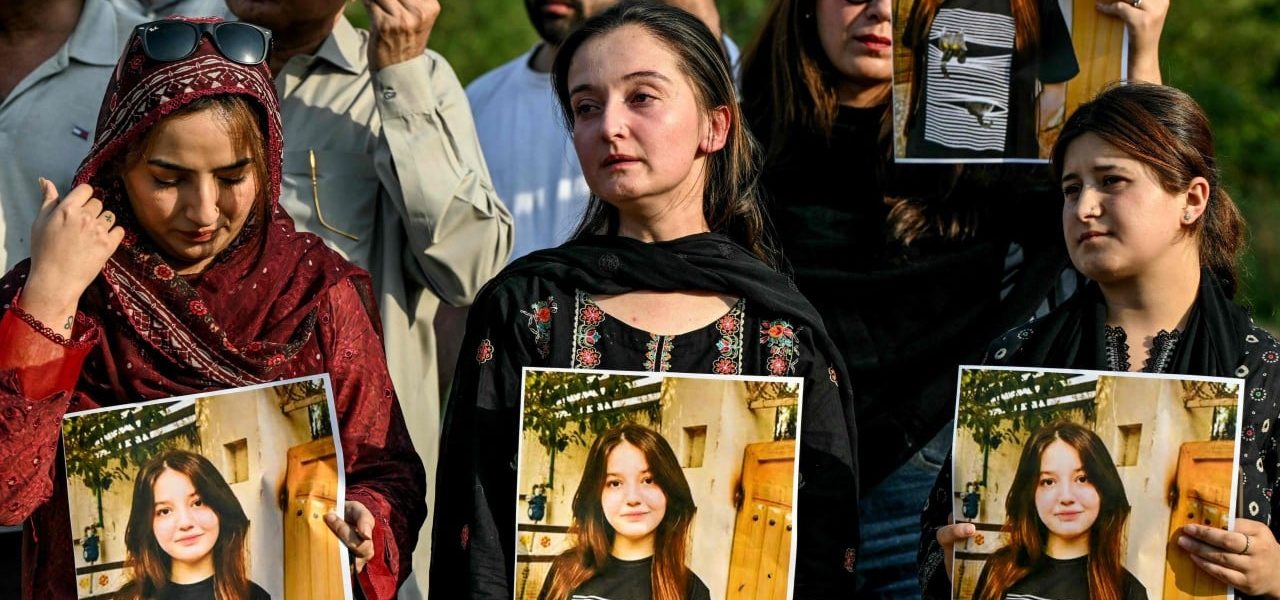
Digital Echoes, Stone Sentences: Pakistan’s Influencer Murder Spotlights a Societal Chasm
POLICY WIRE — Islamabad, Pakistan — The stark announcement from an Islamabad courtroom on Tuesday, sealing the fate of a 22-year-old man, wasn’t just a legal pronouncement; it was an...

POLICY WIRE — Islamabad, Pakistan — The stark announcement from an Islamabad courtroom on Tuesday, sealing the fate of a 22-year-old man, wasn’t just a legal pronouncement; it was an uncomfortable echo in Pakistan’s fraught discourse on women, technology, and male entitlement. For Umar Hayat, the sentence is death. For Sana Yousaf, the vibrant TikTok star he murdered, it’s a tragic punctuation mark on a life cut brutally short. But for millions of women across the subcontinent, her story — and its messy aftermath — continues to serve as a stark reminder.
It’s easy to focus on the cold, hard gavel drop. But the real story here unfurls across social media feeds and hushed drawing rooms, where the lines between modernity and conservatism remain viciously contested. Sana’s demise last June, the brutal consequence of repeatedly rejecting his advances, sparked a predictable — and depressingly familiar — wave of national outrage. But then, as it always seems to happen in these cases, the digital space warped into something uglier. Alongside sincere condolences, a significant, vocal minority blamed her for her own death. [QUOTE_PLACEHOLDER]
Think about that for a moment. A young woman, carving out a space for herself in the burgeoning digital economy, is brutally taken, and the immediate societal reflex for some isn’t sorrow or anger at the perpetrator, but rather, a critical gaze turned upon the victim. It’s a bitter truth, and it speaks volumes about the lingering anxieties some harbor towards women who dare to occupy public spaces, even virtual ones. Pakistan isn’t alone in this, not by a long shot. Across South Asia, the public performance of femininity, particularly online, often triggers a virulent, misogynistic backlash. It’s an almost existential threat for women seeking autonomy in an increasingly interconnected world.
The court’s verdict — delivered in a cramped Islamabad courtroom by a judge who also fined Hayat
Consider the raw data: A 2021 study by Aurat Foundation, a prominent women’s rights NGO in Pakistan, indicated that nearly 70% of Pakistani women have experienced some form of gender-based violence in their lifetime. This isn’t just physical violence; it encompasses psychological abuse, online harassment, and the constant threat of retribution for perceived slights against family honor or patriarchal norms. Sana Yousaf’s case simply pulled back the curtain on this pervasive reality, bringing it into the unforgiving glare of the global digital stage. It’s grim, isn’t it? The sheer audacity of young women like Sana, creating content and building communities, is met with an equally audacious and often deadly pushback.
This isn’t about isolated incidents; it’s about a deeply woven cultural fabric. And frankly, we’ve seen it play out in countless iterations—from so-called honor killings in rural villages to the cyberbullying that can drive young women offline, or worse. The digital sphere, often lauded as a liberator, morphs into a hunting ground when cultural frameworks lag far behind technological advancements. But here’s the kicker: the digital world isn’t going anywhere. Neither are the women brave enough to claim their digital real estate.
We’ve seen similar struggles unfold across the Muslim world, from Turkey’s bustling social media scene to the growing influencer culture in Indonesia and Malaysia. The same fundamental questions arise: Who owns a woman’s public image? How much control does she have over her narrative? And crucially, what happens when that asserted control collides with rigid, traditional expectations of female deference? Sometimes, the answers are terrifyingly violent. This is why cases like Sana’s become proxy battles for the future direction of societies grappling with conflicting value systems.
What This Means
The death sentence for Umar Hayat, while providing a degree of legal finality, only scratches the surface of the underlying societal issues. Politically, this ruling offers the state an opportunity to signal its resolve against gender-based violence, a persistent problem that consistently mars Pakistan’s human rights record. It’s a crucial PR win, for sure, projecting an image of justice to both domestic — and international audiences. But will it translate into substantive change? That’s the real test.
Economically, the implications are more subtle but no less significant. The burgeoning gig economy, heavily reliant on platforms like TikTok, represents a pathway to independence and income for countless young people, particularly women, in a nation where traditional employment opportunities can be scarce. When safety fears paralyze digital participation, it stunts economic potential. Imagine the chilling effect when potential female influencers and content creators weigh the risks of public exposure against their aspirations. This isn’t just a social problem; it’s an economic one, restricting a whole segment of the population from leveraging new technologies for their betterment. And policymakers, you’d think, would pay attention to that.
This verdict, then, isn’t a clean sweep. It’s a single battle won in a much larger, generational war for fundamental equality and safety for women in Pakistan and, indeed, across many parts of the globe grappling with similar cultural frictions. But it’s also a clear signal: you don’t own a woman’s choices, online or off.