


Concrete Crumbles, Dreams Die: Philippine Hotel Collapse Exposes Asia’s Frail Foundations
POLICY WIRE — Manila, Philippines — The aspirations for a gleaming new landmark, a testament to economic buoyancy, can sometimes, quite literally, collapse into a pile of mangled rebar and dust....

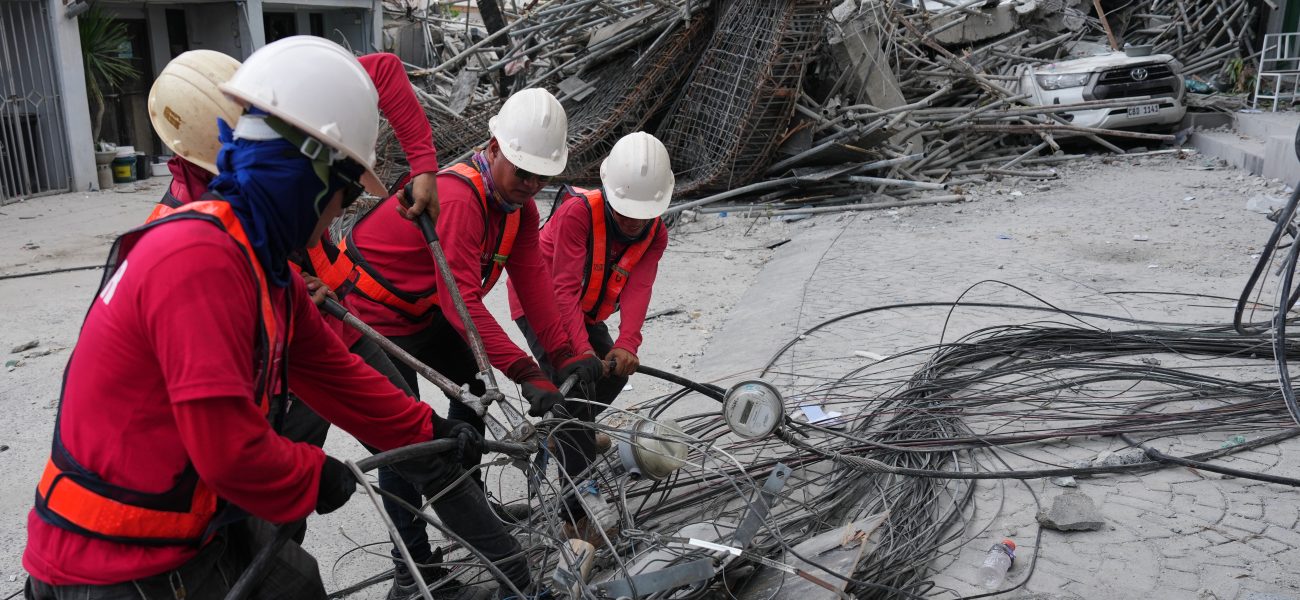
POLICY WIRE — Manila, Philippines — The aspirations for a gleaming new landmark, a testament to economic buoyancy, can sometimes, quite literally, collapse into a pile of mangled rebar and dust. That’s the gritty reality emerging from the capital’s sprawling concrete jungle this week, where the sudden, catastrophic failure of an unfinished hotel sent four souls to their maker and left seventeen, most of them working-class breadwinners, swallowed by the debris.
It wasn’t an earthquake that brought this skeletal structure down—no cataclysmic tremor or a furious typhoon. Nope. Just Monday afternoon’s mundane construction hustle, the kind you see across Southeast Asia, when a substantial portion of the high-rise gave way, ripping through the placid hum of everyday city life. Suddenly, the ambition for luxury accommodations became a stark tomb for the laborers caught beneath its failing weight. You gotta wonder, don’t you, about the corners cut, the inspections skipped, and the official nods that let this happen.
Initial reports from the scene, shrouded in the chaos of search — and rescue operations, paint a familiar picture. Rescue crews are facing an uphill battle, sifting through mountains of concrete slabs — and twisted metal. It’s arduous work, hampered by unstable conditions. Authorities have described the efforts as [QUOTE_PLACEHOLDER]. They’re racing against the clock, because every hour counts when someone’s trapped. Hope, a fragile thing at the best of times, dwindles with each passing moment for those still missing. Their families, meanwhile, gather at the perimeter, clutching photos, their silent vigil a raw testament to human despair.
The tragedy immediately kicks up all sorts of uncomfortable questions for Manila’s city planners and the construction moguls who dominate its rapidly expanding skyline. This isn’t just about a single unfortunate incident; it’s about the very foundations—both literal and regulatory—upon which a nation tries to build its future. Critics are already sounding off, suggesting this incident shines a harsh light on lax enforcement of building codes and safety protocols, an issue that’s become a haunting refrain in developing economies across the region. And it ain’t a surprise.
You see this narrative play out time — and again. It’s often the poorest, the most vulnerable—those striving for even a meager livelihood—who bear the brunt of such negligence. These are men (and sometimes women) who leave their villages, their families, for the promise of a paycheque, only to find themselves working in conditions that wouldn’t pass muster in many parts of the developed world. We’ve seen similar patterns in, say, Bangladesh, where garment factories sometimes become death traps, or even in Pakistan, where informal construction projects frequently defy proper oversight, with equally tragic consequences.
For context, consider this: Data from the International Labour Organization, reported in 2021, indicates that the construction sector globally accounts for about 30% of all occupational fatalities, disproportionately affecting developing nations where regulation is often, shall we say, flexible. That’s a grim statistic, isn’t it? But here, on this Philippine island nation, it’s not merely a number—it’s a living, breathing reality for those frantically searching for loved ones under floodlights, under the weight of crumbled concrete. This calamity rips the veneer off any pretense that the push for quick development doesn’t come with steep, human costs. The local governor, predictably, expressed his sympathies, stating [QUOTE_PLACEHOLDER] and promising a full investigation. We’ll see how full it really is, won’t we?
📄 POLICY WIRE WHITEPAPER PUBLISHED: PAKISTAN'S NATIONAL SECURITY POLICY PRIORITIES
👉 READ BY CLICKING HEREBut the damage is already done, not just to the structure, but to public trust. It undermines faith in institutions meant to protect citizens, leaving folks to wonder if their elected officials are truly safeguarding them or merely rubber-stamping permits for the politically connected. Because, let’s be honest, in these parts of the world, it often feels like money talks louder than any building inspector. You’d think, after so many preventable disasters, someone would get the picture. Apparently not. This grim scenario isn’t just a Philippine problem, of course. It echoes across the region, a warning against prioritizing profit over people.
What’s next for the remaining victims? Rescuers say the immediate goal is recovery, followed by identifying the structural integrity of what remains of the building, a delicate dance of safety and expediency. Long term? There will be an investigation—maybe—and a few scapegoats. But the real issue? That systemic failure of governance, that cozy relationship between developers — and regulatory bodies? That tends to linger, lurking beneath the next aspiring skyscraper. And for the families of the fallen, well, there’s just the silence, and the knowledge that for some, the road to prosperity can indeed be paved with fatal flaws.
What This Means
This dreadful episode, while geographically contained, projects far-reaching implications for regional policy, economic stability, and international perception. Politically, the collapse will apply immense pressure on the Philippine government to demonstrate accountability and strengthen regulatory frameworks, possibly leading to highly publicized, if sometimes superficial, crackdowns on corruption within construction and permitting agencies. This could serve as a model—or, more accurately, a warning—for neighboring nations confronting similar dilemmas between rapid growth and neglected safety. Economically, investor confidence might waver momentarily, especially for industries dependent on robust, reliable infrastructure projects. The event highlights the perennial challenge for developing Asian economies: how to attract foreign investment and foster urban growth without compromising the lives of the very labor force that powers such expansion. It’s a tough balancing act, fraught with moral hazard. For countries like Pakistan and other South Asian nations facing their own construction booms and regulatory hurdles, this serves as a chilling reminder of the consequences of lax enforcement and systemic corruption. The global labor community will likely voice concerns, pressing for stronger international oversight and ethical sourcing in construction, especially as South Asia frequently supplies migrant workers to major projects across Asia and the Middle East. Ultimately, it exposes the brutal reality that unchecked ambition, coupled with weak governance, can shatter lives as easily as concrete beams, creating social unrest that authorities rarely anticipate until it’s too late.