


Canada Builds ‘Health Walls’: Ebola Policy Redefines Global Entry
POLICY WIRE — TORONTO, Canada — Global health decisions, it turns out, can be as blunt as a sledgehammer, even when wrapped in the careful language of epidemiology. Because behind the veneer of...

POLICY WIRE — TORONTO, Canada — Global health decisions, it turns out, can be as blunt as a sledgehammer, even when wrapped in the careful language of epidemiology. Because behind the veneer of medical necessity often lurks a deeper narrative about global mobility, perceived risk, and, let’s be honest, national priorities. Canada’s latest pronouncements on inbound travel from specific African nations don’t just reflect a disease outbreak; they reflect the shifting tectonic plates of how nations view – and control – the free movement of people.
On Tuesday, Ottawa rolled out fresh directives. Travelers hailing from Ebola-affected zones won’t just breeze through customs anymore. They’re looking at a mandatory 21-day self-isolation period. Not just that, but immigration authorities have pulled the brake, putting a temporary halt on processing applications originating from Congo, South Sudan, and Uganda. That’s a significant policy swing, one that reaches far beyond the immediate health crisis and touches upon complex geopolitical threads.
Luc Brisebois, the director-general at the Centre for Border and Travel Health within the Public Health Agency of Canada, articulated the measures as being implemented out of an “abundance of caution.” It’s a phrase that certainly sounds comforting, doesn’t it? He’s confirmed these new rules will hold until August 29. Anybody showing symptoms on arrival? Well, they’ll be whisked off to a hospital for further medical assessment. And for those poor souls without a cozy Canadian crash pad for three weeks? Don’t worry, the government promises to find them somewhere. Good to know.
These stricter border measures kicked off Saturday. But it wasn’t just about quarantining new arrivals. Oh no. Starting Wednesday, Canadian officials also froze final decisions on immigration applications from those affected countries. They’re pausing for 90 days. But here’s the kicker: it [QUOTE_PLACEHOLDER] That flexibility, while understandable from a public health standpoint, introduces an unsettling level of uncertainty for applicants already navigating a labyrinthine process. It’s tough enough getting through the hoops without the government just hitting pause mid-jump, isn’t it?
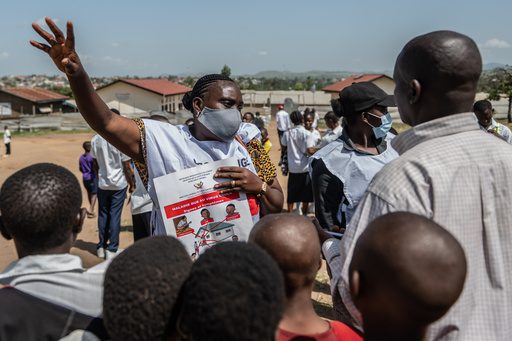
The outbreak itself, the World Health Organization (WHO) says, is concentrated in northeastern Congo. And it’s not just any Ebola, it’s a [QUOTE_PLACEHOLDER] that’s actually [QUOTE_PLACEHOLDER] They’ve recorded [QUOTE_PLACEHOLDER] numbers that paint a grim picture of a rapidly escalating health emergency on the ground. Aid efforts, we’re told, have intensified. Still, the WHO cautions that the whole thing [QUOTE_PLACEHOLDER] So this isn’t just a short-term blip; it’s an entrenched challenge with global implications.
Such moves by nations like Canada inevitably spark conversation—and sometimes consternation—in regions far removed from Central Africa. Think about the broader Muslim world, including nations in South Asia. While not directly targeted here, there’s a shared perception in many developing nations that during global health crises or security threats, travel and immigration policies can become a blunt instrument, disproportionately affecting certain demographics or geographical blocs. It creates a ‘us vs. them’ dynamic, subtly reinforcing divisions even as global health advocates preach interconnectedness. A Pakistani national, for instance, attempting to immigrate to Canada, even if their home country is thousands of miles from an outbreak, might still feel the chilling effect of stricter entry policies and the heightened scrutiny they bring.
It’s not just about direct impact either. The economic ripples from such restrictions are also worth considering. Global supply chains, humanitarian aid movements, — and even academic exchanges feel the squeeze. And these are the silent victims, aren’t they, often forgotten in the grand pronouncements of national security and public health? Policies designed to keep a pathogen out inadvertently slow the global flow of ideas, goods, — and indeed, goodwill.
📄 POLICY WIRE WHITEPAPER PUBLISHED: PAKISTAN'S NATIONAL SECURITY POLICY PRIORITIES
👉 READ BY CLICKING HEREWhat This Means
This isn’t merely a health advisory; it’s a diplomatic signal, stark — and unambiguous. Canada, a nation often championing multiculturalism and international cooperation, is — by necessity, they’d argue — drawing hard lines at its borders. It means that during crises, the liberal rhetoric of open societies can quickly buckle under the perceived threat of biological contagion. And that’s a truth for almost any nation, isn’t it?
Politically, these measures walk a tightrope. While domestically applauded by some for prioritizing national safety, they risk being seen internationally, especially in affected regions, as overly stringent or even discriminatory. The temporary suspension of immigration decisions for specific countries, for example, regardless of intent, feeds into existing anxieties about discriminatory travel policies—concerns that echo across many parts of the Global South. For countries like Pakistan, which send significant numbers of immigrants and temporary workers globally, the precedent of disease-driven halts to immigration processing, even when geographically distant, raises eyebrows about the long-term predictability of international migration pathways. It means that health crises can become unintended levers for broader immigration policy shifts, impacting people from diverse nations seeking refuge or economic opportunity abroad. It’s a stark reminder that even global efforts like those highlighted by organizations working to curb societal schisms can be overshadowed by immediate health imperatives.
Economically, it’s a double-edged sword. While intended to protect the Canadian healthcare system and economy from an outbreak, the policies themselves create barriers to legitimate travel, trade, and even essential aid movements. Any downturn in travel from affected regions, even if small, chips away at interconnectedness, creating an economic vacuum. Plus, the logistics of housing individuals for 21 days aren’t cheap; it represents a tangible cost that federal coffers will bear. This is the financial weight of exercising “abundance of caution.” When considering such measures, it’s not just the immediate health burden averted that needs factoring in, but the indirect and sometimes unseen economic ramifications that propagate outwards, impacting everything from tourism to the international movement of goods. For instance, the very fear of such stringent travel curbs can contribute to what Asia’s airlines are facing today – a volatile travel market driven by external shocks.
In essence, Canada’s move reinforces a critical modern dilemma: how do you balance sovereign responsibility for public health with global humanitarian obligations and the practical realities of a hyper-connected world? It’s a question without easy answers, yet nations continually have to grapple with its consequences, often with far-reaching impacts on individuals and geopolitical dynamics alike.