

Ashes to Resilience: New Mexico Fire Retreats, Climate’s Long Shadow Remains
POLICY WIRE — Capitan, New Mexico — It wasn’t a triumphant cheer, more like a collective sigh. A slow, exhausted exhalation from the weary folks living in the Capitan Mountains, as the infernal beast...

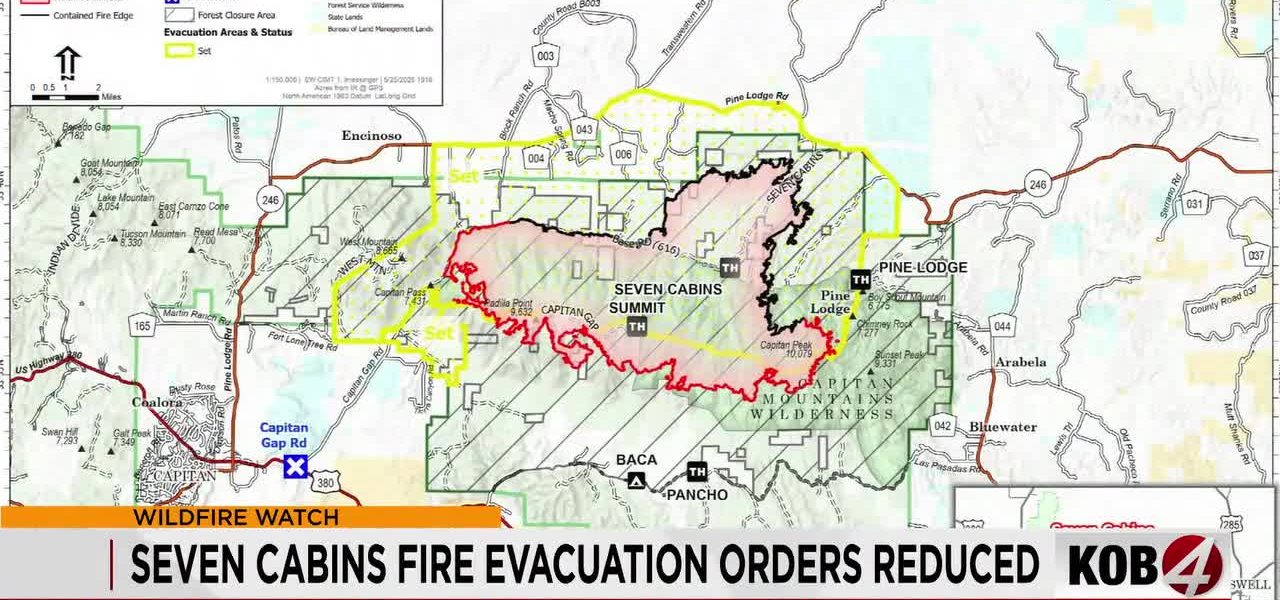
POLICY WIRE — Capitan, New Mexico — It wasn’t a triumphant cheer, more like a collective sigh. A slow, exhausted exhalation from the weary folks living in the Capitan Mountains, as the infernal beast known as the Seven Cabins Fire finally seemed to hesitate. After weeks of gnawing its way through timber and brush, scorching nearly 29,000 acres, the monster’s relentless march has, for now, softened its stride. Don’t mistake it for victory; it’s a temporary reprieve, a fleeting moment of quiet in the constant war waged against an increasingly volatile natural world.
For more than a month now, since mid-May, this part of New Mexico has existed under a smoky shroud, life lived on the edge of a siren’s wail. Evacuation orders had been the grim soundtrack for many. But lately, there’s been some good news, of sorts: fire managers are scaling back those desperate calls for residents to flee. What was a ‘GO’ status—that terrifying instruction to get out, immediately—has been downgraded to ‘SET’ for a section of State Highway 246. And the threat north of that thoroughfare? Poof. Gone, for now. Residents, however, are told to remain vigilant, as if one ever stops being vigilant after living this close to incineration (which you don’t, obviously).
The numbers tell a story, albeit a dry one: 46% containment. It’s an odd metric for something so raw — and destructive, but it’s the benchmark. A battalion of firefighters—a staggering 1,073 people, if you’re counting—have been clawing at the fire’s flanks, largely finding success on its northern edge. But wildfires, like the global political currents we track, don’t respect neatly drawn lines. Their efforts now shift south, a stubborn, less contained front that continues to challenge everything they’ve got. You know, it’s never just one problem, is it?
“We’ve seen what this fire can do, how quickly it can turn,” remarked Incident Commander John Harding, a man whose face, you just know, has seen more than its share of smoke and exhaustion. “Gaining ground on the north was a significant win for us, but the south side is a different beast entirely. We’re working long, arduous shifts, employing everything from air tankers to old-fashioned hand tools. It’s a relentless chess match, and Mother Nature always holds the queen.” His tone was measured, but you could hear the fatigue in his voice, the understanding that the job isn’t over till it’s over, and sometimes, even then, it’s not truly over.
And so, as the summer months roll on, and with them, the dread of more dry lightning strikes or errant sparks, a fragile sense of normalcy attempts to reassert itself. Local economies, battered by fire suppression efforts and a near-total collapse of tourism (who wants to vacation in an active burn zone?), now contemplate the slow, agonizing crawl back. “This isn’t just about property lost; it’s about livelihoods scorched, communities fractured,” stated State Senator Eleanor Vance, her voice a balm of local concern, speaking from an office likely filled with forms for federal assistance. “We’re resilient, we’re. But the long-term impact on our ranchers, our small businesses—it’s something that federal agencies, the climate science community, they’ve got to step up and realize that these aren’t isolated incidents anymore. We’re living the new normal.”
📄 POLICY WIRE WHITEPAPER PUBLISHED: PAKISTAN'S NATIONAL SECURITY POLICY PRIORITIES
👉 READ BY CLICKING HEREBecause that’s the grim truth underlying every reduced evacuation order and every percentage point of containment: this is America’s — and the world’s — accelerating battle against a changing climate. The average wildfire season in the U.S. has lengthened by nearly three months since the 1970s, according to the USDA Forest Service. That’s not just a statistic; it’s the difference between communities breathing easy and constantly holding their breath. It’s the new reality, played out with terrifying regularity from the forests of California to the sprawling plains of Australia.
What This Means
The scaled-back evacuation orders for the Seven Cabins Fire represent a temporary tactical victory, not a strategic triumph over the underlying environmental shifts gripping the globe. Economically, communities like Capitan face a daunting path to recovery. Insurance rates in fire-prone regions are skyrocketing, if coverage is even available, choking homeowners and small businesses alike. Politically, these events intensify pressure on federal and state governments to fund not just reactive firefighting but also proactive mitigation strategies, from forest thinning to updating building codes. It also reignites debates over climate policy, and just how much we’re prepared to pay – both in taxes and in tragedy – for a perceived return to ‘business as usual’. But that usual is long gone, vanished in the smoke — and flames.
This New Mexico blaze, then, isn’t just a localized emergency. It’s a stark reflection of a global phenomenon, a recurring decimal point in the catastrophic ledger of climate change. From the American Southwest to the parched landscapes of South Asia, the planet is feeling the heat. Pakistan, for instance, a nation grappling with its own existential environmental crises—think of the devastating floods that wiped out villages and displaced millions—can only watch these Western fires with a grim, familiar understanding. While the specifics differ, the common thread is shared vulnerability: extreme weather events pushing already strained communities to breaking point. And whether it’s a fire consuming cabins in New Mexico or unprecedented floods submerging villages along the Indus, the call for coordinated global action isn’t just diplomatic nicety; it’s a desperate plea from the frontline. The resources spent fighting this particular wildfire—more than a thousand personnel, specialized aircraft, untold millions in operational costs—illustrate the immense drain on coffers. Imagine that kind of sustained response required year-round, across continents, and you begin to grasp the sheer scale of the challenge.