


Jerusalem’s Frayed Nerves: Light Rail Becomes Latest Flashpoint in Sacred City
POLICY WIRE — Jerusalem — The whine of power tools and the rumble of heavy machinery—those predictable daily accompaniments to any burgeoning metropolis—found themselves abruptly silenced yesterday...

POLICY WIRE — Jerusalem — The whine of power tools and the rumble of heavy machinery—those predictable daily accompaniments to any burgeoning metropolis—found themselves abruptly silenced yesterday in Jerusalem. Instead, an altogether different symphony took over: the chants of hundreds of protestors, coalescing into human blockades. It wasn’t merely traffic they were stopping, it seems; they were jamming up a project intended to knit the city together, inadvertently fraying its nerves even further.
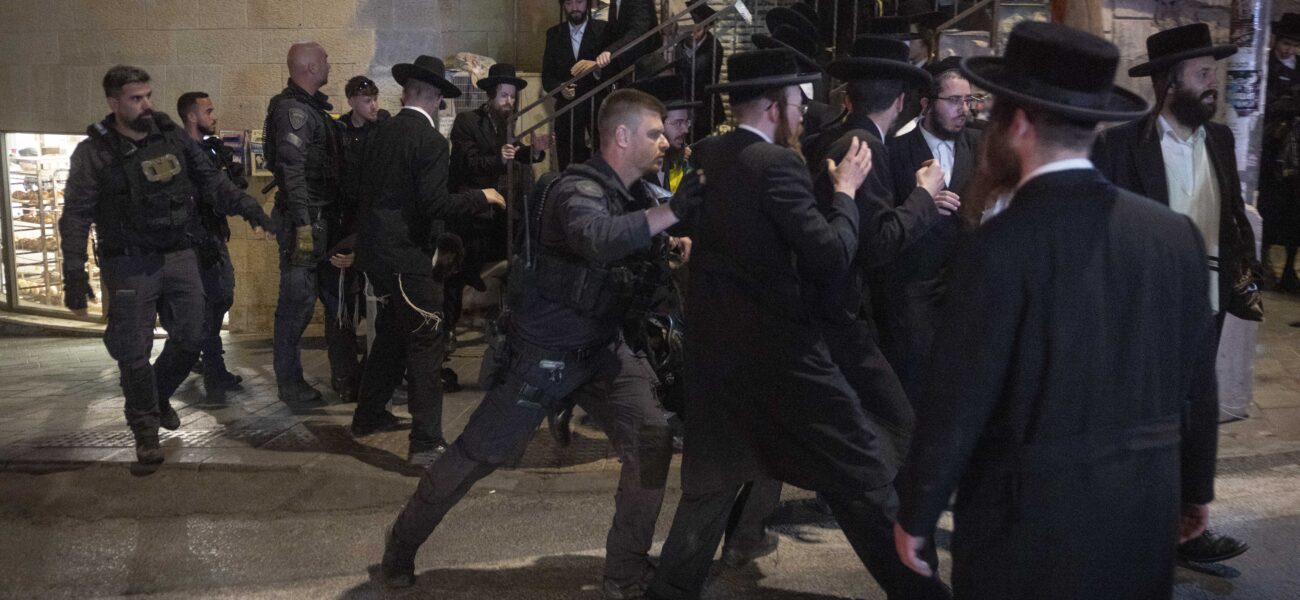
It began as it often does here: a municipal project, intended to modernize, spiraled into a vortex of ancient grievances. The Jerusalem light rail, an ambitious endeavor designed to crisscross the city, connecting diverse populations, instead became a freshly painted battle line. Protesters, largely ultra-Orthodox and some nationalist elements, weren’t just agitated; they were actively shutting down main arteries and, rather theatrically, besieging a construction site meant to expand the Red Line near Shuafat. They’re convinced it desecrates hallowed ground. But really, it’s always about more than just concrete — and tracks, isn’t it?
The scene was a familiar, if perpetually frustrating, dance of defiance — and deployment. Black-clad officers, seemingly outnumbered, struggled to disperse determined crowds near Shivtei Israel Street, ultimately making several arrests. These aren’t isolated incidents, either; they’re echoes of a deeper, foundational unease. Every public work in this city, every dig — and drill, it feels like it scratches at historical wounds, you know?
“We’re building for the future, not disrupting the past,” Mayor Moshe Lion’s spokesperson, Dov Halperin, stated in a terse email. “This light rail system will alleviate congestion, connect communities, — and spur economic growth. These demonstrations, while we respect the right to protest, are actively undermining the welfare of Jerusalemites.” Halperin didn’t hold back, stressing the administration’s resolve. Because of course, they always do. But how many future benefits does it take to outweigh present anger? That’s the billion-shekel question here (literally, given these project costs).
And let’s be frank: the specific objection to this section of the rail often circles back to its proposed path through specific neighborhoods, interpreted by some as a direct challenge to the character of religious enclaves. It’s perceived as an encroachment. It’s a statement. And the protests? They’re a counter-statement, often expressed with an uncompromising vigor that can feel—to an outsider, anyway—somewhat theatrical.
Sheikh Ra’ad al-Din, a prominent Islamic cleric whose voice carries weight throughout Jerusalem’s Arab communities, spoke to Policy Wire with thinly veiled frustration. “They build over our past, and they call it progress,” he said, referring not just to the current protests but to a broader narrative. “The world watches these actions unfold, and we in the Muslim community, from Rabat to Islamabad, we see the erosion of our heritage, not just a train line.” It’s a perception problem of epic proportions, an infrastructure dilemma steeped in identity politics.
📄 POLICY WIRE WHITEPAPER PUBLISHED: PAKISTAN'S NATIONAL SECURITY POLICY PRIORITIES
👉 READ BY CLICKING HEREThis localized drama quickly takes on regional, even global, overtones. Such scenes, broadcast far and wide—and often embellished or distorted, a common challenge in our era of deepfake disarray—serve as potent fodder for narratives across the Muslim world. For Pakistan, for example, a nation deeply invested in the question of Jerusalem’s sanctity, every blocked street here reinforces a political struggle far beyond this city’s ancient walls. They see it as part of a continuous battle for sacred ground, and for sovereignty, and their leadership often expresses vocal solidarity. That’s diplomacy by street protest, writ large.
The Red Line extension itself represents a substantial investment. The overall Jerusalem light rail project, including various lines, is estimated to cost upward of 4.5 billion Israeli Shekels (around $1.2 billion USD) across its various phases, according to recent Ministry of Finance projections. Each day of disruption piles on economic inefficiencies, delay penalties, — and indirect costs to local businesses. It’s not just the spiritual price; there’s a hefty economic toll, too. Think of the missed appointments, the delayed deliveries—a modern city can’t just pause for ideological showdowns without feeling a real pinch.
What This Means
This recent eruption over a light rail line signals a deepening impasse in Jerusalem, revealing how even mundane infrastructure projects get weaponized into symbols of political and religious conflict. It’s never just about transportation here. It’s about who owns the narrative, who controls the space, and whose vision of the future gets laid down in steel and concrete. The state’s insistence on building, juxtaposed with the visceral resistance of specific communities, creates a perpetual deadlock. This isn’t just about traffic flow; it’s about the very flow of power in one of the world’s most contested cities. Economically, these protests don’t just delay construction; they project an image of instability that discourages outside investment and dampens tourism, however marginally. But more profoundly, they serve as regular, very public reminders that beneath Jerusalem’s modern veneer, ancient antagonisms simmer, ready to boil over with the slightest disturbance—a light rail extension, an archaeological dig, even a fresh coat of paint. For policy wonks, it’s a lesson: even the most pragmatic plans fail when they disregard deeply held, emotionally charged beliefs. They really, really don’t make it easy, do they?