


Beyond Nachos: Albuquerque’s Minor League Team Fights for Relevance in a Fickle Economy
POLICY WIRE — ALBUQUERQUE, N.M. — It isn’t often that banana foster nachos – a sticky, sugary culinary defiance of conventional wisdom – become an economic bellwether. But here in Albuquerque,...

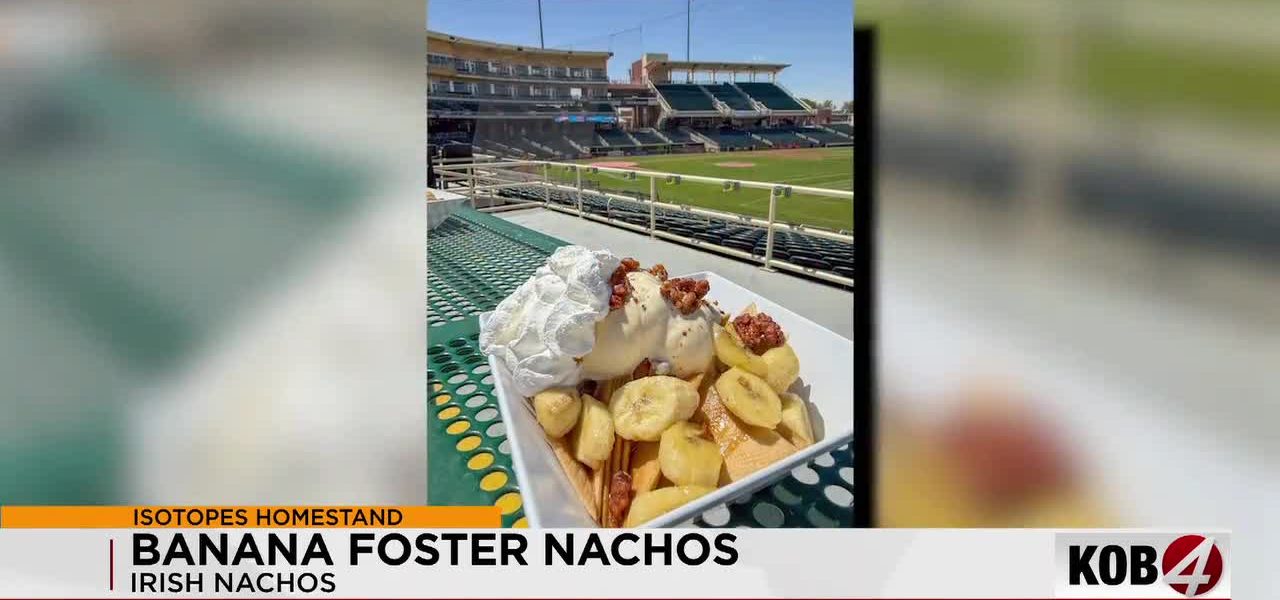
POLICY WIRE — ALBUQUERQUE, N.M. — It isn’t often that banana foster nachos – a sticky, sugary culinary defiance of conventional wisdom – become an economic bellwether. But here in Albuquerque, with the minor league Isotopes prepping their next homestand, the saccharine spectacle serves a purpose far greater than merely filling hungry bellies. This isn’t just baseball; it’s a desperate, joyful battle for eyeballs, discretionary income, and a town’s sense of self in an increasingly fractious world.
For the Albuquerque Isotopes, a triple-A affiliate operating in the high-stakes, low-margin world of minor league ball, this week isn’t about championship glory. Not really. It’s about Dino plushies and something they’ve audaciously dubbed “Nacho Average Wednesday” – a spread of fusion-food absurdity, from Irish nachos to the aforementioned banana foster monstrosities, all designed to coax families off their couches and away from streaming services.
The numbers don’t lie. Minor League Baseball saw its attendance bounce back from the pandemic slump, hitting 30.5 million fans across all levels in 2023, a significant improvement but still below pre-COVID highs. Each of those eyeballs represents a ticket, a hot dog (or, God forbid, a banana foster nacho), and perhaps a dino plushie. Local teams, without the gargantuan TV contracts of their big league brethren, rely on these individual transactions for their very existence. They’re trying to win the night, not just the game.
“Look, folks are tighter with their wallets right now. We get it,” conceded Albuquerque Mayor Susana Sanchez, a seasoned political operator whose family has held season tickets since the team’s inception. “A night out for a family of four isn’t cheap. So, we, the city, and the Isotopes — we’re all focused on making sure it’s an *experience*. Because people crave that. It’s not just a game; it’s an evening where you can forget the price of gas, the national headlines, all of it. Even for a few hours, it works.”
She’s not wrong. People need an escape. But this reliance on increasingly quirky themes highlights a deeper strain on local economies, where staple entertainment options are fighting against a global deluge of content and ever-more-demanding consumers. It’s an arms race for attention, — and the weapons include green dinosaur mascots and pride nights.
Rick ‘The Rocket’ Rodriguez, the Isotopes’ famously gruff Marketing VP, waved off any high-minded analysis. “Policy Wire wants to talk about geopolitical implications? What we’re focused on is getting butts in seats,” he barked, his voice carrying the rasp of a thousand rain delays. “It’s El Paso, it’s divisional ball, it’s a big rivalry. And yes, it’s about those damn nachos. If it makes someone smile, makes ’em forget their woes for a bit, then we’ve done our job. And it keeps the lights on.”
And that’s the kicker, isn’t it? Keeping the lights on. Because whether you’re a minor league baseball franchise or a burgeoning start-up in, say, Karachi, every local enterprise faces the same relentless market forces, the same struggle to differentiate. People’s appetite for novelty isn’t confined by borders; it’s a universal solvent in an age of abundant choices. These bizarre food offerings? They’re a symptom, not a cure.
They’ve got Dinosaur Night, sponsored by the New Mexico Museum of Natural History — and Science, gifting 1,500 plushies. There’s Country Night — and then Pride Night. Each theme is a tiny, calculated risk, an attempt to snag a sliver of the attention pie, to foster a connection. It’s local marketing in a globalized village, and it demands constant innovation. Just like a government agency trying to attract foreign investment to bolster its green energy sector, the Isotopes are packaging their offering to appeal to specific demographics, desperately trying to prove their inherent value in a marketplace brimming with distractions.
What This Means
The frenetic pace of themed nights — and unconventional concessions isn’t just marketing fluff; it’s a strategic pivot. Minor league sports, traditionally pillars of local identity and entertainment, are increasingly operating on the thin ice of consumer whim. Their survival isn’t just about winning games, it’s about monetizing the ‘experience’ — often a theatrical, gastronomically adventurous experience — to stay competitive in an entertainment ecosystem saturated by digital alternatives.
This situation speaks to the broader economic landscape facing mid-sized American cities. When even deeply rooted cultural institutions like a minor league baseball team must resort to Irish nachos and dino giveaways to pull a crowd, it signals underlying vulnerabilities. It suggests a fight not just for casual fans, but for the very soul of localized commerce, mirroring struggles in communities far beyond the American Southwest, perhaps even in South Asia, where traditional forms of entertainment contend with rapid technological change and shifting societal interests. These are the subtle indicators that an economy, while perhaps robust at the macro level, is experiencing localized distress, where every dollar spent on leisure is fiercely contested.