


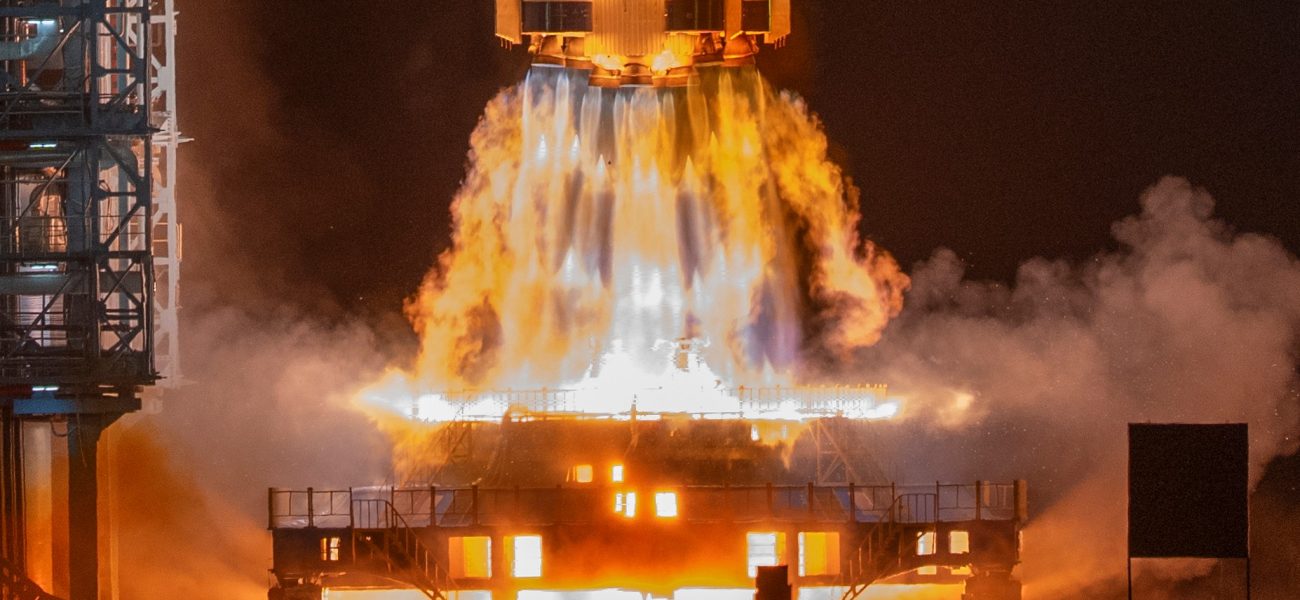
Beijing’s Orbital Gambit: A Year in Space, A Generation of Influence
POLICY WIRE — Wenchang, China — While the world’s attention skitters from proxy wars to simmering trade disputes, Beijing just pulled off another quiet coup above our heads. They didn’t...

POLICY WIRE — Wenchang, China — While the world’s attention skitters from proxy wars to simmering trade disputes, Beijing just pulled off another quiet coup above our heads. They didn’t just send another rocket screaming towards the heavens; they committed a human being to an orbital tenure that few nations have truly sustained. This isn’t about bragging rights, not anymore. This is about establishing facts on the ground—or, more accurately, in space. And the ramifications ripple far beyond low-Earth orbit.
The Shenzhou 23 spacecraft, a marvel of iterative engineering, didn’t just dock; it cemented China’s long-term human presence in space. One of its three-person crew, we hear, is set to call the Tiangong space station home for a full calendar year. That’s an ambitious stretch, especially for a nation once playing catch-up. It’s a calculated flex of technical muscle, a testament to decades of unwavering state investment, often unseen by Western eyes preoccupied with immediate headlines.
It’s fascinating, really, how Beijing frames this—always as peaceful exploration, always for humanity’s shared future. Yet, these ambitious strides aren’t happening in a vacuum. (Pun absolutely intended.) They’re occurring amidst a clear, relentless geopolitical strategy, where mastery of space translates directly into terrestrial power. You don’t sink billions into advanced rocket propulsion — and orbital habitats just to study cosmic rays. You do it because space is the next frontier for economic leverage, military advantage, — and diplomatic heft.
“Our celestial endeavors are purely for the advancement of human science and the betterment of global society,” stated Wang Wenbin, spokesperson for China’s Foreign Ministry, at a recent briefing. “We invite cooperation, we share data—our commitment to peaceful development in space remains unwavering.” You’d almost believe him. But scratch beneath the surface, and you’ll find a drive for self-reliance and technological autonomy that mirrors a masterclass in high-stakes leadership.
This long-duration mission on Tiangong—China’s answer to the International Space Station, from which it’s largely been excluded by U.S. law—is effectively a permanent R&D lab, a testing ground for everything from new materials to closed-loop life support. And because of this persistent effort, China has consistently maintained a robust launch cadence, launching an estimated 67 orbital missions in 2023 alone, according to Space.com, outpacing all but the most commercialized space programs.
But there’s also an outward-looking aspect that often escapes mainstream Western media’s attention. China’s space program, much like its Belt — and Road Initiative (BRI), isn’t solely insular. It’s a mechanism for fostering alliances, extending influence, and attracting partners—particularly among nations in South Asia and the broader Muslim world. Pakistan, for instance, has long been a close partner, having sent its own payloads, like the ICUBE-Q, aboard Chinese rockets. They’re collaborating on everything from communication satellites to lunar observation. For Islamabad, it’s access to capabilities they couldn’t otherwise afford; for Beijing, it’s about cementing strategic relationships and building a constellation of aligned nations.
📄 POLICY WIRE WHITEPAPER PUBLISHED: PAKISTAN'S NATIONAL SECURITY POLICY PRIORITIES
👉 READ BY CLICKING HEREAnd these relationships aren’t merely symbolic. They translate into tangible technological transfer, training programs, and a gradual integration of space infrastructure. It’s how you build a new sphere of influence, piece by painstaking piece, light-year by light-year, often under the radar. But what about the older players? They’re watching, alright. “While the stated intentions are always benign, any nation with rapidly expanding space capabilities poses questions regarding dual-use technology and strategic positioning,” noted Dr. Evelyn Reed, a retired NASA orbital dynamics specialist. “It’s simply how the game works. No one builds this kind of infrastructure purely for academic curiosity anymore.”
It’s a pragmatic assessment, cold — and clear. But it’s the only way to genuinely grasp what’s at play. Beijing isn’t just sending folks into orbit; they’re projecting state power, cultivating a new class of space-faring partners, and incrementally shifting the global strategic balance.
What This Means
This prolonged mission on the Tiangong station isn’t just about an astronaut’s physical endurance; it’s about China’s political and economic fortitude. Politically, it reasserts Beijing’s position as a standalone, advanced space power, capable of sustaining complex human missions independently. It chips away at the historical dominance of the U.S. and Russia, positioning China not just as an equal, but as an alternative leader in space exploration.
Economically, this mission signals continued heavy investment in a high-tech sector with vast spillover benefits. From materials science to artificial intelligence, from precise navigation systems to Earth observation data, advancements made in orbit feed directly back into China’s terrestrial industries and its national defense architecture. This allows China to develop its own industrial standards and supply chains, further reducing reliance on foreign technology—a core tenet of its national strategy. the collaborative efforts with nations like Pakistan underscore a calculated economic diplomacy, integrating developing countries into China’s technological orbit. It means more shared infrastructure, more data, — and a tighter grip on key communication pathways. In essence, a year in space is less about the stars, — and much, much more about staking claims right here on Earth.
📖 GET YOUR FREE COPY NOW OF POLICY WIRE DIGITAL MAGAZINE JULY 2026 EDITION
👉 READ & DOWNLOAD FREE MAGAZINE