


Havana’s Long Nights: When Blackouts Spark More Than Candles
POLICY WIRE — Havana, Cuba — For weeks, the hum of air conditioning units and the glow of streetlights have been less a guarantee, more a distant, tantalizing memory. Nights across the Cuban capital,...

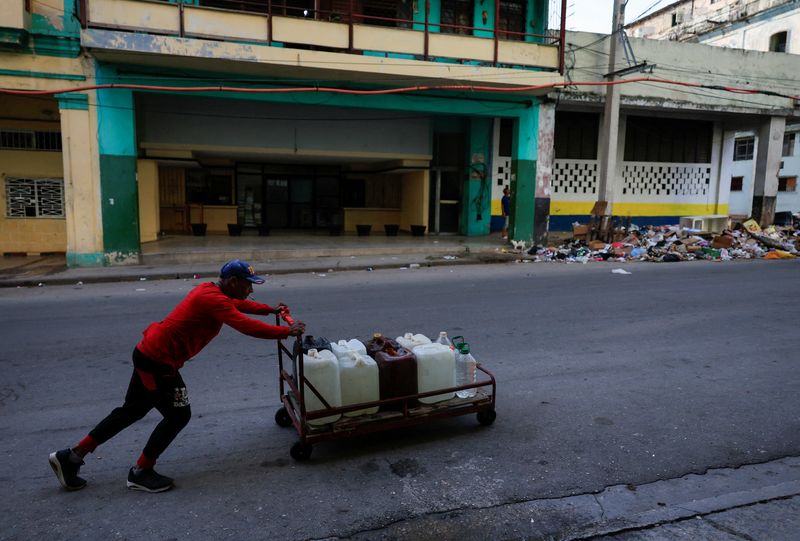
POLICY WIRE — Havana, Cuba — For weeks, the hum of air conditioning units and the glow of streetlights have been less a guarantee, more a distant, tantalizing memory. Nights across the Cuban capital, usually vibrant with activity—or at least the gentle thrum of life—have dissolved into profound silence, broken only by the whispers of frustrated citizens. It’s a silence pregnant with anger, the kind that ignites when basic necessities evaporate, — and patience wears thin. These weren’t isolated incidents anymore; they’re symptoms of a systemic malady, one whose severity is now manifesting not just in homes, but on the streets.
It began as an inconvenient flicker, then an hour, then entire swaths of the city going dark for what felt like interminable stretches. Suddenly, the problem wasn’t merely the air conditioning—it was spoiled food, the inability to pump water, medical facilities struggling, and the crushing weight of daily life grinding to a halt. Small clusters of people gathered in frustration—just neighbors talking, you’d think. But quickly, those clusters became crowds. They began demanding immediate solutions, not just vague assurances. You see, when the lights go out, everything else gets illuminated, doesn’t it?
And so, protests flared across Havana, a city already weary from decades of economic strain — and external pressures. The public outburst isn’t simply about an absent kilowatt; it’s about a deeper disillusionment with a system perceived as incapable of even keeping the lights on. It’s a raw, unfiltered expression of societal stress, echoing sentiments not unfamiliar to populations navigating crumbling infrastructure and bureaucratic inertia across the developing world. Here, the energy grid’s faltering infrastructure, combined with chronic fuel shortages exacerbated by international sanctions, has created a truly combustible environment. Power, or the lack thereof, isn’t just an amenity—it’s political leverage, a barometer of a nation’s stability.
But the irony isn’t lost on anyone observing this spectacle. Cuba, once a revolutionary torchbearer, now struggles to power its own populace, leading to scenes that parallel less heralded struggles elsewhere. Think of the rolling blackouts that plague Pakistan’s burgeoning cities, or the periodic collapses in Venezuela’s energy system—they’re not just technical glitches. They’re public statements of economic frailty, political stagnation, — and governance shortfalls. In 2022, Cuba’s economic output actually contracted by 1.8%, according to data compiled by the United Nations Economic Commission for Latin America and the Caribbean, illustrating the backdrop of these public frustrations.
Ordinary citizens, pushed to the brink, haven’t been shy. [QUOTE_PLACEHOLDER], cried one resident. Their collective voices, though initially tentative, quickly coalesced into a potent murmur. They want more than promises; they want tangible change. It’s hard to ignore a city in the dark, and it’s even harder to ignore its residents when they take to the streets with portable lamps and phone flashlights, using the very symbol of the problem to protest its existence.
The government’s response, predictably, has been a blend of acknowledgment — and control. They’ve recognized the crisis, promised swift action, but simultaneously deployed security forces. It’s a delicate dance, trying to quell discontent without sparking further unrest. It’s like trying to put out a fire with a garden hose when the house is already fully ablaze. And for citizens, waiting indefinitely in darkness, the official rhetoric just sounds increasingly hollow. This whole situation has morphed from an inconvenience into a critical test of governmental legitimacy.
📄 POLICY WIRE WHITEPAPER PUBLISHED: PAKISTAN'S NATIONAL SECURITY POLICY PRIORITIES
👉 READ BY CLICKING HEREThe specter of economic collapse hangs heavy. Tourism, a much-needed foreign exchange earner, takes a direct hit when the basic comfort of electricity isn’t guaranteed. Foreign investment shies away. You can’t build a vibrant economy when the basic building blocks aren’t there. And it’s not just Cuba. Look at the global crises stemming from similar systemic failures, where infrastructure deficiencies lead directly to societal upheaval.
What This Means
These protests aren’t an anomaly; they’re a barometer, pointing to deep fissures within Cuba’s command economy, exacerbated by its isolation. The sustained power outages—often stretching for 10-12 hours daily in some areas—aren’t merely an infrastructure failure. They’re a political crisis boiling over. Economically, this severely hampers productivity, scares off potential investors, and drives inflation for essential goods, worsening living standards already among the hemisphere’s lowest. For a nation that imports over 80% of its food, sustained blackouts mean fresh produce spoils, exacerbating food security issues that already exist. We’re witnessing the profound linkage between failing public services — and civil unrest.
And this dynamic reverberates beyond Havana’s shores. From energy-poor Bangladesh, facing its own grid challenges, to regions in North Africa grappling with resource scarcity, the core issue is uniform: a state’s ability—or inability—to provide basic services becomes the crucible for popular discontent. The implications for Havana are dire. Unresolved, these grievances will chip away at state authority, potentially leading to further social fragmentation and economic decay. For onlookers, it’s a stark reminder: even in tightly controlled states, the elemental human need for stability and basic function will, eventually, always find a voice—even in the dark.