

Prodigy’s Gambit: Ansu Fati at Crossroads Amidst Sevilla’s High-Stakes Gamble
POLICY WIRE — Madrid, Spain — The modern footballing fairy tale often starts with a young talent, bursting onto the scene, dazzling crowds with precocious skill. But it rarely ends there. More often,...

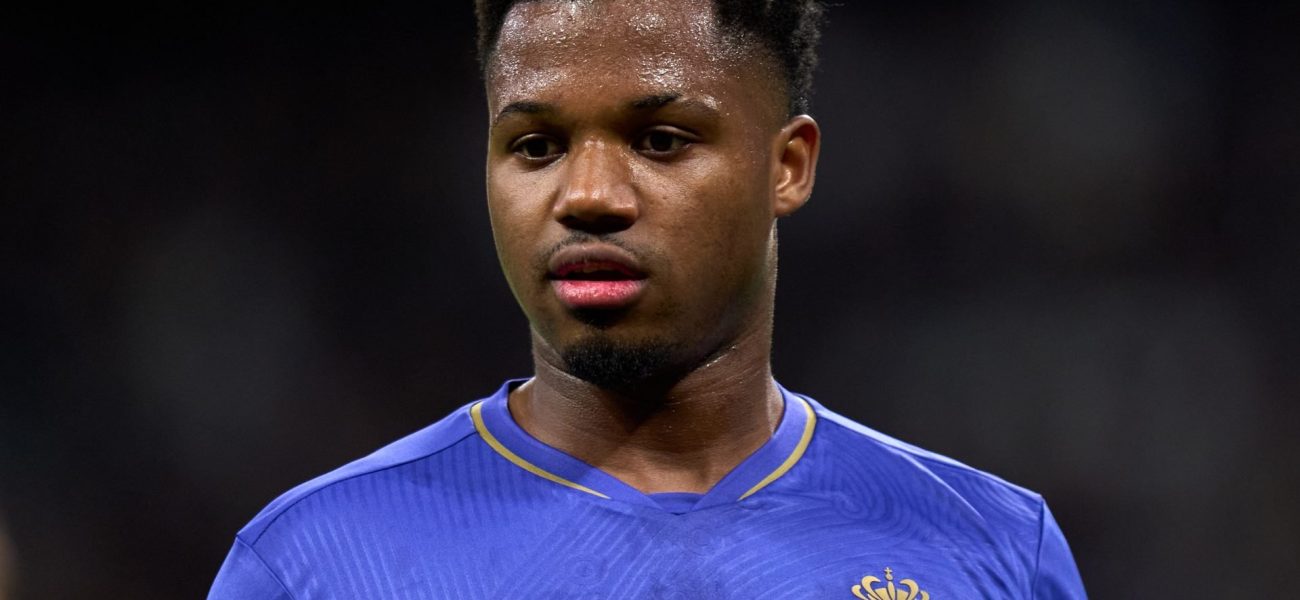
POLICY WIRE — Madrid, Spain — The modern footballing fairy tale often starts with a young talent, bursting onto the scene, dazzling crowds with precocious skill. But it rarely ends there. More often, it morphs into a bruising negotiation, a corporate tango between player aspirations, club coffers, and the ever-shifting winds of economic reality. Enter Ansu Fati, FC Barcelona’s once-hailed prodigy, currently navigating exactly that labyrinth, his career now less a straightforward path to glory and more a high-stakes, multi-club poker game.
It’s not about the goals he scores anymore (and he scored a respectable dozen for Monaco this past season, mind you). No, it’s about balance sheets, ownership visions, and whether a kid still years from his prime fits into the meticulously crafted, often painfully lean, plans of European giants. Because let’s be real, Barcelona’s been in a fiscal chokehold for a while now. They’ve gotta offload salaries, even if those salaries belong to their own, their very own La Masia-honed prodigies.
This whole situation escalated with the recent whisper campaign — then outright reportage — connecting Fati to Sevilla FC. But not the Sevilla we thought we knew. No, this is a Sevilla seemingly re-imagined, re-engineered, perhaps even reborn, under the watchful, demanding gaze of its new backers, led by club legend Sergio Ramos. It’s a compelling narrative, isn’t it? The seasoned warrior returns not just to play, but to build, to invest. What a turn for the books.
The murmurs gained some serious traction, actually, when Fati popped up in the stands at Balaídos for a Celta Vigo versus Sevilla match. Just there to see his pal, Ilaix Moriba, apparently. Sure. Everyone knows in this game, proximity creates presumption. A young star, whose parent club seems intent on forgetting he exists, suddenly watching a team trying to reinvent itself? You don’t need a detective license to put that jigsaw together.
“We’re in a period of necessary restructuring,” Laporta reportedly commented to an internal committee, a statement that found its way into our ears through a reliable source. “Every decision, no matter how difficult, must serve the long-term solvency — and vision of this club. It’s not always about sentiment; sometimes, it’s about survival.” A brutal truth for a club that prides itself on more than just winning.
And Sevilla? Their pitch isn’t just about playing time or a new challenge; it’s about a fresh beginning for a player who, just a few seasons back, was expected to inherit Lionel Messi’s throne. Now, he’s a highly valued commodity on the open market, an asset to be leveraged. Sources close to Five Eleven Capital, the group behind Sevilla’s new project, are brimming with confidence. “This isn’t just about making splashes; it’s about laying foundations,” one financial advisor, requesting anonymity to discuss ongoing negotiations, relayed to us. “We aim to build a squad capable of competing at the highest levels, both domestically — and internationally. A player of Ansu’s caliber — and youth wouldn’t just be an addition; he’d be a cornerstone of that ambition.”
📄 POLICY WIRE WHITEPAPER PUBLISHED: PAKISTAN'S NATIONAL SECURITY POLICY PRIORITIES
👉 READ BY CLICKING HEREBut the road to Andalusia is littered with ‘ifs.’ First, Monaco has their option to buy, an €11 million proposition they’re mulling. Will Fati even want to stay there? Secondly, Sevilla’s own financial scaffolding needs to be fully cemented. The new owners, headed by Ramos, are confident they’ll secure the necessary guarantees, injecting fresh capital for transfer market muscle. After all, you don’t bring in someone like Fati if you’re not swinging for the fences. The club is said to be eyeing a broader commercial appeal too, with significant emphasis on expanding their brand into lucrative new markets, including parts of the Muslim world where Spanish football has a growing, passionate following.
The situation isn’t unprecedented, of course. Spain’s La Liga clubs, for all their global allure, constantly juggle ambition with harsh fiscal realities. Barcelona itself, once seemingly unshakeable, had gross debts exceeding 1.35 billion euros in 2021, according to official club statements—a figure that explains many of its subsequent player movements and cost-cutting measures. It’s an arena where even the brightest talents become chips in a much larger, often crueler, game of financial stability and sporting aspiration.
But Fati’s move to Sevilla would require an almost improbable alignment of the stars. It would need him to reject Monaco. Then, Barcelona and Sevilla, two clubs whose relationship has sometimes been about as warm as an arctic wind, would need to find common ground on financial terms that mirror what Monaco was ready to offer. You’d think the presence of Sergio Ramos might make some conversations a tad smoother on the Andalusian side, but old rivalries die hard. Unless, of course, the new money talks loud enough to drown out past grievances. What a tangled web, huh?
What This Means
This whole Ansu Fati saga isn’t just about a football transfer; it’s a microcosm of the changing landscape in European football. It’s a blunt illustration of how even clubs steeped in tradition—like Sevilla or Barcelona—are now fundamentally global commercial entities, always hunting for fresh capital and new revenue streams. For Barcelona, offloading Fati, even on terms they might not love, signals a cold, hard strategic pivot from prodigy-nurturing to asset-management. It’s a reluctant acceptance that their economic house must be in order, whatever the cost to their romantic image. But that’s just the business, isn’t it?
And for Sevilla? This move, if it materializes, is a significant declaration of intent. It signifies a willingness to spend big, backed by a consortium that isn’t afraid to shake things up. It suggests an aggressive strategy not merely to survive, but to leapfrog competitors, fueled by capital infusions (potentially from regions looking for strong European investments) and a vision articulated by a football icon. It could reconfigure power dynamics within La Liga, providing a real challenger to the traditional top three. But this also means unseen forces—money, politics, and power dynamics—are shaping who plays where, and why. It’s a market, after all, — and the invisible hand can be quite heavy-handed.
📖 GET YOUR FREE COPY NOW OF POLICY WIRE DIGITAL MAGAZINE JULY 2026 EDITION
👉 READ & DOWNLOAD FREE MAGAZINE