


Flicker of Justice: Release in Man’s Death Puts Spotlight on Procedural Drama
POLICY WIRE — London, UK — It wasn’t the grisly murder some online armchair detectives had already conjured, nor was it the dramatic conspiracy fodder cable news thrives on. Just another...

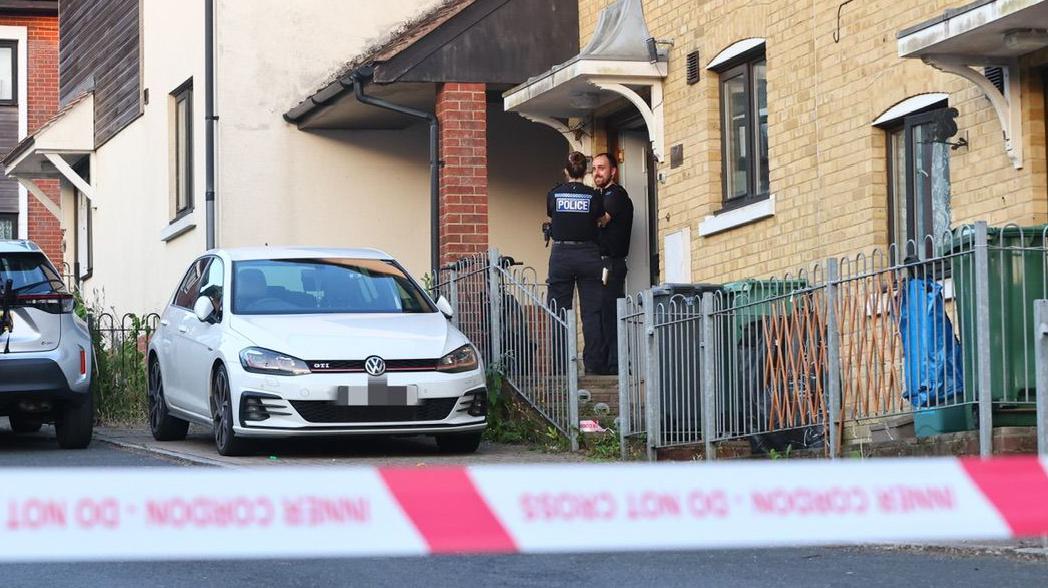
POLICY WIRE — London, UK — It wasn’t the grisly murder some online armchair detectives had already conjured, nor was it the dramatic conspiracy fodder cable news thrives on. Just another Saturday afternoon, really, only it had briefly ensnared two lives—a young boy and an adult woman—in a public maelstrom of speculation. Now, they’re free, police having wrapped up their initial probes, determining the man’s death was not suspicious. The quiet closure arrived unceremoniously, a stark contrast to the initial flurry of police tape and the inevitable murmurings that always accompany such events.
It’s funny, isn’t it? How quickly the narrative twists. One moment, there’s an active investigation, veiled in official boilerplate. The next, a curt statement from law enforcement unravels the whole thing, leaving the public to re-evaluate their snap judgments. For those briefly held—imagine the sheer panic, the bewildered silence that must’ve descended when police lights flashed at their doorstep—the experience has undoubtedly left a lasting imprint, a subtle scar from a system that casts a wide net just in case. But hey, that’s how it sometimes works in the real world; they cast, they retrieve, they sort it out. And often, there’s nothing particularly sinister about the catch. [QUOTE_PLACEHOLDER]
Because let’s face it, we crave resolution, especially when mortality looms. And when it’s unclear, when the authorities are involved, it’s our human default to conjure the darkest scenario. A tragedy of uncertain origin somehow always morphs into something far more nefarious in the collective consciousness than, say, a quiet exit on life’s stage. This particular case, while localized and seemingly minor in the grand scheme, provides a microscopic view into how public opinion forms—and crumbles—when facts slowly supersede emotion. It’s not a murder mystery, folks; it’s a testament to the everyday, often overlooked, complexities of human existence and its inconvenient ends.
Think about the systems at play here. The swift police response, the custodial period, the eventual exoneration—it’s a bureaucratic dance we rarely consider until someone we know, or care about, gets caught in its rhythms. This is, of course, a common tale in any legal framework aspiring to justice. In places like Pakistan, for instance, where investigative resources might be stretched thinner, and media narratives can harden more quickly, a similar initial situation might escalate differently. The weight of community suspicion, once stoked, isn’t easily extinguished—even with official pronouncements. Public perception, particularly in high-stakes situations or those touching on family honor (or lack thereof), carries its own undeniable gravity in much of South Asia.
The Metropolitan Police, like many agencies globally, follows protocols. When a death is reported — and initial circumstances aren’t immediately clear, they act. They’ve to. According to data compiled by the Bureau of Justice Statistics, roughly 75% of initial investigations into unexplained deaths in Western countries eventually classify them as non-homicidal—a reminder that reality often disappoints our morbid imaginations. A brief detention—as unpleasant as it surely was—is part of that due diligence, the legal apparatus whirring through its checks and balances. We can decry it as overzealous, or we can understand it as an attempt, however imperfect, to leave no stone unturned, even if most of the stones hide nothing more than dust.
And so, life for these two individuals, momentarily suspended in uncertainty, can now resume. One wonders what stories they’ll tell—or perhaps, what stories they’ll intentionally forget. The man, now identified, won’t feature in many headlines, not now that his death is deemed ordinary. But for the woman and boy, the ghost of an interrogation, the chilling silence of a holding cell, might just linger a while longer, a permanent, albeit subtle, alteration to their personal histories. It’s a sobering reminder that sometimes, the biggest impact of a news cycle isn’t the dramatic reveal, but the quiet undoing of a public assumption.
Their experience—the brief entanglement with state power and its subsequent, albeit mundane, resolution—isn’t just a local snippet. It echoes broader concerns about due process — and public scrutiny everywhere. In an age where digital whispers become roaring facts faster than evidence can be gathered, the presumption of innocence often fights a losing battle against the viral spread of conjecture. It’s a societal pressure cooker, always on, — and sometimes, a relatively innocent kettle gets scalded. You’ve got to wonder about the lasting effects on those individuals. How do you just go back to normal after being treated like a potential perp? How does a community un-think what it thought for a short while?
What This Means
This episode, though it quickly dissipated from the front pages, serves as a sharp commentary on several layers of modern societal function. First, there’s the inevitable efficiency (or perceived efficiency) of a large investigative body. They move, they contain, — and then they publicly retreat when the facts don’t align with initial suspicions. This rapid escalation and de-escalation of a narrative, amplified by today’s immediate news consumption, means that reputations can be tainted in minutes and cleared days later, with significantly less fanfare. It highlights a tension: the need for rapid response by authorities versus the erosion of privacy and potential for public misjudgment when cases are in their earliest, most nebulous stages.
Economically, there’s little direct impact here, beyond perhaps the cost of the police resources deployed for a non-suspicious death. Politically, however, such occurrences, especially when they involve minority communities or specific demographic groups, can inadvertently stoke underlying social anxieties. Imagine if the individuals held were from a particular ethnic background often unfairly stereotyped in the media—the quick assumption of guilt could reinforce damaging prejudices, even if officially disproven. While this case might not be extreme, it offers a micro-snapshot of how institutions handle—and sometimes mishandle—the delicate balance between investigation and preserving an individual’s dignity. It’s a reminder of the procedural dramas unfolding daily, often far from the glare of true controversy, but still leaving their quiet marks on individual lives and the societal fabric. Such events can influence community trust in law enforcement, a bedrock for stability. (And sometimes, these minor cases simply evaporate, making way for larger spectacles like the maneuvering around Beijing’s driverless dreams or other geopolitical chess matches.) But we shouldn’t dismiss the local dramas. Because these are the mundane crucibles where our sense of justice is often forged, for better or worse.