


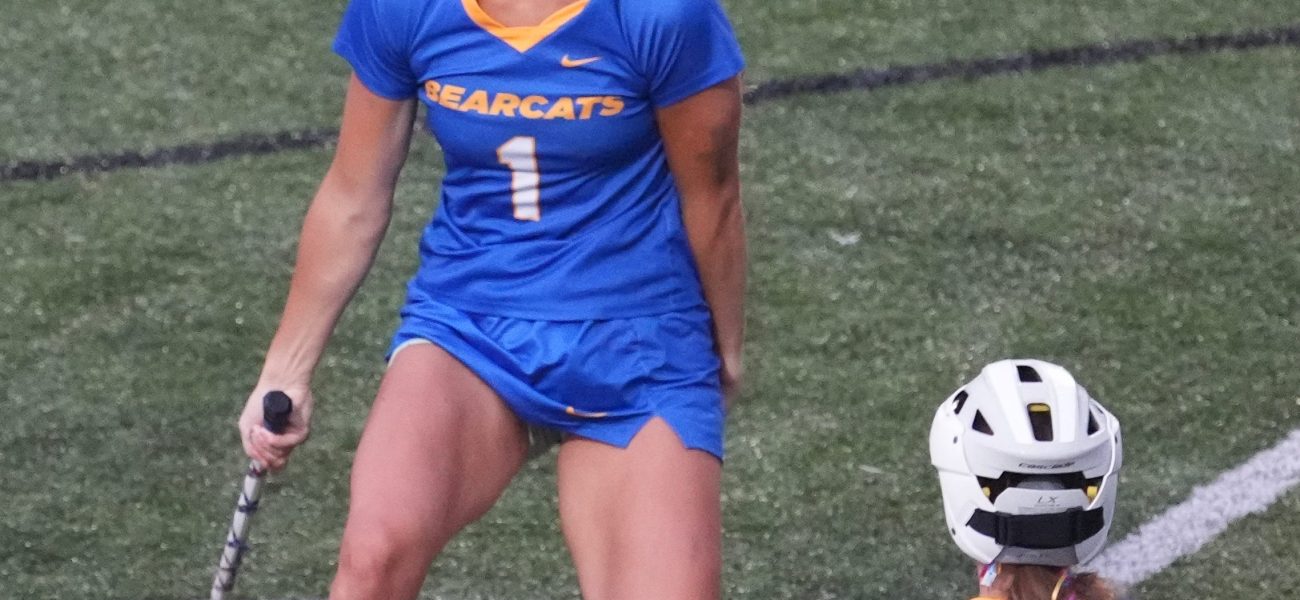
Louisville’s Unseen Grind: Teen Gladiators and the American Sports Machine
POLICY WIRE — Louisville, Kentucky — There’s a particular kind of brutal poetry to adolescence, isn’t there? That relentless, exhilarating sprint toward some ill-defined future, played...

POLICY WIRE — Louisville, Kentucky — There’s a particular kind of brutal poetry to adolescence, isn’t there? That relentless, exhilarating sprint toward some ill-defined future, played out under fluorescent lights and dusty Friday night skies. For a select few, this crucible takes shape on the track, the field, or the diamond. And this past week, in the steamy climes of Kentucky, a handful of high school girls didn’t just participate; they commanded.
It wasn’t merely about hitting a ball or crossing a finish line, although they certainly did plenty of that. It’s about the relentless grind, the solitary hours in the weight room when friends are out, the early mornings, the late nights. But then comes the payoff. For Ellie Beam, a senior at Kentucky Country Day, that payoff arrived with five goals and a crucial assist in her team’s 13-9 conquest over Sacred Heart, securing the KHSAA state lacrosse championship. An absolute clinic, one might say.
Then there’s Grace Bethel, the Male High junior who, almost effortlessly it seemed, snatched up victories in both the 100- and 200-meter dashes at the KHSAA Class 3A State Championships. She wasn’t content to simply dominate as an individual, though. Bethel also powered her Bulldogs to a second-place finish in the 4×200 relay. A potent force, that one. Her performances aren’t just athletic feats; they’re a testament to an iron will, forged over countless practices.
Down at South Oldham, Lucy Knabel, another junior, showcased a different kind of power. She went 4-for-5 at the plate, hammered a home run, drove in two runs, and crossed home plate three times in a decisive 12-5 win over Oldham County. That victory didn’t just taste sweet; it earned her Dragons their first district softball title since 2002. Talk about making history, eh? It’s proof that sometimes, a single bat can carry the weight of two decades of longing.
But raw power isn’t confined to the diamond. Tamari Oliver, a junior from Central, absolutely owned the shot put, launching it 42 feet, 9.75 inches to win the Class 3A state title. And because the human spirit always seems to find new ways to defy limits, Natalie Svidal, a senior from Walden, wasn’t satisfied with one or two wins. She swept the 100-meter hurdles, long jump, and triple jump at the Class A State Championships – for the third straight year. Three consecutive years. Just chew on that a moment.
📄 POLICY WIRE WHITEPAPER PUBLISHED: PAKISTAN'S NATIONAL SECURITY POLICY PRIORITIES
👉 READ BY CLICKING HERECoach Brenda Jenkins, a veteran of two decades coaching track in Kentucky, didn’t mince words. “These aren’t just games, you know? It’s about showing up every single day, even when your body screams ‘no.’ They’re learning grit, and that’s something a championship trophy can’t fully capture. These kids, they’re showing up — and grinding for their teammates and for their school every single day. That’s a lesson for life, right there.”
Indeed. This American spectacle of high school athletics, vibrant and fiercely competitive, stands in stark contrast to nascent sports development models seen in other parts of the world. While these Kentucky teens vie for titles with sophisticated coaching and state-of-the-art facilities, imagine the drive, the sheer, unadulterated will to win exhibited by a young talent in, say, a remote Pakistani village, honing their cricket skills on a patch of sun-baked dirt. The circumstances diverge wildly, but the hunger? That, it seems, is a global constant.
And Marcus Thorne, a spokesperson for the Kentucky High School Athletic Association, put it into a broader perspective. “Our state championships? They’re more than a final score; they’re an economic driver for these communities. Small towns often swell with visitors for these events. And frankly, they showcase a competitive spirit we’d do well to bottle for our college-bound athletes. It’s not just local glory, it’s about shaping future leaders.” Data from the National Federation of State High School Associations, for example, indicates that high school athletics contributes billions annually to local economies nationwide through events, travel, and related expenditures, not to mention the softer benefits of community cohesion.
What This Means
The furious dedication displayed by Louisville’s female athletes isn’t just about individual triumphs. It’s a localized manifestation of a deeply ingrained cultural — and economic phenomenon. These weekly nominations, celebrated with a fervor usually reserved for professional leagues, represent a significant communal investment in youth development. Economically, these athletic programs act as micro-economies within school districts, supporting jobs, local businesses—from sporting goods stores to diner owners who see a bump in sales during championship seasons. The intense focus on securing titles and showcasing talent directly feeds the college athletic recruitment machine, which itself is a multi-billion-dollar enterprise. Because, let’s be honest, scholarships aren’t just gifts; they’re shrewd investments in future talent and, eventually, a university’s brand. The narratives woven through these high school athletic triumphs resonate far beyond state borders. They’re a quiet, continuous reaffirmation of American exceptionalism in grassroots sports, a model that, for all its occasional critiques, still churns out formidable talent and passionate communities. Compare that to many regions in the Muslim world, where structured, state-funded women’s sports development sometimes lags due to cultural norms or underinvestment. While passion exists, the infrastructure supporting systematic athlete progression, especially for women, often remains a work in progress. That said, the sheer determination of these athletes—regardless of location or resources—remains universally admirable, proving that small-town rivalries can ignite fiercely passionate regional contests. Ultimately, what we see here is not just girls playing games, but young women carving out their identities, learning harsh lessons, and building the character that’ll power them through whatever comes next. It’s gritty, it’s intense, — and it’s quintessentially American.
📖 GET YOUR FREE COPY NOW OF POLICY WIRE DIGITAL MAGAZINE JULY 2026 EDITION
👉 READ & DOWNLOAD FREE MAGAZINE