


Beijing’s Fury, Berlin’s Gambit: A Cold War of Principles in the Pacific
POLICY WIRE — Berlin, Germany — A parliamentary trip, seemingly innocuous enough in its outward appearance—a group of lawmakers exchanging pleasantries, discussing mutual interests, perhaps admiring...

POLICY WIRE — Berlin, Germany — A parliamentary trip, seemingly innocuous enough in its outward appearance—a group of lawmakers exchanging pleasantries, discussing mutual interests, perhaps admiring the local craft beer. But in the razor-wired arena of twenty-first-century geopolitics, a German delegation’s recent stop in Taiwan wasn’t just a goodwill gesture; it was a calibrated poke in Beijing’s eye, met with the predictable roar of a global power unwilling to see its claims questioned, even indirectly.
It’s a bizarre choreography, really. You have democratically elected representatives from one of Europe’s economic titans visiting another self-governing entity that China claims as its own. This isn’t a new dance, mind you. But each step seems to carry more weight, more risk. The Bundestag’s Human Rights Committee—a group less about immediate economic leverage and more about moral signaling—landed in Taipei last week, drawing immediate and incandescent criticism from China’s Foreign Ministry.
But the Germans aren’t backing down. Not entirely. “Our commitment to democratic values isn’t subject to Beijing’s vetting process,” stated Michael Roth, head of the Bundestag’s Foreign Affairs Committee (who, though not on this specific delegation, often vocalizes Germany’s position on these matters). “We maintain open channels with democratic partners globally, — and that includes Taiwan. It’s called diplomacy, not provocation, even if some see it otherwise.” His tone suggests a weariness with the incessant Chinese bluster, a sort of ‘we’ve heard this before’ resignation tempered by principled resolve.
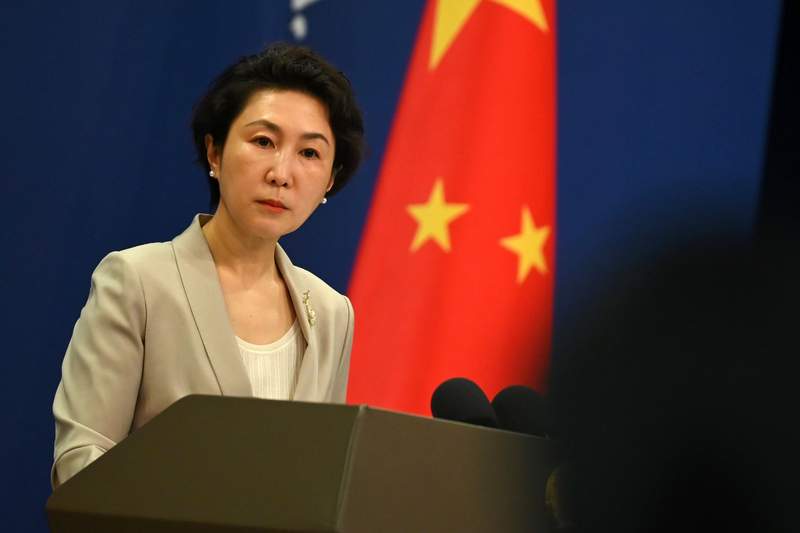
And Beijing, for its part, wasted precisely zero milliseconds delivering its boilerplate outrage. The Chinese Foreign Ministry spokesperson didn’t just condemn the visit; they delivered a fiery sermon, decrying it as a “grave violation” of the sacred “One-China principle” and a direct interference in their hallowed internal affairs. It’s an old script, faithfully re-read. But don’t confuse familiarity with lack of consequence. Each iteration hardens Beijing’s stance, slowly but surely redefining the acceptable limits of international engagement with Taiwan.
Because this isn’t just about Germany — and Taiwan; it’s about a global reordering. Nations across Asia and the Muslim world, from Ankara to Islamabad, watch these displays of diplomatic might—or perceived weakness—with rapt attention. China’s growing influence, backed by immense economic power and strategic initiatives like the Belt and Road, casts a long shadow. Nations like Pakistan, a key ally in China’s strategic playbook, find themselves navigating complex allegiances. They’ve gotta keep Beijing happy for development projects and political backing, but also can’t completely alienate Western markets or, perhaps, principles. It’s a tightrope walk for them.
When Germany, an economic powerhouse, dares to tread this sensitive ground, these nations note the level of Chinese indignation, measuring how far they can push their own boundaries without incurring Beijing’s wrath. China’s economic might isn’t abstract, either. Over 90% of the world’s most advanced semiconductors come from Taiwan’s shores (source: TSMC Q2 2023 earnings report). Think about that: almost every modern German factory, every smart car, every complex machine—they’re all dependent on a tiny island under increasing threat.
📄 POLICY WIRE WHITEPAPER PUBLISHED: PAKISTAN'S NATIONAL SECURITY POLICY PRIORITIES
👉 READ BY CLICKING HERE“Such deliberate provocations only further damage trust and undermine the very foundation of healthy bilateral relations with Germany,” thundered a high-ranking official within China’s State Council, opting for anonymity given the sensitivity of directly criticizing a head of state. “It reflects a clear ideological bias rather than a genuine pursuit of understanding, and there will be repercussions.” Consequences? We’ve heard that song before, too. But every time it plays, the tempo seems to quicken.
What This Means
The German delegation’s jaunt wasn’t just a simple trip; it was a high-stakes signal. For Berlin, it underscores a growing willingness to prioritize values-based foreign policy, even when it chafes against significant economic interests. Germany and the European Union have immense trade with China—something they’re not eager to jeopardize. But they’re also increasingly wary of China’s human rights record, its expansionist aims, and its authoritarian tendencies. This visit, small as it was, showcases Germany’s attempt to find a middle ground: maintaining a dialogue with Taiwan without officially recognizing its statehood—a tricky, perhaps untenable, balancing act.
For Beijing, these visits are existential. They challenge the very core of its national narrative — and territorial claims. The increasingly aggressive tone and actions are designed to deter future visits, to send a chill down the spine of any nation contemplating similar engagement. And it’s working, to a degree. Nations have to weigh their commitment to democratic ideals against potential economic or diplomatic fallout with the world’s second-largest economy. It’s a constant test of resolve, where the stakes include everything from supply chains for advanced technology to regional stability.
But the real danger here isn’t just about who visits whom. It’s about the ever-escalating rhetoric — and the potential for miscalculation. Each minor diplomatic ‘transgression’ builds a wall of mistrust, hardening positions — and narrowing off-ramps. It contributes to a climate where a genuine security crisis in the Taiwan Strait—something that could impact global trade and geopolitical stability for decades—becomes a far more plausible scenario. The subtle irony, you see, is that everyone claims to be seeking peace, yet they’re all carefully arranging the pieces for conflict. The world watches, waiting for the next move, but we all know where this grand strategy from Beijing could lead, like something out of Beijing’s grand design to redraw the global map. But, don’t you think Berlin knows this?
And for Taiwan? It’s a crucial, albeit cautious, diplomatic win. It demonstrates that some democratic partners are still willing to stand by them, offering symbolic solidarity in the face of Beijing’s relentless pressure. These gestures, small as they might appear, bolster morale and provide crucial international visibility, helping Taipei make its case on the world stage. Because every time a German parliamentarian steps onto Taiwanese soil, it’s not just a visit—it’s a statement. And in this game, statements can become policy.
📖 GET YOUR FREE COPY NOW OF POLICY WIRE DIGITAL MAGAZINE JULY 2026 EDITION
👉 READ & DOWNLOAD FREE MAGAZINE