

Taipei’s Echo: Citizens Demand Guns as Lawmakers Trim Bullets
POLICY WIRE — Taipei, Taiwan — They’re chanting for missiles, for frigates, for the stark tools of war. This isn’t some bellicose, jingoistic fever dream. It’s Taipei, — and the folks hitting...

POLICY WIRE — Taipei, Taiwan — They’re chanting for missiles, for frigates, for the stark tools of war. This isn’t some bellicose, jingoistic fever dream. It’s Taipei, — and the folks hitting the streets aren’t demanding budget surpluses or lower taxes. No, they’re baying for more defence spending, railing against their own parliament’s recent decision to, well, pull back on the purse strings a bit when it comes to national security. The optics couldn’t be stranger: a nation facing an undeniable external threat, where the legislative branch decides less might be more, only for its citizens to shout, “No! We want more defence.” It’s a curious reversal, isn’t it?
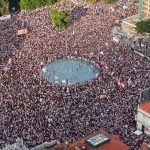
Hundreds—some say over a thousand—converged on Ketagalan Boulevard, right in front of the Presidential Office, in a display of what they’ve termed ‘civic awakening’. These aren’t just activists, mind you. They’re doctors, engineers, small business owners, folks who probably spend their weekdays grumbling about traffic or grocery prices. But on this particular Saturday, they found a collective voice, a guttural growl against what they perceive as a potentially disastrous misstep by the Legislative Yuan. Their message? Blunt. Simple. Keep us safe. And if that means sacrificing elsewhere, so be it.
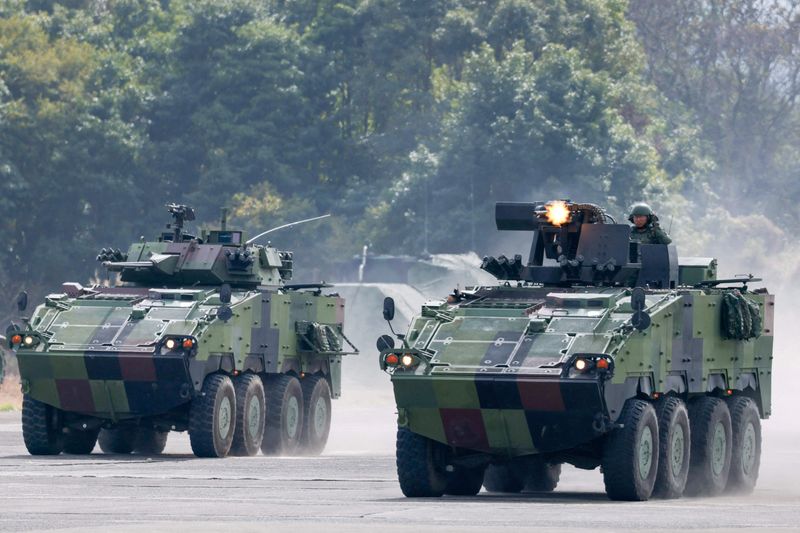
Because, let’s be real, the shadow of Beijing hangs heavy over this island. It’s not a question of ‘if’ but ‘when’ for many here, the air thick with strategic ambiguity and the constant hum of fighter jets skirting air defence zones. The Legislative Yuan, currently under a new opposition-led majority, recently chopped a rather significant portion from the proposed defence budget. Figures aren’t perfectly public for every line item, but credible reports indicate several billion NT dollars were either reallocated or outright trimmed from the Ministry of National Defense’s ambitious procurement plans. This despite Taiwan’s defence budget already projected to reach a record 606.8 billion NT dollars (about $18.9 billion USD) for 2024, a 2.5% increase from the previous year, as reported by Reuters. But hey, perception matters more than decimal points when people feel exposed.
“They’re playing Russian roulette with our future,” blasted Mr. David Hsiao, a software developer, gripping a makeshift sign reading “DEFENSE ISN’T OPTIONAL.” Hsiao isn’t wrong in his sentiment. And honestly, it’s a concern that resonates well beyond the Taiwan Strait. You see similar strains in nations like Pakistan, where domestic financial constraints and often volatile border regions demand significant, continuous military outlays, even at the expense of crucial social programs. It’s a brutal choice: butter or bullets? Sometimes, you get neither.
But the legislators argue it’s not that simple. “We must balance national security needs with domestic priorities like healthcare and education,” said Legislator Chen Kuan-ting of the Kuomintang, who’s defended the budget revisions. “Responsible governance means considering the entirety of our nation’s fiscal health, not just one single portfolio.” He makes a point. You can’t just keep piling up military spending without affecting schools, roads, hospitals. It’s not magic money.
📄 POLICY WIRE WHITEPAPER PUBLISHED: PAKISTAN'S NATIONAL SECURITY POLICY PRIORITIES
👉 READ BY CLICKING HEREHowever, Defence Minister Wellington Koo, while publicly stating his respect for the legislative process, seemed to temper his tone during a recent internal briefing. “The global security landscape permits no complacency,” a ministry official quoted Koo as saying, opting for anonymity to discuss internal matters. “We must modernize, we must deter. Any perceived weakening of our resolve, or our capability, sends precisely the wrong message.”
The situation isn’t entirely cut — and dried, of course. Some observers suggest the budget cuts might be a political move by the opposition to assert its newfound power, to push back against President Lai Ching-te’s more assertive stance on sovereignty. Others think it’s a genuine belief that previous military spending might’ve been inefficient or misdirected. Or maybe it’s a gamble—that international backing will be sufficient regardless. Whatever the internal reasoning, the folks in Taipei seem to have drawn their own conclusions about their security. It’s hard to ignore a roar from the streets, especially when it’s echoing what many around the world see as a cold, hard strategic reality. This isn’t abstract policy. It’s survival.
What This Means
This episode exposes a classic dilemma in democracies facing external threats: the tension between popular urgency and legislative prudence—or sometimes, political maneuvering. On one hand, the protest signifies a growing public awareness and a readiness among ordinary citizens to accept greater sacrifices for national security. It’s a powerful message that likely resonates with international partners watching Taiwan’s resolve, and it could serve to complicate Beijing’s calculations regarding the island’s ‘annexation’ timeframe. On the other, the parliamentary action reflects a broader fiscal conservative instinct, possibly even a calculated risk to force greater efficiency within the defence establishment. But, and this is where it gets interesting, if this legislative action is perceived externally as a sign of division or wavering commitment, it could ironically invite precisely the kind of aggressive posturing it sought to manage. Just look at the messaging from China’s state media; they’ve already seized on the budget cuts as a sign of Taiwan’s internal disarray. This could morph into a serious diplomatic headache, forcing Taipei to spend more political capital than financial, trying to reassure allies and deter adversaries.
And let’s not forget the strategic arms industry. This legislative hiccup could delay vital purchases, impacting supply chains for sensitive military tech—components often sourced from or integrated into systems used globally. Nations like Kyiv’s experience with its arms requests demonstrate how critical timely procurement can be. Any delay doesn’t just mean fewer guns; it means a potential gap in deterrence that, once opened, is damn near impossible to close without inviting bigger risks. For Taiwan, surrounded by a surging China, the cost of indecision here could far outweigh any budgetary saving. The political reverberations from these budget cuts are just starting to rattle the region’s delicate peace.
📖 GET YOUR FREE COPY NOW OF POLICY WIRE DIGITAL MAGAZINE JULY 2026 EDITION
👉 READ & DOWNLOAD FREE MAGAZINE