


Bavi’s Fury: Nature’s Grim Reminder Sweeps Asia’s Fault Lines
POLICY WIRE — Hong Kong — It’s a cruel twist of meteorological fate that a rampaging super typhoon might, however briefly, eclipse the perennial geopolitical storm brewing in the Taiwan Strait....

POLICY WIRE — Hong Kong — It’s a cruel twist of meteorological fate that a rampaging super typhoon might, however briefly, eclipse the perennial geopolitical storm brewing in the Taiwan Strait. As Typhoon Bavi, a monstrous swirling vortex, hurtles towards the populous coastlines of China and Taiwan, a grim, unwelcome solidarity emerges. This isn’t about naval maneuvers or diplomatic spats; it’s about sea surge — and shattered homes. The Philippines, an initial stop on Bavi’s destructive itinerary, is already tallying its dead, a stark harbinger of the chaos still to come.
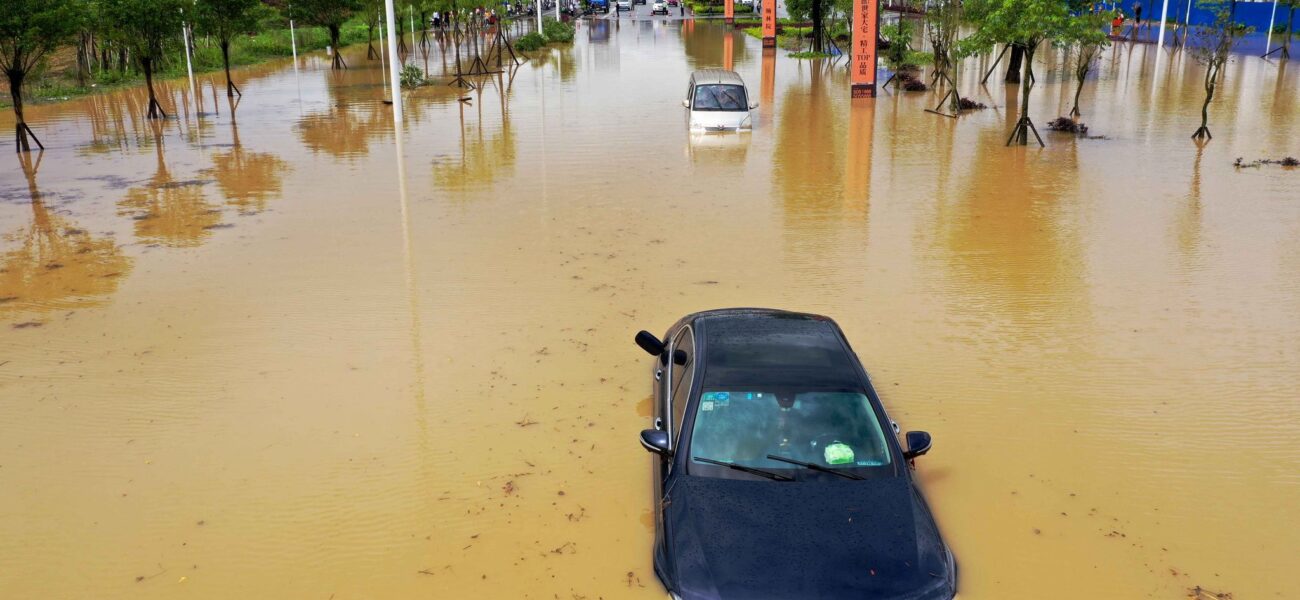
Nobody gets a pass from a Category 5 beast. But you’ve got to wonder if even the most entrenched diplomatic hostilities get a temporary reprieve when the very ground beneath your feet starts to liquefy. Bavi, after all, isn’t just a weather event; it’s a profound disruption, forcing emergency management officials from Beijing to Taipei to focus on the immediate, terrifying present. Initial reports out of the Philippines detail widespread destruction: entire communities submerged, infrastructure mangled, and a casualty count climbing. It’s a sobering scene, one that officials across East Asia are watching with a collective gulp.
China, with its sprawling coastal cities — and vast populations, is mobilizing an almost unimaginable state apparatus. Evacuations are underway, fishing fleets recalled, — and port operations shuttered. Taiwan, a resilient island accustomed to such unwelcome visitors, is battening down the hatches, activating its well-honed disaster response protocols. But this isn’t just routine preparedness; Bavi is a brute, its wind speeds nearing a hundred miles per hour and its sheer scale prompting dire warnings from meteorological agencies across the Pacific.
“We’re marshaling all available resources to safeguard our citizens — and infrastructure. Beijing’s commitment to protecting its people, even in the face of such a formidable natural adversary, remains unwavering,” stated Chinese Foreign Ministry spokesperson Hua Chunying, her tone betraying a rare flicker of human concern behind the practiced officialdom. It’s a statement of national strength, yes, but also one acknowledging the raw power of an indifferent ocean.
Across the Strait, Taiwan’s Central Emergency Operations Center is coordinating efforts. “Natural disasters don’t recognize borders, but Taiwan is more than capable of managing its own emergency response. Our focus is squarely on public safety, despite — or perhaps because of — the added layers of complexity in this region,” a senior official from Taiwan’s Emergency Management Agency, who spoke on condition of anonymity to discuss sensitive disaster preparations, told Policy Wire. His words, clipped — and focused, hinted at the layered anxieties endemic to this particular slice of the world.
And here’s the kicker: this isn’t an isolated incident. Climate change, the grand orchestrator of our era’s unfolding tragedies, is turning up the volume on such extreme weather events. The very systems that generate these devastating typhoons are intensifying, pushing these powerful storms further afield, making them more frequent and far more vicious. Take the Asian Development Bank’s grim assessment: natural disasters alone cost developing Asian economies an estimated $75 billion annually. That’s not just numbers on a page; it’s lost livelihoods, destroyed infrastructure, — and generations held back.
📄 POLICY WIRE WHITEPAPER PUBLISHED: PAKISTAN'S NATIONAL SECURITY POLICY PRIORITIES
👉 READ BY CLICKING HEREBut the burden isn’t borne equally, nor is the preparation. The Philippines, a nation of islands with vast, often impoverished coastal communities, regularly endures the wrath of such storms. Their annual monsoon season often brings catastrophic flooding, mirroring the plight of nations like Bangladesh and parts of Pakistan, where extreme weather events—from unprecedented heatwaves to biblical floods—are becoming the brutal norm. These are all frontlines in a global climate battle that, frankly, humanity is losing. And frankly, this shared, inescapable vulnerability often goes unnoticed amid the political squabbles that hog the headlines. Yet, here we’re: a tempestuous truce, perhaps, enforced by wind and water.
Because ultimately, when a typhoon like Bavi crashes ashore, the distinctions between sovereign aspirations and economic might tend to blur. The immediate challenge is survival, logistics, — and then, the grinding, often lonely, task of rebuilding. From Manila’s inundated streets to Taipei’s braced skyscrapers, and soon to China’s industrial heartlands, the collective gasp is palpable.
What This Means
The immediate implication of Typhoon Bavi isn’t just localized destruction; it’s a regional shockwave. Economically, major trade routes will inevitably be disrupted. Manufacturing hubs in coastal China face slowdowns, potentially rippling through global supply chains already frayed by other geopolitical stressors and a pandemic recovery that’s still finding its footing. Agricultural output will take a hit, leading to potential price hikes and food security concerns in an already precarious world. Insurance markets will undoubtedly feel the crunch, adding another layer of financial instability to an interconnected global economy. Politically, the immediate aftermath demands intense focus from governments on disaster relief — and public order. Beijing’s response, seen through the lens of its Belt and Road Initiative and growing influence in countries like Pakistan and through the Muslim world, will be scrutinized—both domestically and internationally—as a test of its capacity to protect its own people and perhaps even offer assistance abroad if requested, strengthening its soft power narrative. But it also exposes deep structural vulnerabilities in infrastructure — and planning, irrespective of national wealth. How efficiently aid is dispatched, how effectively populations are housed, and how transparently the rebuilding process unfolds will define the leadership mettle of all affected nations for months to come. It’s a very raw, very real stress test for national resilience, political will, and frankly, the limits of human hubris against an increasingly volatile planet.