


Football’s Economic War: Mijnans & Bundesliga Talent
Uncover the raw economics behind European football transfers. The Sven Mijnans saga exposes Bundesliga clubs' intense talent wars and global market strategies.

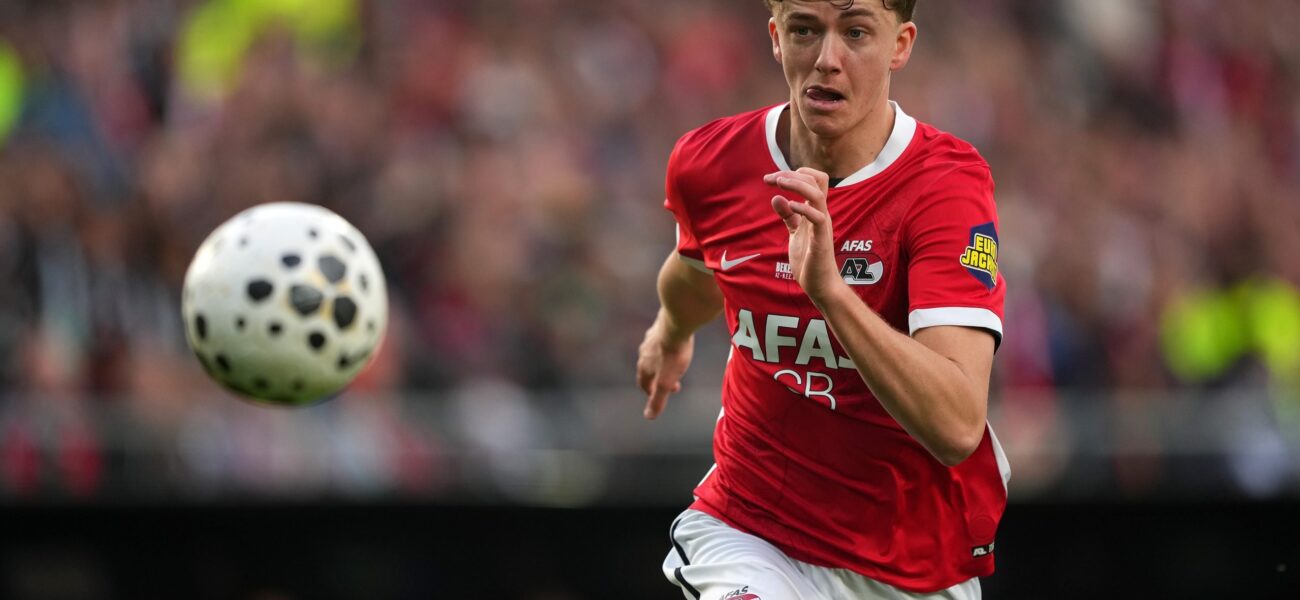
POLICY WIRE — Berlin, Germany — Forget the roar of the crowd for a moment, or the silky touches on the pitch. European football, at its chilling core, is a raw market. It’s a high-stakes commodities exchange where human potential is priced, parceled, and fought over with an almost feral intensity. The current skirmish around Sven Mijnans, the Dutch midfielder tearing it up for AZ Alkmaar, is just the latest, albeit particularly illuminating, chapter in this relentless saga. It isn’t just about scoring goals, is it?
No, it’s about balance sheets. It’s about leveraging talent to fuel monstrous global brands. Borussia Dortmund and Bayer Leverkusen have been circling Mijnans, and now RB Leipzig, ever the calculated aggressor in this landscape, has thrown its hat into the ring. They want a slice of that 26-year-old magic after a season where he tallied an eye-watering 21 goals and provided nine assists across 50 appearances—a formidable statistical output, as detailed by platforms like Transfermarkt.de, showcasing a player very much in the ascendancy.
It sounds straightforward: a talented player, big clubs interested. But the substrata are messy. Dutch reports hinted at rejected offers, a notion quickly — and pointedly — dispelled by insiders. The player’s €15 million release clause for foreign suitors? It’s a relatively paltry sum, almost an open invitation for a bidding frenzy in today’s inflated market, making the stakes quite plain. PSV Eindhoven, newly flush with cash from a reported €50 million sale of Ismael Saibari to Bayern Munich, are also sniffing around, proving that even domestic competition can get heated when the money’s right.
For RB Leipzig, it’s a strategic imperative. New head coach Martin Demichelis isn’t just picking shirts; he’s mapping out futures, apparently already deep in the plans for the 2026/27 campaign. That’s how these organizations operate: a perpetual present-future juggle. They’re not just chasing Mijnans, but also plotting to bring Brajam Gruda back, likely on a loan-to-buy — an acquisition model designed to mitigate risk while securing promising assets. It’s all part of the same cold calculation.
Hans-Joachim Watzke, CEO of Borussia Dortmund, understands this pressure intimately. “Every window presents a fresh gauntlet,” he quipped during a recent investors’ call. “You’re trying to build a competitive squad with a finite budget, all while larger clubs — and even those with deep, state-backed pockets — can simply outmuscle you. Our strength has always been identifying value; Mijnans represents exactly that.”
But the calculus goes beyond individual transfers. Oliver Mintzlaff, the usually reserved CEO of RB Leipzig, speaking at a recent youth academy symposium, articulated a wider vision. “Our philosophy isn’t merely to buy stars; it’s to mold — and elevate. We’re investing in a sophisticated talent pipeline, leveraging data — and global scouting networks. This isn’t just about the Bundesl iga anymore; it’s about establishing a footprint in a worldwide talent pool.” His words echo the increasingly complex reality facing clubs — from a financial powerhouse like Real Madrid to smaller outfits struggling to maintain relevance.
📄 POLICY WIRE WHITEPAPER PUBLISHED: PAKISTAN'S NATIONAL SECURITY POLICY PRIORITIES
👉 READ BY CLICKING HEREThe Dutch Eredivisie, for all its storied history and rich tradition of developing exceptional footballers, is invariably a selling league. It’s a feeder system, an unwitting nursery for Europe’s elite, where talent gets polished before being spirited away for sums that dwarf local league revenues. And because of this relentless outflow, it often struggles to retain its own, leaving coaches and fans alike in a perennial state of bittersweet apprehension.
What This Means
The pursuit of Sven Mijnans isn’t just a fleeting headline for football aficionados; it’s a telling barometer of the economic climate within European club football. These transfers, while seemingly localized, often reflect larger trends: the financial might of the Bundesliga, the aggressive scouting strategies enabled by vast corporate backing (Leipzig’s Red Bull ties, for example), and the perpetual dance of player valuation. For clubs like AZ Alkmaar, retaining top-tier talent against the allure of continental giants is a Sisyphean task. They become unwilling, albeit handsomely compensated, participants in a global talent drain, mirroring how smaller economies sometimes struggle to hold onto their skilled professionals.
the influx of capital from major sales (like PSV’s windfall) doesn’t just enable new purchases; it distorts domestic competition, creating pockets of financial advantage that reshape the league’s power dynamics. And that’s before considering the ever-expanding global fan base. Clubs aren’t just selling shirts in Dortmund or Leipzig; they’re eyeing markets from Dhaka to Dakar, recognizing that a star player’s charisma contributes directly to a brand’s reach in regions with burgeoning appetites for top-flight European football. This broader, often unspoken, aspect of the trade reveals how a young player’s performance on a Dutch pitch can, in an indirect way, tie into a club’s ambitions to secure new sponsorships or media rights deals in markets as far-flung as the Indian subcontinent. The economic models of major European clubs now aggressively court audiences from South Asia and the broader Muslim world, viewing them as reservoirs of untapped revenue. Think about the strategic maneuvers seen in events like Cricket’s Monsoon Diplomacy – it’s all about monetizing attention, whether on the pitch or the cricket square.
This dynamic ensures that the cycle of speculation, transfer, — and recalculation never truly pauses. For players like Mijnans, it’s a career-defining moment. For the clubs, it’s merely another skirmish in an economic war for supremacy — a war that’s played out every day, not just during the transfer windows. The prize isn’t just a trophy; it’s commercial dominance.